Spotify published a Claude Code plugin that hands file reading to a cheaper model, and measured a 90% cut in bulk-read tokens
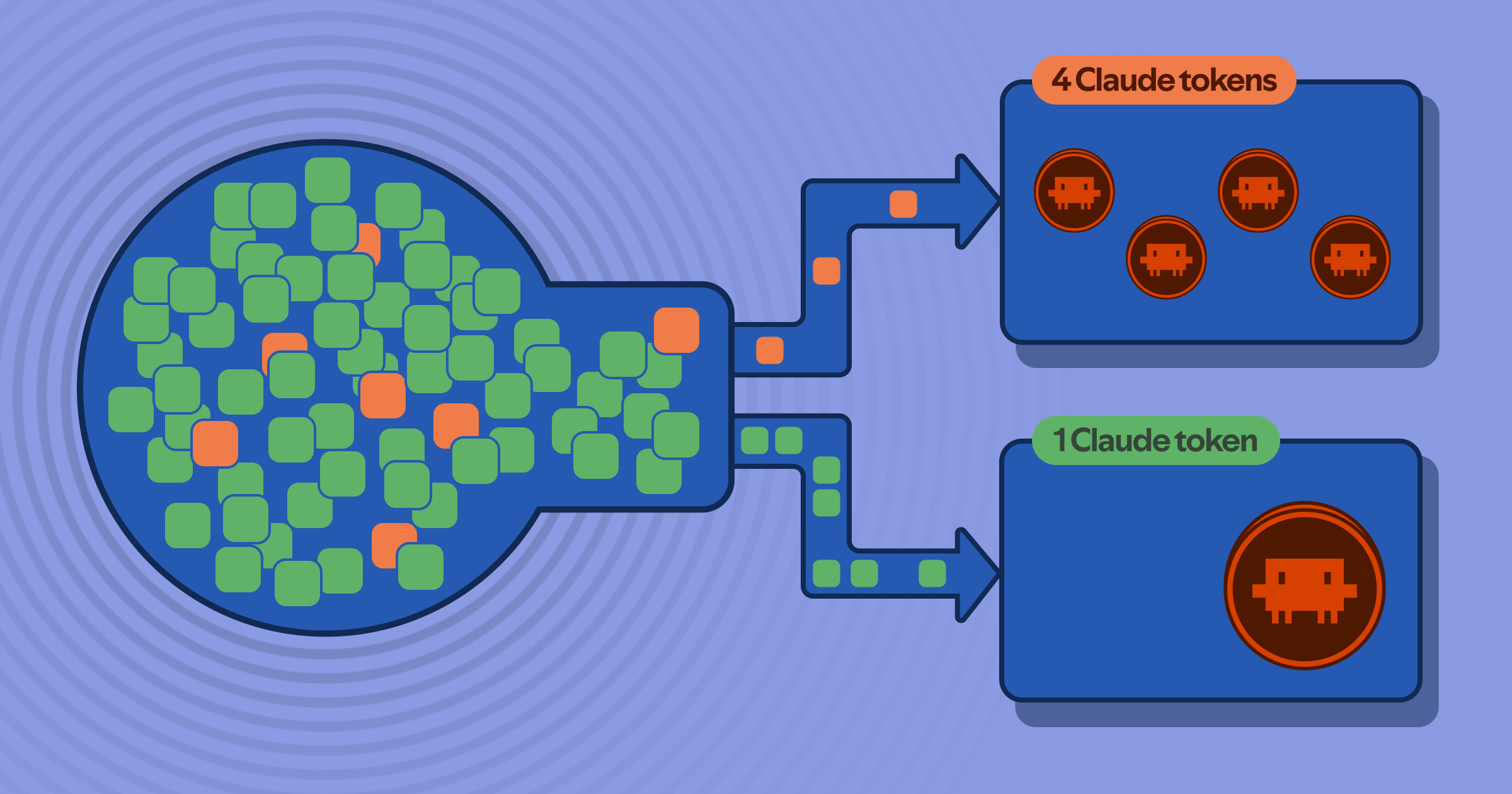
Image: Spotify Engineering
Why it mattersReading files is the largest share of an agent's token bill, and it is the part that does not need the expensive model, so routing it away is a cost cut with no reasoning trade.
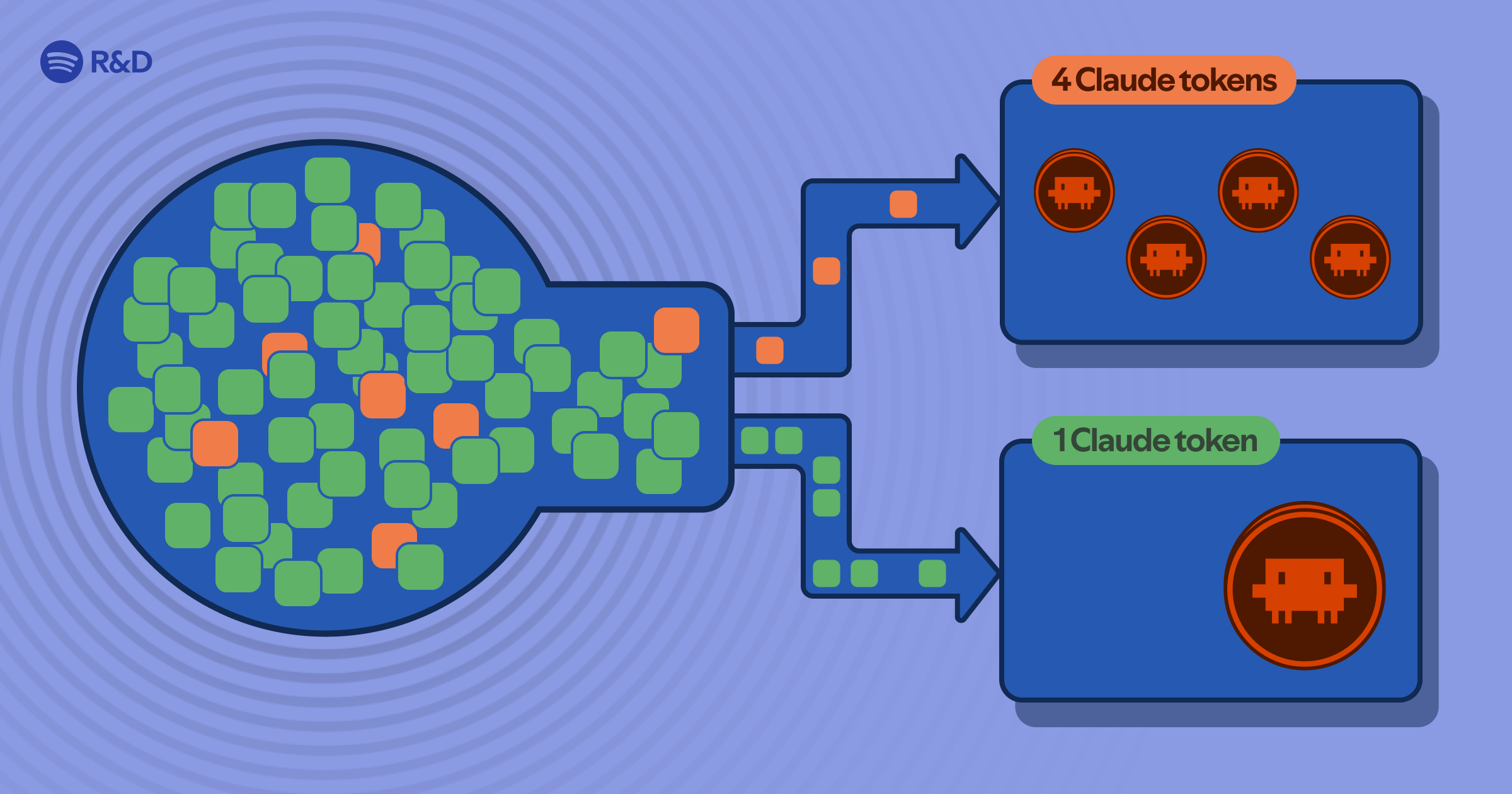
Spotify Engineering published a post on 3 September describing a Claude Code plugin, called shunt, that moves file reading and boilerplate writing off Claude and onto cheaper worker models. Dimitri Mazmanov, a principal product manager at Spotify, writes that mean bulk-read savings were around 90%.
That figure is Spotify's own measurement, and the post states the method. It was tested against a Java monorepo across four scenarios, comparing the tokens Claude would spend reading files directly against the tokens it spends consuming a worker's summary instead. The post does not publish the per-scenario counts, and the four scenarios are not named, so the 90% is a mean with the working partly withheld.
What the workers actually are
The plugin sits on Portal, Spotify's platform for what it calls AiKA Modes: declarative agents that run on an ephemeral runtime, which the post compares to AWS Lambda for agents. You define instructions, pick a model, set parameters and attach tools, without running infrastructure.
Two of those modes do the work here. A bulk-reader takes file analysis, and a code-writer produces boilerplate that matches existing patterns. Both use Gemini 2.5 Flash as the worker model in the examples. Neither has to be built first: the post says both modes are already public, so a reader is picking them up rather than authoring them.
Where the author says it stops working
The limits are stated plainly, which is the more useful half of the post. Responses typically take 10 to 30 seconds, and Portal caps a single invocation at 30 seconds, so large generations have to be split into smaller calls. For small files the overhead of delegating costs more than the tokens it saves.
Two jobs are ruled out entirely. Editing that depends on reliable line numbers does not survive the handoff, and reasoning work, which the post gives as debugging and safety-critical analysis, is not delegated at all. What is left is the bulk mechanical reading, which is exactly the part that was never worth frontier-model prices.
The cost pressure behind this is real and separately sourced. The post links Gartner, which predicted in June that AI coding costs will pass the average developer salary by 2028 as token consumption grows. That prediction belongs to Gartner, not to Spotify.
The cheap tokens and the expensive ones are already separable
The interesting claim is not the percentage. It is that an agent's token bill splits cleanly into work that needs judgement and work that needs throughput, and that the split runs along a line a plugin can find without a human deciding case by case.
That changes what a cost control looks like. Capping usage or switching everyone to a smaller model trades quality for money across the whole task. Routing only the reads trades nothing, because the model that summarises a file it was handed is not the model deciding what to change.
The caution is that the savings number and the routing rules both come from the company that built the platform, measured on one Java monorepo. A team that wants the figure to hold on its own codebase will have to measure it there, and the pieces to try are public.
Source
Portal by Spotify cut my Claude Code token usage by 90%, Spotify Engineering, 3 September 2026. The plugin modes referenced are published in spotify/portal-ai-plugins.
Source: Spotify Engineering
This item was written by an AI system from the linked source. Reveneau is responsible for what it publishes.
Get AI News in your inbox
New developer tools, model and agent releases, and how teams are actually shipping with them. Short, and only when there is something worth reading.