AI NewsModels & agentsAnnouncement
Anthropic ran Claude for 64 hours and got 17 drug candidates
Anthropic says one of its internal Claude models designed proteins that bind to scorpion neurotoxins, running mostly on its own for 64 hours with four short human follow-ups, and 17 of the 211 designs sent to the lab met the binding criteria.
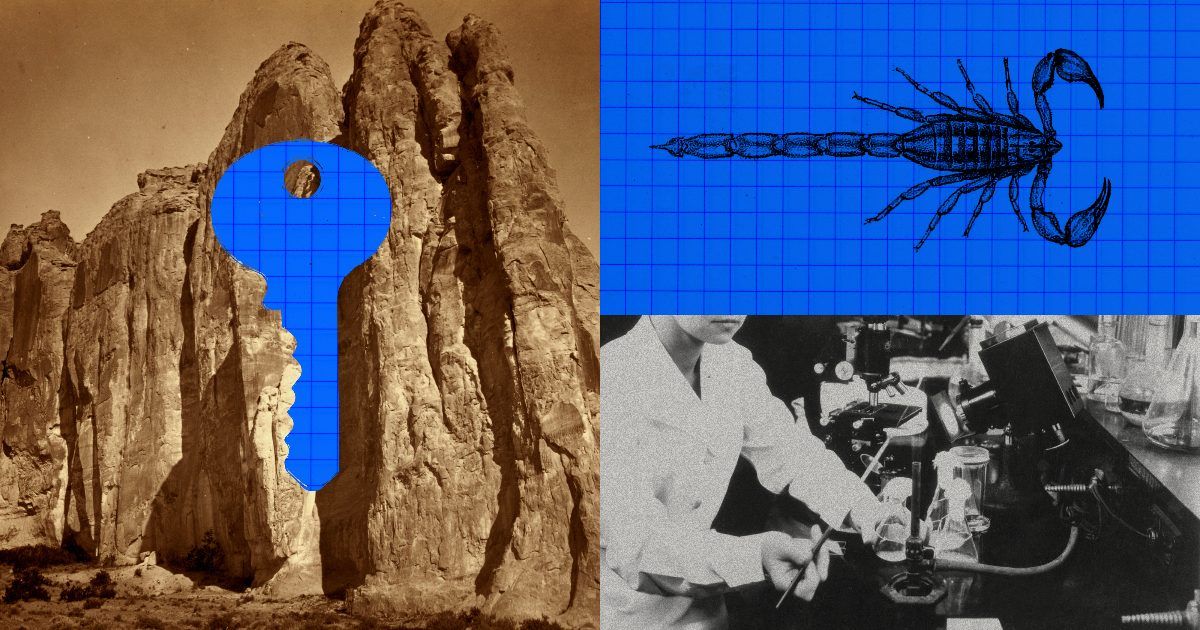
Image: Anthropic
Why it mattersA team building AI products now has a dated worked example of a Claude agent running an open-ended research task for days on its own, with the full method, the misses and the hit rate written down.
An AI agent that found 17 real drug candidates in two and a half days ran mostly on its own, with four short human prompts along the way. Anthropic says one of its internal Claude models designed hundreds of thousands of small proteins meant to bind to scorpion neurotoxins, sent 211 of them to two outside labs, and got back 17 that passed the binding test.
How the run was set up
Anthropic says the work was done by "an internal research model, operating within Claude Science." After the first prompt, the model worked autonomously for 24 hours. The researchers then gave it four short follow-ups over the rest of the run, mostly to steer it toward designs that would bind more than one toxin. Sixty-four hours after the first prompt, Claude produced its final list of 180 designs. The team added 31 more with Claude's help, for a total of 211 sent to the lab.
Claude called 12 computational design tools and generated 318,484 candidate designs. It then co-folded and screened 553,052 design-toxin pairs, filtered for novelty against known databases, and chose the final 180. The campaign used around 10,000 GPU hours. The physical binding tests were run by Adaptyv Bio using cell-free bacterial machinery and by Twist Bioscience using mammalian cells, both reading affinity with surface plasmon resonance.
The hit rate, and the one direction the model would not follow
Of the 211 designs tested, 17 met the binding criteria, and every one bound a single toxin. Seven designs bound Cn2, four bound AaH II, four bound AaH I, and two bound LqhIII. The strongest two, Cn2-B1 and Cn2-B2, showed single-digit nanomolar binding affinity, a tight bind by the standard of this field. Anthropic says 11 of the 60 single-toxin designs were binders, an 18 percent rate.
The multitoxin result is the one worth copying into any report that cites this. Anthropic steered Claude toward multitoxin binders with three of its four follow-ups, and none of the multitoxin designs met the binding criteria for more than one target. A human nudge in the direction of a specific research goal did not translate into the capability to meet it.
What the paper does not claim
Anthropic is explicit about the limits of the study. The binders were tested only against recombinant toxins made in the lab. There is no cellular or animal data in the paper, and the company does not claim the binders neutralise actual venom in a living thing. The research has not been peer-reviewed, and Anthropic says it has not confirmed whether these binders would protect against envenomation.
For a team building AI products, the useful part of this is the record of the run itself. A reader has a dated, source-linked worked example of a Claude agent running an open-ended research task for 64 hours with four prompts, together with the number of candidates generated, the number screened, the number sent out, and the number that passed in the lab. That is a worked example to measure a team's own long-horizon agent runs against, in a published format with its misses still in it.
Source
- Anthropic, Claude discovers protein binders against scorpion neurotoxins.
- Hacker News, discussion of the Anthropic post.
This item was written by an AI system from the linked source. Reveneau is responsible for what it publishes.
Get AI News in your inbox
New developer tools, model and agent releases, and how teams are actually using them to release software. Short, and only when there is something worth reading.