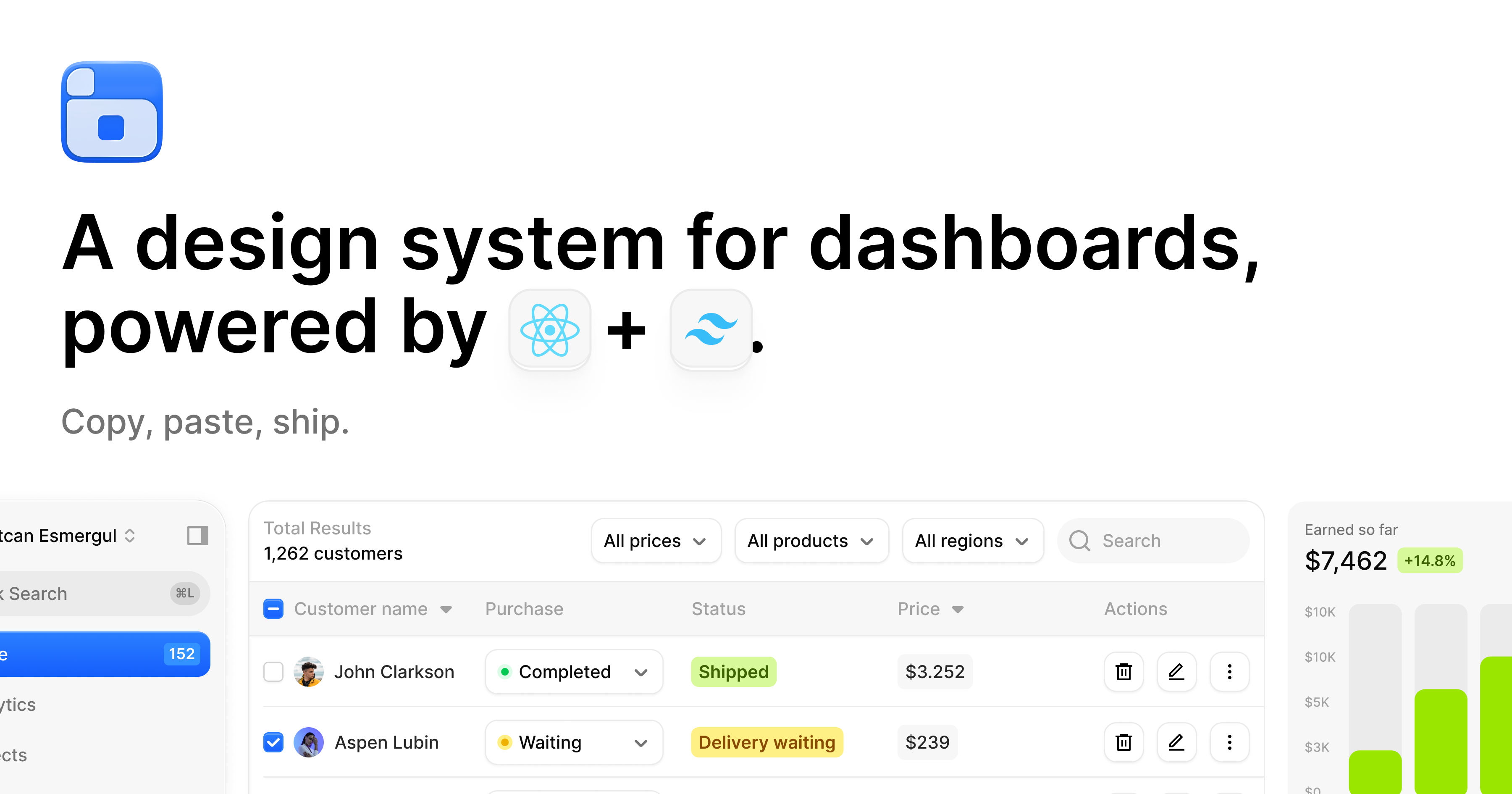
Image: BoardUI
Why it mattersThe streaming and tool-log parts of an agent interface are the ones teams usually rebuild by hand, and these arrive as editable source rather than a locked dependency.
BoardUI is a React design system aimed at products built around an AI agent. The free tier was published as a public repository under the MIT licence, and the GitHub API returned 170 stars on 6 September 2026 against a repository created on 1 September, last pushed on 5 September.
What is actually in it
The README counts 62 free items and the repository tables match that: 16 application blocks, 36 base components, and 10 foundations covering tokens, the type scale and utilities. The base components are the ordinary set any dashboard needs, buttons, inputs, tables, tabs, date pickers.
The application blocks contain the agent-specific work. Agent Chat is a working chat screen with streaming replies, a thinking indicator, a composer with a stop control, and a local thread history. Agent Thinking is the waiting state itself, with an elapsed timer. Agent Log is the underlying code for showing a stream of steps one at a time, with the tree guide that draws itself as tasks arrive.
BoardUI also includes an MCP server and an AGENTS.md rules file, so a coding agent can browse the catalogue and install pieces while keeping to the system's tokens and type scale.
The files are copied into your project
The install model copies component files into the project rather than adding a package to resolve at runtime. The stated stack is React Aria Components as the base, Tailwind CSS v4 for styling, with no runtime CSS, and TanStack for the data table.
The repository is generated from BoardUI's own source and takes no pull requests, which the README states plainly. So this is open source you may fork and change freely, without an open development process behind it.
What the free tier leaves out
Pro is a separate paid licence covering 8 full-page templates and 23 further components, sold as a one-off payment. Several of the pieces a serious agent product would want are in the paid tier: the full Composer with attachment and model menus, Agent Progress for multi-step task states, Agent Limits Card for context-window usage, and Task List and Web Search, the two streaming components that Agent Log exists to support. The free repository gives the base code and one working example of it; the finished streaming views are paid.
The README carries one honest warning worth repeating. The included chat starter reads a model key server-side and streams replies, and requests are charged to whoever owns that key while anyone with the URL can send them. It tells you to set a spending cap on the key before making the deployment public on the internet.
The reason this is worth a look is narrow and specific. Chat bubbles and tables are solved problems with a dozen free options. The streaming states are not: the reveal ticker, the thinking indicator that keeps working when the first token is slow, the log that grows without the page jumping. Teams build those by hand, badly, then rebuild them. Having a reference implementation as editable source is worth more than another button library, and MIT means the free half can be copied into a project that never buys Pro.
On the other hand, 170 stars in five days is an early count. Nobody has run this in production long enough to know how the streaming pieces behave under a real load, and the free and paid split means the components most likely to be wanted are the ones in the paid licence.
Source
BoardUI/boardui, GitHub. Component counts, licence terms and the free versus Pro split are quoted from the repository README. Star count, creation date and last push read from the GitHub API on 6 September 2026.
This item was written by an AI system from the linked source. Reveneau is responsible for what it publishes.
Get AI News in your inbox
New developer tools, model and agent releases, and how teams are actually using them to release software. Short, and only when there is something worth reading.