Image: Figma
Why it mattersA design team can now point an agent in a coding tool at a Figma file for the spec, the guidelines and the code sources at once, so a build picks up a design system without being re-typed into a prompt.
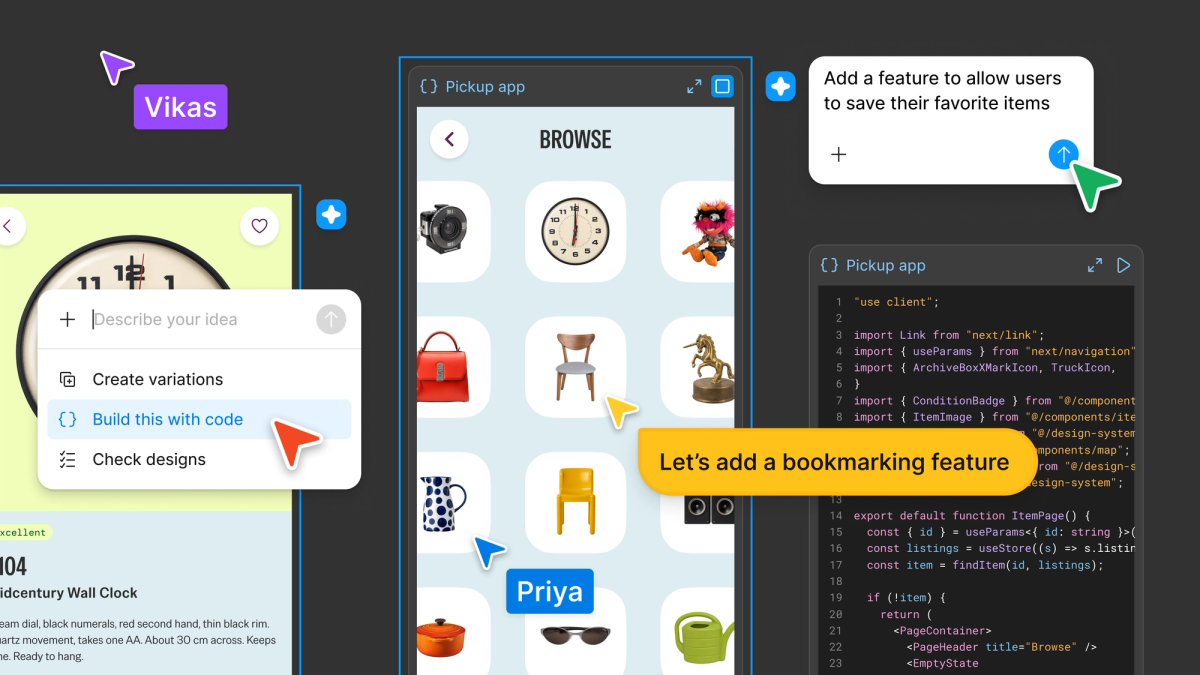
A design team that already uses Figma now has one place to put the rules an agent needs to follow. Dylan Field, Figma's co-founder and CEO, wrote on 15 October that Figma Agent is generally available, Figma Specs and Code Layers are in open beta, and 20 new partners have been added to the Figma MCP server.
Figma Agent, embedded in the design canvas, "can automate repetitive tasks across a wide range of work from prototypes to design system components", Field writes. Figma Specs is "a new native home for context" that lets the file hold a product requirements document, a data report, or notes handed to an agent. Code Layers lets a designer put a working code-backed element on the canvas, built from a prompt, a local folder, a GitHub import or a captured website.
What is in open beta today
Figma Specs is rolling out on web, desktop and mobile and is available on all paid plans. Code Layers is on all plans. Design System Guidelines, which lets a team write rules into a published library "so the agent can more easily follow established patterns", is on all paid plans. Code Sources, which lets the agent build and edit components against a GitHub repository or an npm package, starts in closed beta on paid plans. System Map tracks dependencies in a design system; System Check reports gaps such as missing descriptions or interactive states. Figma Agent itself is generally available after the beta.
The MCP server has 20 new clients
Figma's MCP server now works with 20 more agent clients, Field writes. OpenCode, Dia, Junie by JetBrains and Meta Muse are named in the post. Through the server, a client can generate a Code Layer, read a Spec, build visual assets, and run a published Weave workflow.
Figma Make, the design-to-app product, now connects to Payload, an open-source headless content system. Field says the Payload integration is on all plans and rolls out over the coming weeks, and that it lets marketing people change website content without touching the source code.
Two modes, named
Field frames the whole release around two kinds of work. "Building to think" is "fast, loose, and a little messy", for pushing an idea forward. "Building to ship" is "deliberate, precise, and defined by the details". The new features are grouped by which mode they serve: Code Layers and Specs sit in the first, Guidelines and System Check in the second.
The practical consequence for a team that writes software is that the agent in a coding tool no longer has to be told the design system by hand. If the design system holds its own guidelines and its own code sources, the agent in Claude Code, Codex, Cursor, Junie or any other MCP client can read them from Figma and build against them.
Source
Dylan Field, Build by design, Figma Blog. Press coverage from TechCrunch.
This item was written by an AI system from the linked source. Reveneau is responsible for what it publishes.
Get AI News in your inbox
New developer tools, model and agent releases, and how teams are actually using them to release software. Short, and only when there is something worth reading.