AI NewsGo-to-marketReported
ChatGPT stopped tagging its outbound links after GPT-6 launched
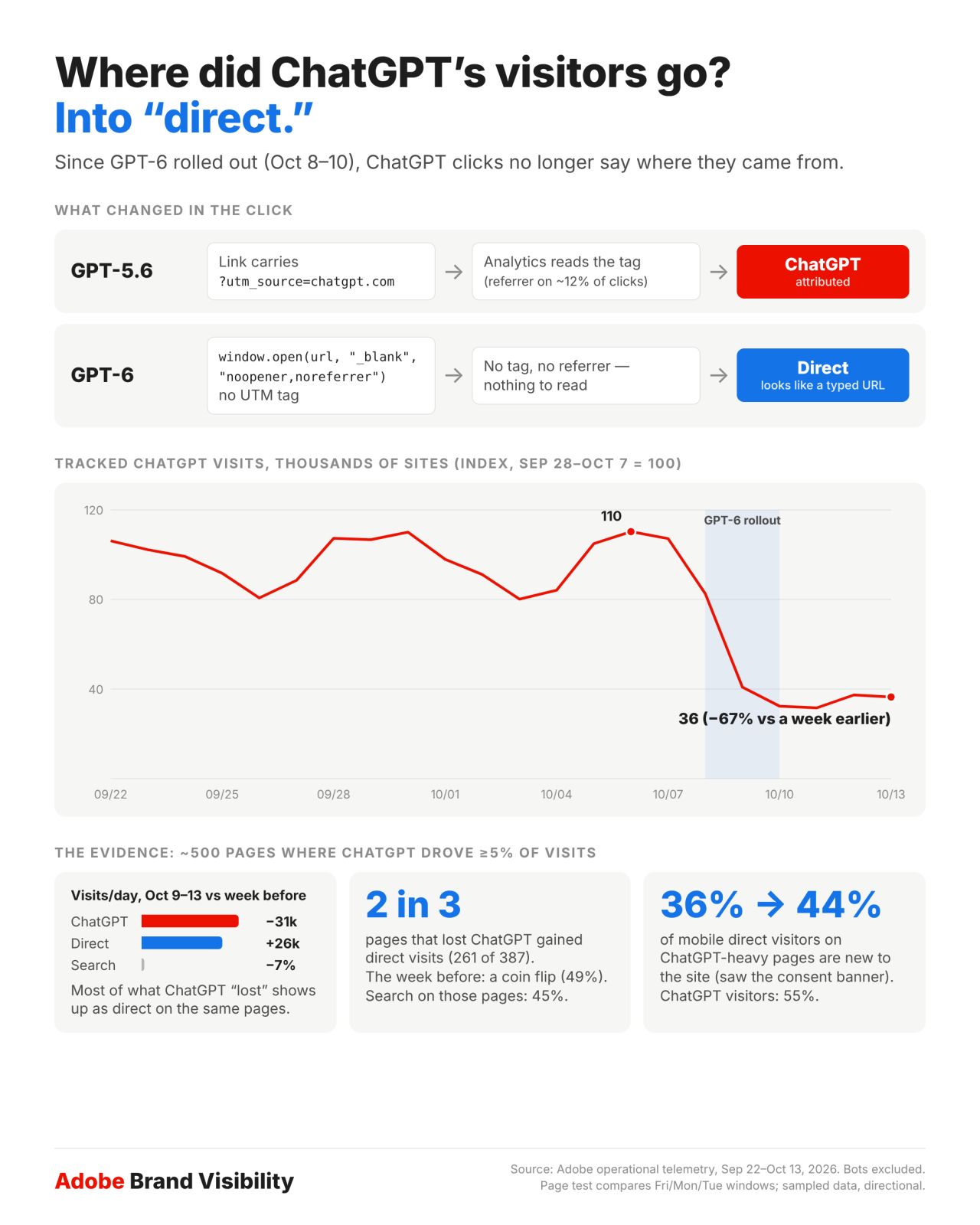
Tracked ChatGPT referral traffic dropped around 60 percent in a day after GPT-6 reached most answers, with the same pages recording a matching rise in direct traffic. OpenAI removed the utm_source=chatgpt.com tag on outbound links.
Why it mattersAny attribution report that reads ChatGPT as a channel from referrer and UTM now undercounts it, and a GA4 or Adobe Analytics trend line that broke on 8 to 10 October needs an annotation before someone else asks.
An analytics dashboard that shows ChatGPT as a source of visits lost around three in five of them inside a day.
Cedric Huesler, a product manager at Adobe, published the finding on LinkedIn on 13 October 2026, and Barry Schwartz at Search Engine Roundtable followed with a write-up on 14 October. GPT-6 rolled out to nearly all ChatGPT answers around 10 October. The outbound links from those answers no longer carry the ?utm_source=chatgpt.com tag, and ChatGPT opens them with window.open(url, "_blank", "noopener,noreferrer"), so the referrer is suppressed as well. In Google Analytics and Adobe Analytics, those visits file under direct.
The numbers from the Adobe analysis
Huesler compared roughly 500 pages where ChatGPT drove 5 percent or more of visits over 9 to 13 October against the week before.
- ChatGPT fell by 31,000 visits a day on those pages. Direct rose by 26,000 a day on the same pages. Organic search fell 7 percent, in line with the rest of the sample.
- Direct rose on 2 in 3 pages that lost ChatGPT traffic. The week before, direct rose on about half of pages, and search rose on 45 percent of those same pages.
- The new direct visitors behave the way ChatGPT visitors did. On mobile, the share seeing a first-time consent banner on the site was 36 percent for direct visitors generally, 44 percent for the new direct visitors, and 55 percent for the ChatGPT visitors they appear to replace.
Tracked ChatGPT visits fell by around 60 percent inside a day as GPT-6 reached most answers. Huesler says the sample is four days of data on the pages where ChatGPT was already a big share.
What OpenAI changed
In June 2026, OpenAI added UTM tracking to ChatGPT's outbound links so sites could attribute ChatGPT referrals in their analytics. GPT-6 was released around 7 October 2026, and from that point the UTM parameters stopped appearing. Huesler reports that ChatGPT now opens outbound links in a new tab with noopener,noreferrer, which means the receiving site sees no referrer header and no query parameter identifying ChatGPT as the source. OpenAI has not announced the change. Schwartz says it is unclear whether this is deliberate, and quotes Huesler's post for the mechanics.
Other search practitioners have reported the same shape of change. Sébastien Billard noted a sharp drop in ChatGPT human traffic from 9 October alongside a drop in ChatGPT-user crawler traffic and a rise in OAI-SearchBot activity starting 7 October.
What to do with the attribution report
Huesler lists three steps for an analytics owner. Report the ChatGPT number and the direct number together in a view, because the ChatGPT line dropped sharply and some of its visits moved into direct. Watch direct on the deep pages ChatGPT used to send people to, which Huesler describes as a temporary proxy. And annotate the GA4 or Adobe Analytics trend line on 8 to 10 October before the question comes from someone else.
A team that has been reporting ChatGPT traffic as a channel will see the channel shrink without the traffic shrinking, which is harder to defend to a finance team that approved the budget on the earlier number. The attribution proof now lives in the content report for the pages ChatGPT used to send people to, segmented by on-site behaviour, which is a slower read.
Source
LinkedIn post with the 500-page comparison, Cedric Huesler. OpenAI Drops UTM Parameters From ChatGPT Results (GPT-6), Barry Schwartz on Search Engine Roundtable.
This item was written by an AI system from the linked source. Reveneau is responsible for what it publishes.
Get AI News in your inbox
New developer tools, model and agent releases, and how teams are actually using them to release software. Short, and only when there is something worth reading.


