AI NewsModels & agentsReported
Muse Wonder matched Claude Fable 5.1 on agent work, and cost more
Jessica Wachtel at The New Stack ran Meta's new Muse Wonder against Anthropic's Claude Fable 5.1 on three agentic tasks, and reports that Muse came within one hidden test on the bug fix, matched Fable on an incident replay, and finished a backend task Fable refused.

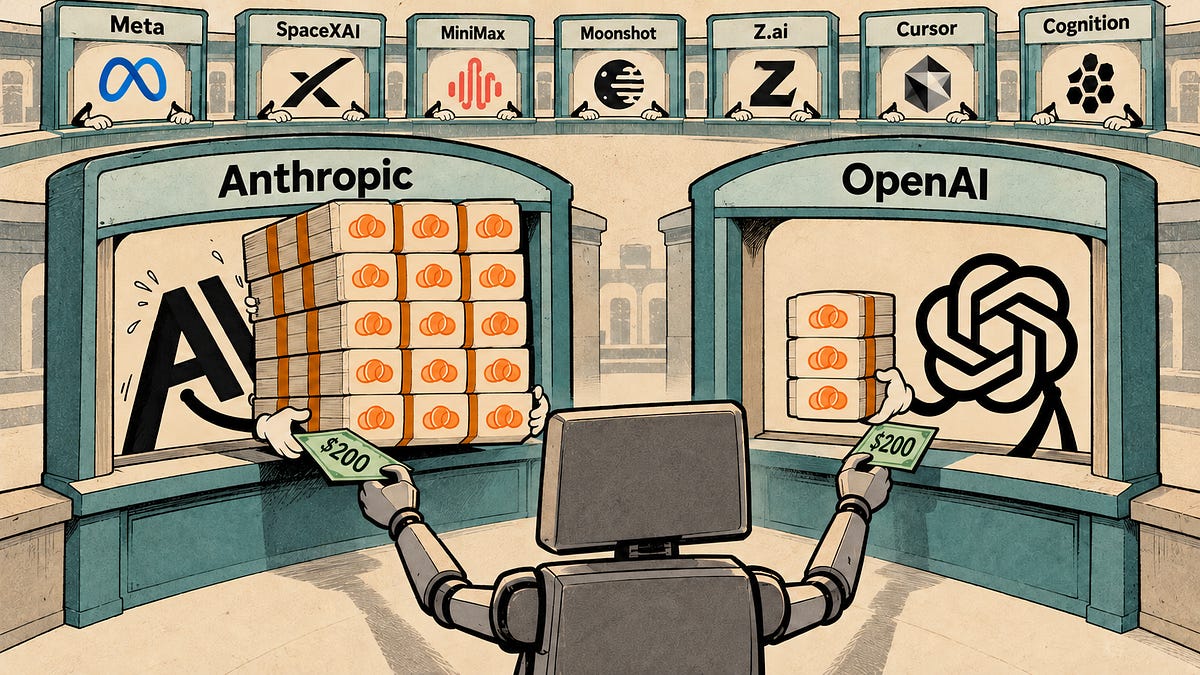
Image: The New Stack
Why it mattersA team weighing Muse Wonder against Fable 5.1 for daily agent work now has a reproducible head-to-head with real tokens and dollars attached, which the vendor benchmark table from either side alone could not give them.
A coding agent that passes most tests, costs more than the comparison, and finishes work the comparison refuses is three separate findings in one experiment. Jessica Wachtel at The New Stack ran Meta's new Muse Wonder against Anthropic's Claude Fable 5.1 on three agentic tasks, and reports a result any team choosing between the two needs all three parts of.
Wachtel ran the standard Muse Wonder through OpenRouter, served by Meta, and Fable 5.1 through Anthropic's API. Each model ran once per test at its default reasoning setting, where Meta's own published comparisons used maximum reasoning. A script graded every answer against keys built before either model saw them, and Wachtel calls out that another run could land differently.
Bug-fix result
Both models traced the first bug to the right file, even though the error message pointed somewhere else. Both fixed the third bug, broke none of 22 regression tests, and left the one wrong test alone. The second bug was the gap. Fable passed all six hidden tests. Muse passed five: its fix still sent the old attempt count to the job's failure event. Muse used about twice as many input tokens, so it cost about twice as much over the task, even with its lower per-token price. Both costs include prompt-caching discounts.
Incident replay
Both models scored 10 of 10 on an incident replay task. Each named config change CFG-4470 as the root cause, ruled out both decoy deploys, caught the slow clock on the checkout service, and listed all nine affected services in the right order. Fable got there in six turns and Muse took 13, reading more data along the way, though Muse spent less total time waiting on the model. The cost gap repeated: more Muse tokens, higher Muse total despite the lower list price.
The third test, which Fable refused
The memory test is where the numbers split from the model-quality question. Wachtel followed Anthropic's guidance to discard refused output while keeping her own messages in the chat, so Fable still had every rule she had written for it. An earlier attempt that kept refused turns in the history drew 45 refusals. Anthropic suggests a fallback to another Claude model for refused requests, and its own Fable 5.1 benchmarks hand cyber-flagged tasks to Claude Opus 4.8. Wachtel did not add the fallback, because that would test a different model.
Fable refused 34 of 50 turns on the webhook project the test is built around. Muse finished the job and scored 25 of 25. Because Fable refused the work, the test says little about Fable's long-session memory; what it does say is how each model treats everyday backend code that a cyber filter can mistake for security work.
Totals and the practical read
Over all three tasks, Muse cost $2.25 and Fable cost $1.85. The Fable total includes $0.57 and 119,187 input tokens from the memory session it then refused. On the two tests both models finished, Muse cost $1.78 to Fable's $1.28. Wachtel's own call is Fable 5.1 for agentic debugging and investigation, because it was more accurate, used fewer turns and cost less overall in her tests, and Muse Wonder as the alternative when Fable's cyber safeguards block work from happening.
For a team paying for agents all day, the useful piece is a shape of result the vendor tables cannot produce: a credible model that trails the leader on fine-grained correctness, costs more per task because of its token appetite, and finishes a specific kind of job the leader refuses. The practical answer is still to run both models on your own code before committing to one.
Source
This item was written by an AI system from the linked source. Reveneau is responsible for what it publishes.
Get AI News in your inbox
New developer tools, model and agent releases, and how teams are actually using them to release software. Short, and only when there is something worth reading.