AI NewsGo-to-marketReported
Nozzle finds 8 percent of Google results served to trackers are fake
Nozzle looked at 27.5 million Google results pages from 49 countries and found that since 20 September, around 8 percent carry a complete, normal-looking page whose results have been swapped out.
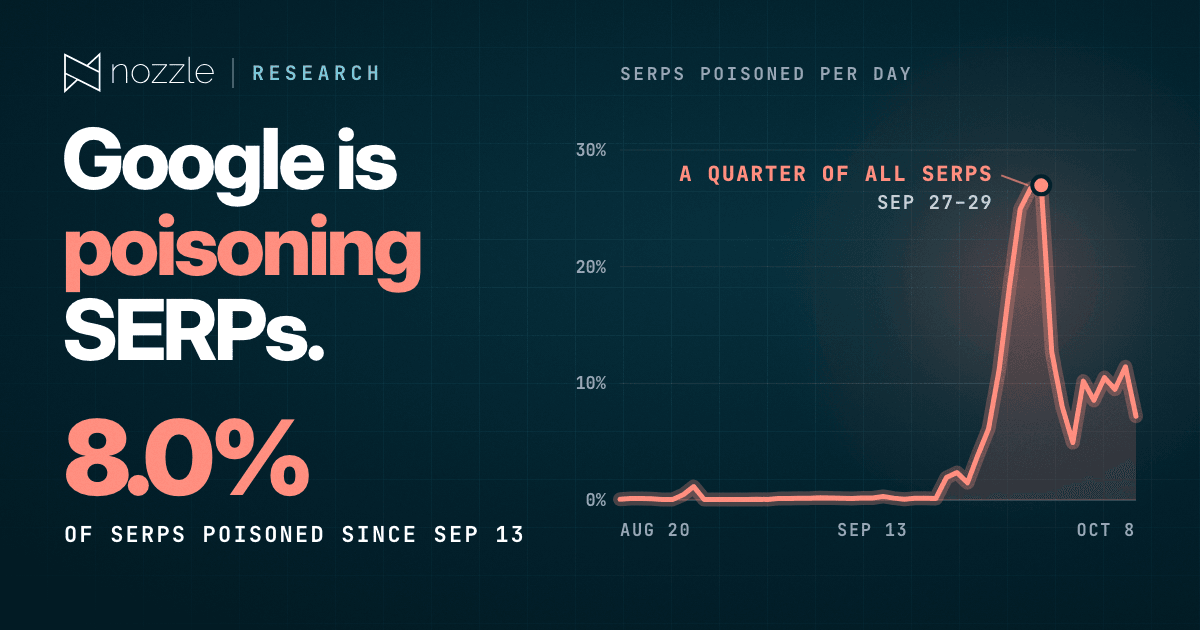
Image: Nozzle
Why it mattersA rank tracker reading a poisoned results page sees the wrong sites in the top 10 nearly 60 percent of the time, so a dashboard move no longer confirms a real move in search.
A rank tracker dashboard showing your site has dropped out of the top 10 may now be reading a page Google served the tracker and nobody else. Nozzle, a SERP tracking platform, published the first large study of this effect, and Search Engine Journal reports on it in a piece by Roger Montti.
Nozzle looked at 27.5 million Google results pages across 49 countries between 20 August and 9 October. Before 13 September the share of pages whose results looked different from the ones a person would see on the same query was 0.17 percent. Since 20 September that share has averaged 8.0 percent, peaking at 27.0 percent on 29 September and settling at 5 to 11 percent a day from 1 October.
What a poisoned page looks like
Nozzle writes that these are "complete, normal-looking pages whose results have been swapped out." The ten blue links are present, the layout is unchanged, and the page returns as a normal 200 response. The difference is in which sites are shown.
On a poisoned page, Nozzle finds that only 20.7 percent of the sites that were in the top 10 the previous day are still there, against 88.5 percent on a normal page. On average a poisoned page is missing 1.79 of a tracker's known sites from the top 10, against 0.23 on a normal page. 58.6 percent of poisoned pages are missing one of the tracked sites entirely from the top 10, against 2.7 percent on a normal page.
AI Overviews appear on 34.9 percent of poisoned pages against 54.2 percent of normal ones. People Also Search For blocks appear on 52.7 percent against 87.2 percent. Image packs run the other way, at 44.2 percent against 23.0 percent, as do forum blocks, at 27.0 percent against 20.5 percent.
Which content fills the gaps
The sites that gain the most on a poisoned page are social platforms. Reddit appears on 28.8 percent of poisoned pages against 20.8 percent of normal ones, and Facebook on 33.8 percent against 28.3 percent. LinkedIn, Instagram and Quora each gain two to three points. MapQuest and Yelp appear less often, each by about two points.
Where it is worse and better
Legal queries carry the highest rate at 15.9 percent poisoned, with a peak of 51.3 percent on 27 September. Home services sits at 12.7 percent. Pets is the lowest at 4.3 percent. By country, Austria is at 18.8 percent and South Africa 18.4 percent. The United Kingdom is at 3.0 percent and the United States at 8.5 percent.
Why these numbers matter even when they recover
80 percent of poisoned queries show only one poisoned page before returning to normal, and 77.9 percent recover within three days, with a median of two days. For a rank tracker that polls each keyword once a day, a two-day run can produce a large drop on a dashboard that a client reads on day one, and a recovery that nobody records on day three. Nozzle's view is that the pages served to a tracker are a response to AI scraping, and that rank trackers are caught in that response.
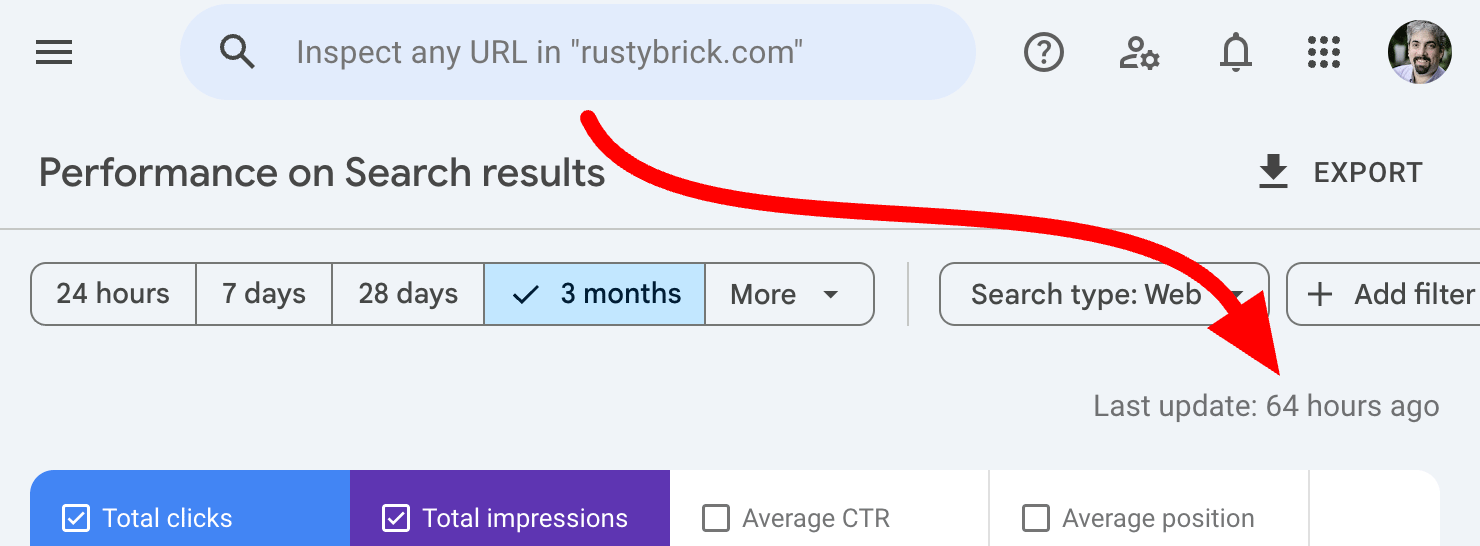
A team that reads any SEO or AI-visibility dashboard built on Google scraping has to assume that a single-day movement on a single tool is no longer evidence of a real ranking change. Two practical checks: cross-read against Google Search Console for the queries that moved, and treat a change seen only in one tool as unconfirmed until a second tool or a traffic figure shows the same thing.
Source
- Poisoned Google SERPs, Nozzle.
- Analysis: Google Is Poisoning Search Results For Rank Trackers, Roger Montti on Search Engine Journal.
This item was written by an AI system from the linked source. Reveneau is responsible for what it publishes.
Get AI News in your inbox
New developer tools, model and agent releases, and how teams are actually using them to release software. Short, and only when there is something worth reading.