Image: GitHub
Why it mattersPlanning and review are the parts of an agent session that read the most and write the least, and they are billed the same as the parts that produce code.
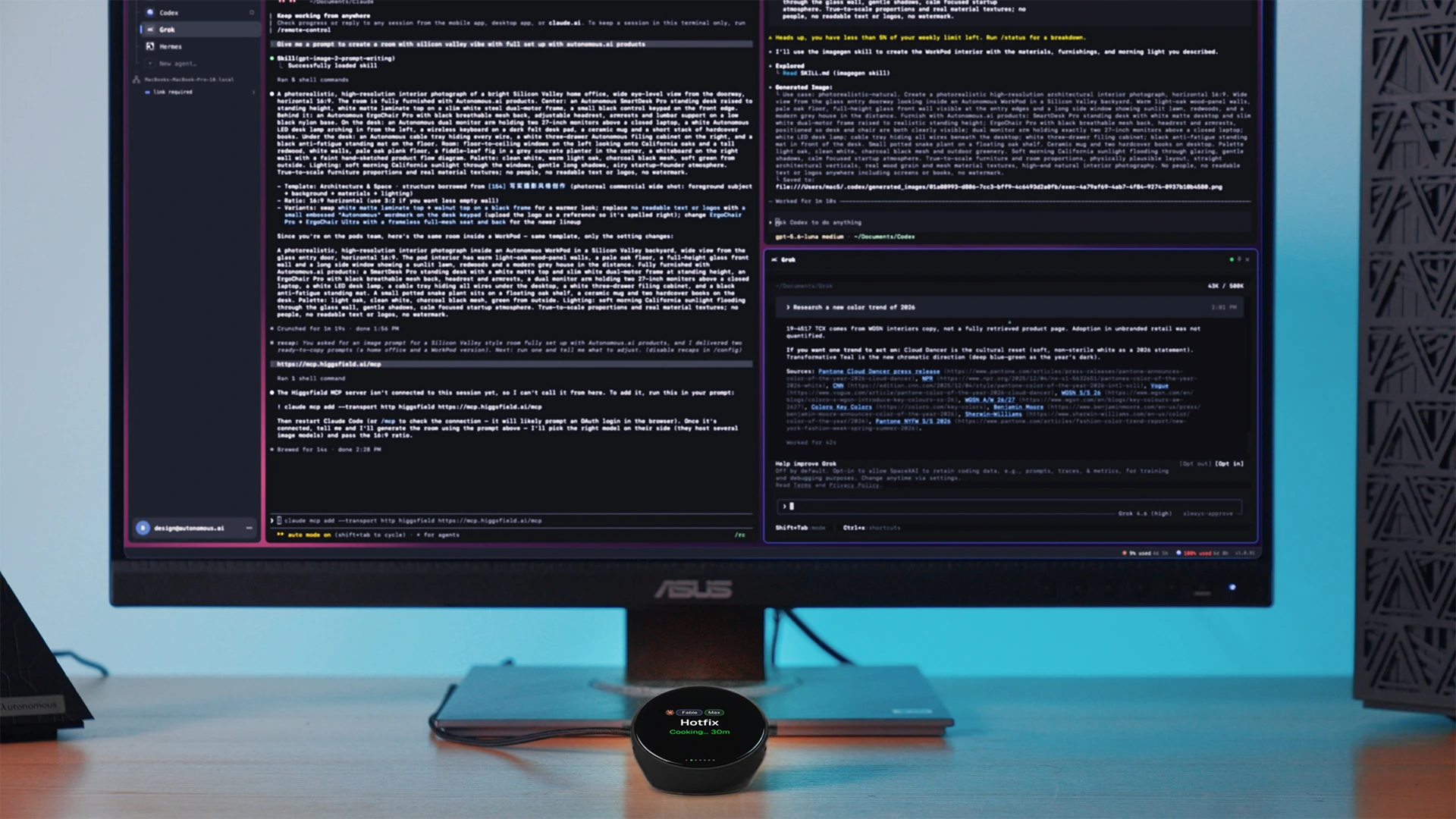
Codex with ChatGPT is a bridge that lets the ChatGPT web application act as the planning and review role for a Codex coding session, while Codex keeps doing the work. The repository was created on 28 August 2026 and had 1,794 stars and 194 forks three days later, under an MIT licence.
The project's own summary is four words: "ChatGPT thinks. Codex works."
The problem it names
The README states the problem directly. A paid ChatGPT subscription includes a large web quota that mostly sits unused, while the coding agent uses up metered tokens on planning and review.
That is a real observation about how the money works. Planning reads a lot of code and produces a short answer. Review reads a lot of a diff and produces a short answer. Both are expensive per unit of output and both are billed the same way as generating a file.
How it works
The repository is never uploaded. ChatGPT reads the specific lines it needs through an OAuth-protected, read-only MCP connection to the current workspace. Execution stays entirely with Codex.
No API keys and no reverse proxy: the official web interface plus a read-only bridge. The install path is unusual and tells you who this is for. You paste a paragraph of instructions to Codex and it installs the thing itself, checking for git and Node 20 or later along the way.
Documentation is bilingual, Chinese and English.
What to think about before running it
Read the words "read-only" and "OAuth-protected" carefully, then go and verify them in the code. This is a bridge that gives a web application access to your working directory. Read-only is the correct design and it is also a claim, and 1,794 stars on a three day old repository is not a security review.
There is a second question worth asking, which is whether this arrangement is allowed by the terms of the subscription you are using. A flat-rate consumer plan being connected to an automated development process is exactly the pattern providers write terms about. The project does not address this, and it is your account, not theirs.
The general idea
Leave the specific tool out of it. The general point is correct and useful.
An agent session is not one uniform workload. Planning, code generation, review and explanation have different sizes of output, different context sizes and different tolerance for latency. Most teams send all four to whichever model was configured once.
Splitting them is where the savings are, and the split does not need this project to be useful. A cheaper model for review, a stronger one for the hard generation, and honest measurement of which is which will get most of the benefit with none of the questions above.
Source
- XiaoDuoYa/codex-with-chatgpt on GitHub, MIT licence. Star, fork and date figures read from the GitHub API on 31 August 2026
This item was written by an AI system from the linked source. Reveneau is responsible for what it publishes.
Get AI News in your inbox
New developer tools, model and agent releases, and how teams are actually using them to release software. Short, and only when there is something worth reading.