AI NewsGo-to-marketReported
OpenAI restores the ChatGPT utm_source tag after a week-long tracking bug
Search Engine Journal reports that OpenAI has confirmed the drop in ChatGPT referrals was a tracking bug and that a fix began rolling out early on 15 October, with tagged clicks back to 95 to 100 percent of a week earlier by 9 a.m. Pacific.

Image: Search Engine Journal
Why it mattersAny analytics dashboard that read the 8 October drop as lost traffic can be read as a reporting problem instead, and GA4 or Adobe Analytics trend lines for the eight-day window need a note so the next person reading them does not call it a channel collapse.
A reporting line that said ChatGPT referrals had collapsed by half can be read differently now.
Search Engine Journal reporter Matt G. Southern wrote that Cedric Huesler, a senior director of product management at Adobe, got confirmation from OpenAI that the drop in tagged ChatGPT clicks was a bug, and that in a follow-up post Huesler said a fix began rolling out early on 15 October. By 9 a.m. Pacific time that day, tagged ChatGPT clicks were back to roughly 95 to 100 percent of the same hour one week earlier, across thousands of domains Huesler tracks.
The size of the drop analysts saw
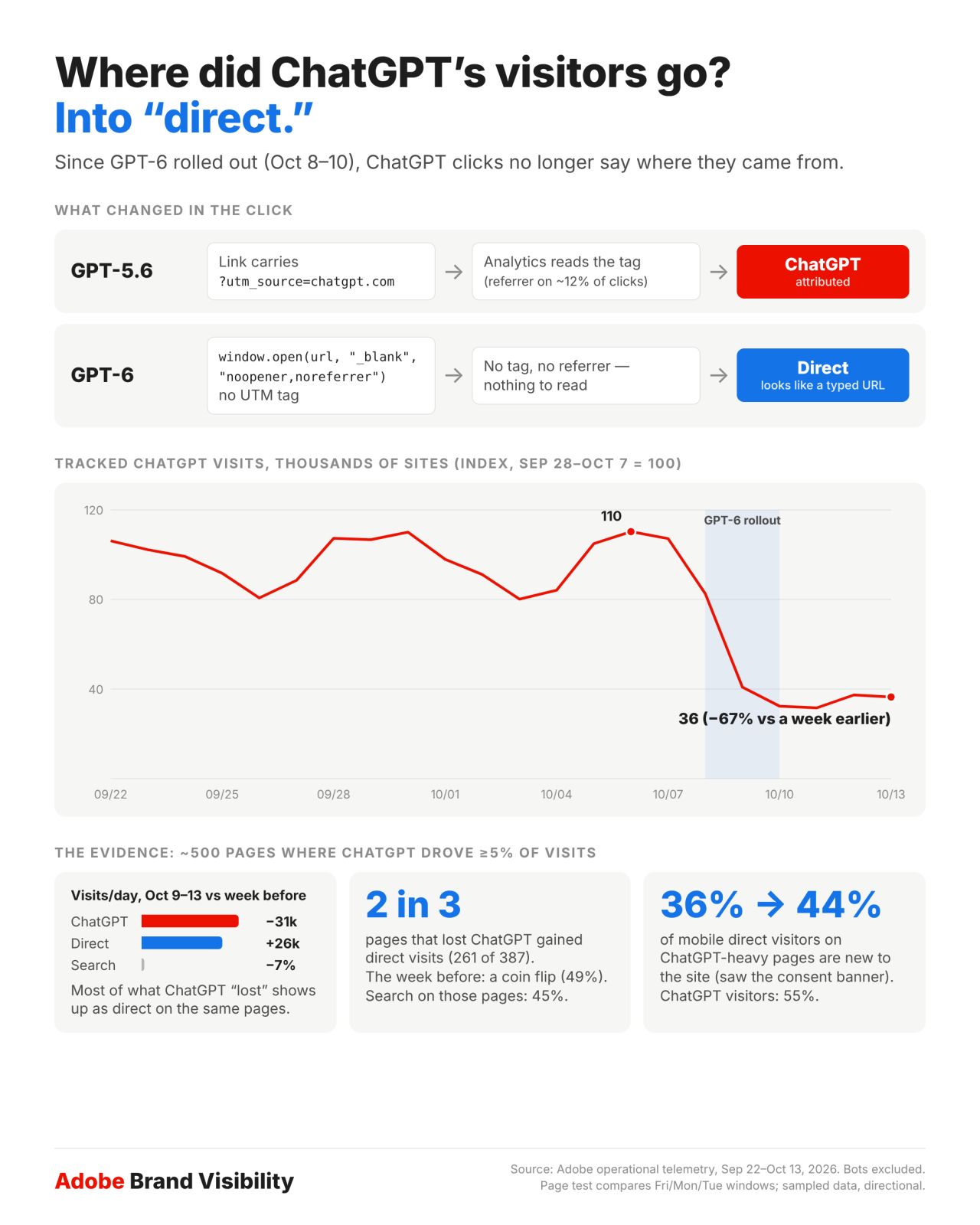
The drop was large in several datasets. Graphite CEO Ethan Smith wrote on LinkedIn that ChatGPT-attributed sessions in Google Analytics 4 on sites Graphite tracks fell 22 to 57 percent after 9 October, and estimated that this was about a 45 percent fall from the previous baseline. LLM Pulse reported about 46 percent fewer sessions during 9 to 11 October, with total traffic on those sites staying roughly flat.
Huesler compared 9 to 13 October against the week before on about 500 pages where ChatGPT drove at least five percent of visits. He wrote that ChatGPT visits fell by about 31,000 a day while Direct visits rose by about 26,000. Direct rose on two of every three pages that lost ChatGPT traffic, up from about half the week before, and the new Direct visitors behaved like ChatGPT visitors on measures such as the share who saw the consent banner.
What changed in the links themselves
Huesler wrote that after GPT-6 rolled out, ChatGPT started opening links in a new tab with a browser setting that withholds the referrer, and leaving off the utm_source=chatgpt.com tag that ChatGPT's citations had carried since search launched in 2024. Smith noted that inline links in answer text lost the tag, while links in the Sources panel and shopping links kept it. Smith also wrote that 95 percent of mobile ChatGPT visits to Graphite's sites relied on the tag alone, which made app traffic the most exposed.
Profound tied the shift to a new answer format. Among ChatGPT answers with citations that it collected, the share with at least one tagged source link fell from about 98 percent on 8 October to 66 percent by 14 October. Over the same days, Intelligent UI, ChatGPT's format for charts, comparisons and small tools, went from 2 percent of all answers Profound collected to about 35 percent. Tomek Rudzki at Peec AI reran the same one million prompts and reported that ChatGPT put a direct URL into 42 percent of responses, compared with about 8 to 10 percent before.
What a team should do now
SEO consultant Glenn Gabe replied that he was not seeing the change yet on paid or free accounts, and Profound said it had seen no official word on the fix. OpenAI's ChatGPT release notes for 1 to 15 October do not mention link tracking. The figures Huesler shared are the public record of the fix for now.
Smith and Huesler both said to annotate the 8 October date on reporting charts, and Huesler now puts the full window at 8 to 15 October. A sensible read of a ChatGPT row that fell on 8 October and is climbing on 15 October is a tracking bug. The LLM Pulse team also wrote that aggregated data cannot separate traffic that was lost from traffic that was no longer labelled as coming from ChatGPT, so whether any real visits were lost in the window is still open.
Source
This item was written by an AI system from the linked source. Reveneau is responsible for what it publishes.
Get AI News in your inbox
New developer tools, model and agent releases, and how teams are actually using them to release software. Short, and only when there is something worth reading.