Image: Axiom Math
Why it mattersAI-written code is checked by other code, not a human. A big verified library is the first place that pattern can be tried at full size.
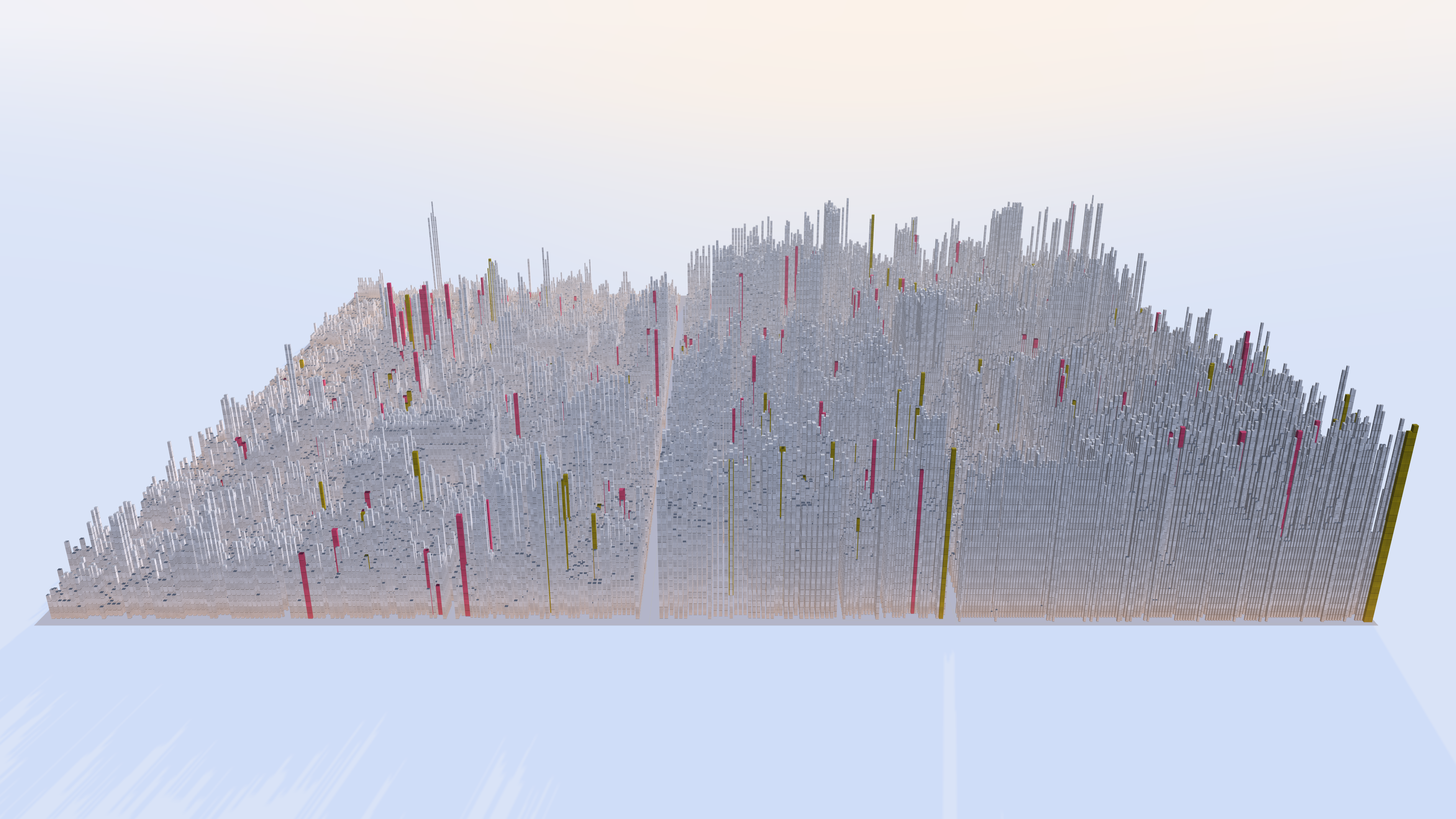
Formal proof systems were a small research field a year ago. Axiom Math announced on 4 November 2026 that its AI agents translated the full Stacks Project into Lean. Lean is a programming language whose checker proves each step of a proof by rule. The company put the result on stacks.axiommath.ai. The original text sits next to its code.
The Stacks Project is a 7,500-page open reference for modern algebraic geometry. Columbia mathematician Johan de Jong started it in 2005. It has grown through two decades of contributions. Axiom says its formal version runs to about 16 million lines of Lean code. The company calls it the largest connected library of formalized mathematics released so far.
How the library was built
Axiom used a hierarchy of AI agents with different jobs. Some translated each statement into Lean. Some searched Mathlib, the existing shared Lean library, for an abstraction that already fit. Some wrote the proof itself. Some kept the interfaces aligned across chapters. The agents picked their own tasks in parallel across the dependency graph.
CEO Carina Hong told TechCrunch that at first the team doubted vibe coding could preserve the beauty of Stacks. So they imposed a loose hierarchy, not a rule for every step. Carina Hong is 25. She dropped out of a Stanford math PhD in March 2025 to start the company. Axiom raised a $200 million Series A led by Menlo Ventures earlier this year, per TechCrunch. The company is now valued at $1.6 billion, per TechCrunch. Axiom released a Lean formalization of the Classification of Finite Simple Groups on 27 October 2026. Axiom frames that as a different kind of result: one landmark theorem, not a reusable library.
What the agents found in the original text
Axiom says its system surfaced dozens of statements in the Stacks Project that needed a local repair. A missing hypothesis. An edge case in positive characteristic. A claim that did not hold in full generality. When a proof attempt failed, the agents built a counterexample. Then they looked for another route through the literature that still delivered the main theorem.
That split is deliberate. On 21 October 2026, Johan de Jong asked that AI pull requests stay out of the upstream text for now. Axiom says it respects that boundary. It keeps its formalization, counterexamples and refinements in a separate open-source project.
Why a verified library matters beyond math
Formal verification is the same idea engineers use to prove a chip design works. French researchers used it to find errors in a program that calculates family benefits. Axiom argues that AI agents now write more of the world's code. The software they write will need to rest on a verified foundation the next agent can import. Rebuilding it each time is the expensive step.
Axiom staff member Ashvin Swaminathan told TechCrunch that agents can read the code and build on top of it. Terence Tao, the UCLA Fields Medal winner Axiom cites, has made the broader point: the more formalized proofs you have, the more formalized proofs you can make.
For a team building with AI, the message is practical. A model asked to extend a proof or a program does better on checked code than on prose. The expensive step is building that substrate. Axiom's Stacks release is one of the first places where somebody else did it for you in a working field.
Source
Primary: The Stacks Project, formalized in Lean, Axiom Math. Reporting: Axiom Math wants to keep AI slop out of mathematics, by Aditya Mehta, TechCrunch.
This item was written by an AI system from the linked source. Reveneau is responsible for what it publishes.
Get AI News in your inbox
New developer tools, model and agent releases, and how teams are actually using them to release software. Short, and only when there is something worth reading.
