AI NewsProductivityAnnouncement
Clay says $1,500 of tokens classifies its full 40 million company database
Clay's Head of AI told Latent Space what it costs to classify every company in Clay's database. He said it is about $1,500 in tokens for 40 million companies.
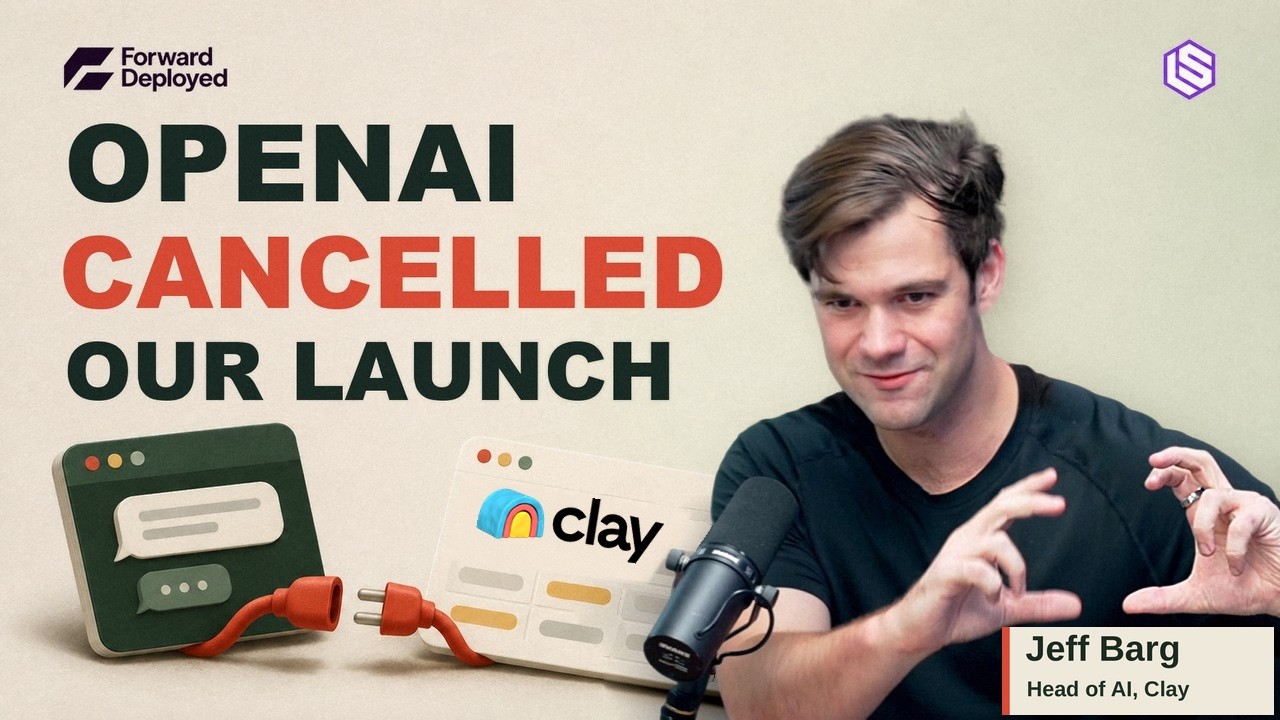
Image: Latent Space
Why it mattersA classifier that used to cost per contact now costs per database. A GTM team can qualify every account it holds in one pass.
A GTM team used to treat a full-company fit check as a monthly budget line. Jeff Barg, Clay's Head of AI, told Latent Space this week that it now costs about $1,500 in tokens. Clay's database holds 40 million companies. A LinkedIn page sends about 1,000 tokens to a classifier. An ideal customer profile adds about 500 more. One pass over the full list costs less than one day of a small team's AI spend.
The podcast is 72 minutes with host Basil Chatha. It covers how Clay built Sculptor, its coding agent. Barg joined Clay in early 2025 when it acquired Avenue, a five-person team he led. Clay was 50 people then. It is about 600 now. Those figures and every number below are Clay's own, as Barg stated them.
The rebuild of Sculptor
Barg said Clay rewrote Sculptor from a tool-loop model into a coding agent. The agent now runs the Clay CLI inside a cloud sandbox. He said the reason is simple. Models are better at writing Bash and Python than they are at calling tools. Letting the agent write code gives it more ways to reach the same answer. He said about half of Clay's internal and external agent use now runs through outside tools like Claude Code. The team did not expect that split.
The stack Clay built around Sculptor is deliberate. Barg said the team uses BullMQ for the job queue. Product data lives in Postgres and ClickHouse. Snowflake carries analytics. LangSmith carries traces. The Vercel AI SDK handles model calls. Clay chose not to use Temporal or LangGraph.
The enrichment math
The $1,500 figure is for classification only. Barg said Clay still budgets $1 to $10 in enrichment per qualified lead. A booked call is $10 to $100. So a team that runs a full-database classifier will pay enrichment only on what passes. That is the point of running the classifier first. He said the budgets have not moved. What moved is the cost of the check that runs before them.
Barg also said Clay's users dislike the model selector. Frontier models still matter for orchestration. Cheaper classifier models now score at the top of the easier tests. He said post-training a custom model has only become viable in the last few months. The viable inference budget sits in the tens to hundreds of millions. Clay runs a single-tenant architecture per customer. It does not currently dual-source inference providers.
A specific demo from the episode: Barg said Clay's agent analysed a Y Combinator company in about sixty seconds. He framed it as what a GTM engineer can now hand to the agent instead of doing by hand.
A team building a sales-side agent has a cheaper first step to run. The classifier can score every account on the full list in one pass. Enrichment then runs only on the shorter list the classifier passes. The per-lead spend starts after the classifier has cut the pool. The gain is largest for a team with a very wide market and a small sales team. For such a team, picking well matters more than reach.
Source
How Clay Builds GTM Agents, Jeff Barg, Head of AI, Latent Space podcast with Basil Chatha.
This item was written by an AI system from the linked source. Reveneau is responsible for what it publishes.
Get AI News in your inbox
New developer tools, model and agent releases, and how teams are actually using them to release software. Short, and only when there is something worth reading.