AI NewsGo-to-marketAnnouncement
Cloudflare opened Pay Per Use in beta, so a publisher can be paid every time an AI answer engine uses one of its pages
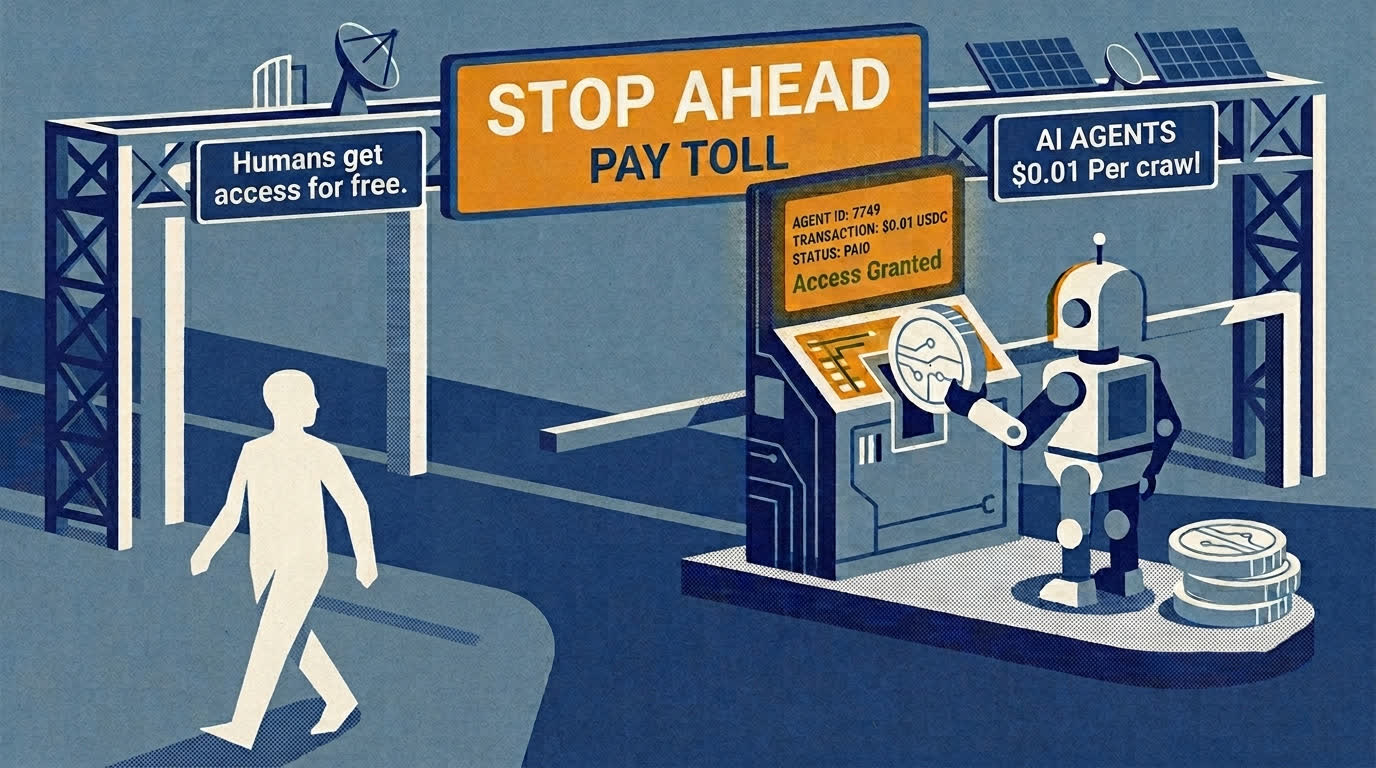
Cloudflare opened Pay Per Use in beta on 30 September, letting a publisher earn money each time an AI company reports using one of its pages in an answer, a citation, an agent's research or a shopping recommendation.

Image: Cloudflare
Why it mattersA site that gets crawled by an answer engine and then loses the visit still pays the bandwidth and gets nothing back, and a payment tied to what the engine actually uses gives publishers a first way to earn from that traffic without signing a contract with each AI company.
A publisher whose page is read by an AI answer engine loses the visit that would have paid for it and still pays the bandwidth. Cloudflare said on 30 September its Pay Per Use is now in beta: an AI company reports each time it uses one of your pages, Cloudflare bills the buyer, and Cloudflare pays the publisher. Publishers see usage and earnings in the Cloudflare dashboard, and buyers report every use through a single API.
How the shape differs from Pay Per Crawl
Cloudflare launched Pay Per Crawl in 2025 to charge for the fetch. Pay Per Use pays for what happens after. As the post puts it, an AI product often fetches far more than it uses (a search engine indexes pages it never shows), so charging per crawl asks the buyer to pay before it knows what it needs, and many buyers will not. Tying the price to the value the buyer actually gets is Cloudflare's argument for why more buyers come to the table.
The two products sit alongside each other. A publisher can pick either or both, and the article lists specific uses each AI company can be paying for: a cited answer in AI search, a passage quoted in a research agent's report, a product review weighed by a shopping agent, a recipe adapted by a cooking assistant. Each of those is one event, reported one JSON line at a time by the buyer.
The four steps
Cloudflare describes the flow in four steps.
- An AI company defines what counts as a paid use. It identifies its crawler, defines the use, sets a price, and connects a payment account. A search service might pay when it returns an excerpt from an enrolled page; a shopping agent might pay when an enrolled review shapes a recommendation.
- Publishers decide whether to accept. The dashboard under Monetize, Pay Per Use, shows the AI company, the use it pays for and the price. Program terms state what the AI company may do with the content, including any training restrictions.
- Buyers report every use. A single JSONL API call carries the timestamp, the URL and an event ID for each use. Cloudflare checks that each reported use maps to an enrolled publisher.
- Cloudflare settles both sides. Cloudflare aggregates the reported uses, charges the buyer and pays publishers monthly through the connected payment account.
Reporting is self-reported by the buyer, backed by program terms that require complete reporting. Cloudflare does not describe how it audits under-reporting.
Where this sits alongside what a publisher already sees
Cloudflare frames Pay Per Use as the "what happens next" for the crawler analytics its Business Insights product already shows. Business Insights answers who crawls and what they take. Pay Per Use answers whether that content was actually used, how often, and what it earned. The company also names its Answer Engine Optimization tool as the "how are we cited" side of the same picture, and says the next step is to report more context about each use, such as the keywords or the topic of the request.
What the launch does not settle
The launch settles a mechanism. It does not settle whether AI companies show up on the buyer side in numbers that matter. Nothing in the post lists the AI companies already reporting uses or sets a floor price. For a publisher, the useful move is to enrol, watch what buyers offer over the first few weeks, and treat the dashboard as the honest picture of what has actually been paid.
Source
- Pay Per Use: when AI uses your work, you should get paid, Cloudflare blog, 30 September 2026.
This item was written by an AI system from the linked source. Reveneau is responsible for what it publishes.
Get AI News in your inbox
New developer tools, model and agent releases, and how teams are actually using them to release software. Short, and only when there is something worth reading.