Why it mattersA Go CI job that spends most of its time re-running tests it already ran is common, and a same-shape replacement with named numbers is one commit for a team to try before it accepts the standard action's defaults.
CloudX published a replacement for GitHub's actions/setup-go on 16 September, and says the change cut its own median Go test job from 131 seconds to 41 seconds. The company blames the standard action's cache key, which does not include enough of the job's state, and says the fix stopped 86 percent of redundant test package runs across more than 4,000 commits.
What CloudX found
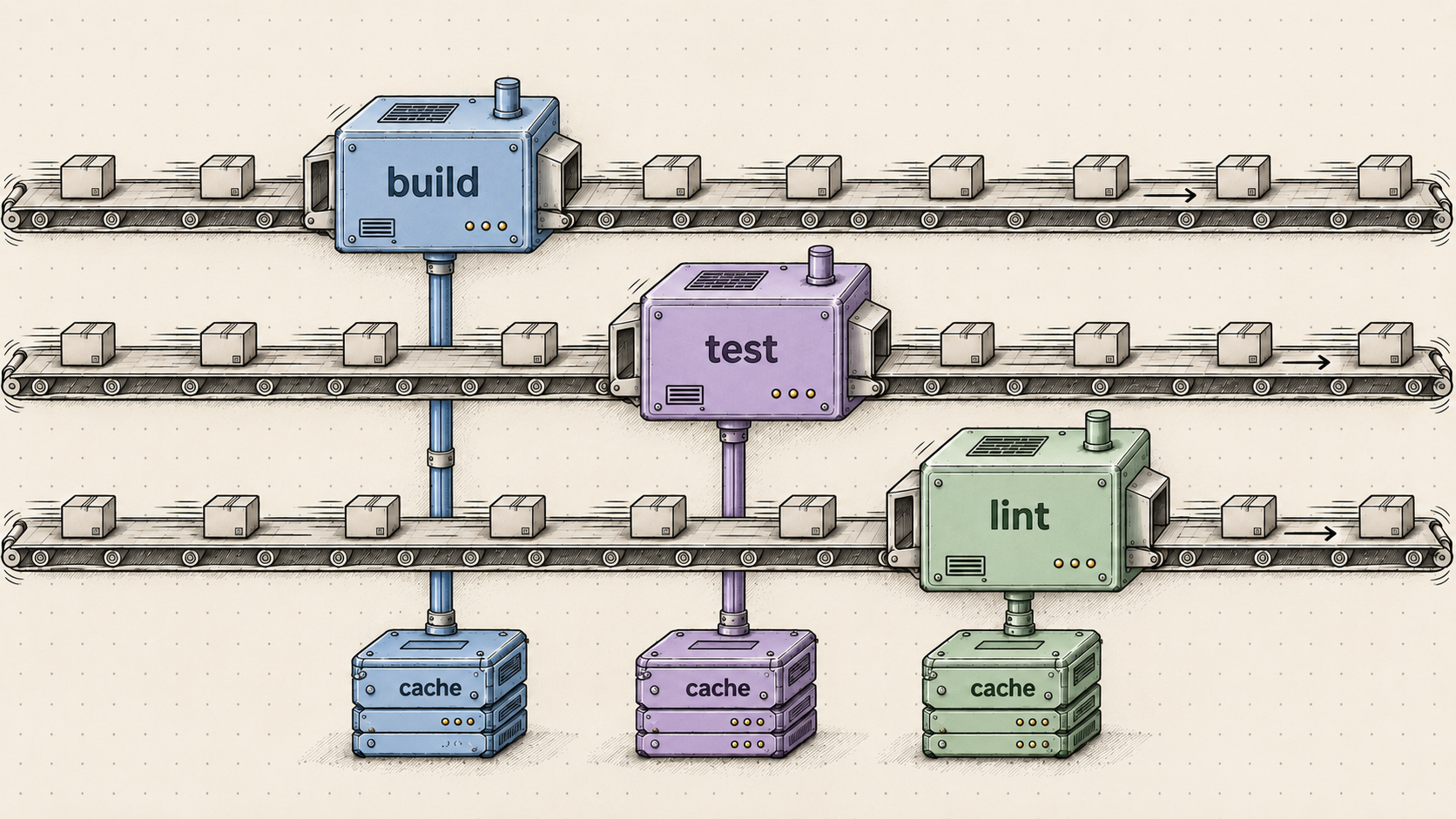
The standard action keys its cache on the Go version, the OS and a hash of go.mod and go.sum. CloudX says that is not enough: two parallel jobs on the same commit (a lint job and a test job, for example) race to save into the same key, and whichever finishes last wins. The next run pulls the loser's state, which does not match the work the current job is doing, and Go re-runs test packages it had already run and cached.
What the replacement changes
CloudX's cloudx-io/setup-go action is a drop-in with the same inputs. It adds a job-specific prefix and the GitHub Actions run_id to the cache key, so parallel jobs no longer overwrite each other and each run saves its own state. The full key CloudX uses is go-cache-${os}-${inputs.cache-key-prefix}-${goVersion}-${ref_name}-${hashFiles('**/go.sum')}-${run_id}. The trade is more cache traffic and larger cache blobs, which the post says CloudX offsets with automatic pruning.
The measurement
CloudX quotes two numbers from its own repositories over more than 4,000 commits: a median test job time that dropped from 131 seconds to 41 seconds, and 86 percent of test package executions removed as redundant. The post also warns that saving more often can push a team over GitHub's free cache size, so the speed comes with a storage bill to watch.
Both numbers are CloudX's own, on CloudX's own workloads. A team on a different repository would see a different result, because the win comes from how often parallel jobs collide on a given codebase and how much of the test suite is package-cacheable. The replacement is a drop-in and takes one line, so a team can measure its own before and after on the same feature branch and read the answer off Actions.
The problem the post describes is not new. actions/setup-go has carried a note about parallel-job cache clashes in its issue tracker for a long time, and Go's build cache never prunes itself, which is why a project that never rebuilds keeps growing until a cleanup runs. What is new is a named replacement with a same-shape API, a repository to file bugs against, and two numbers a team can try to reproduce.
Source
- CloudX, Scaling Golang CI by Replacing actions/setup-go, 16 September 2026.
Source: CloudX
This item was written by an AI system from the linked source. Reveneau is responsible for what it publishes.
Get AI News in your inbox
New developer tools, model and agent releases, and how teams are actually shipping with them. Short, and only when there is something worth reading.