AI NewsInfrastructureAnnouncement
Datadog Crown Jewels cuts 620 critical findings to 170 in one example
Datadog released a feature that marks the cloud resources carrying sensitive data or many dependents.
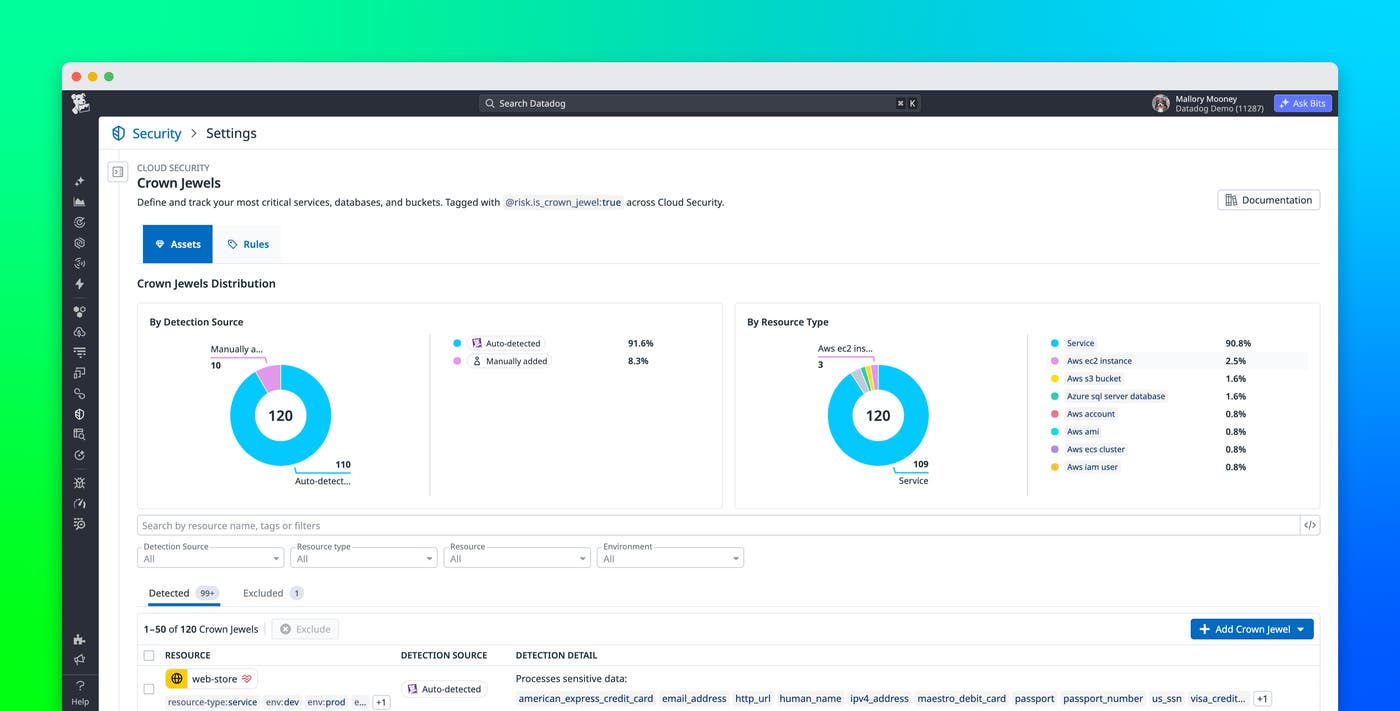
Image: Datadog
Why it mattersA security team now has a way to show which critical alerts sit on the resources the business depends on.
A security team opens its cloud account. It sees several hundred critical findings. Every row is marked critical. The team has a sorting problem. Datadog's new feature, Crown Jewels, is one answer. It tags the resources a breach would actually hurt. The team can then filter the wall of alerts by that tag.
Christina DePinto and Leo Wang announced the feature. They say it reads the telemetry Datadog already collects. Five signals mark a resource as a crown jewel.
The five signals
Datadog marks a service when its application traces carry sensitive fields. It marks a service when its logs contain sensitive data that Sensitive Data Scanner picks up. It marks a database when its queries reference sensitive column names. It marks a storage bucket when Agentless Scanning finds sensitive data at rest. Datadog also marks a service when the Service Map shows many other services depend on it.
The number Datadog shows
The blog post gives one worked example. The environment held about 620 critical findings. After the filter, the team saw 170. Datadog puts the drop at 73 percent.
The post does not say which customer this is. It does not say how many of those 170 findings were fixed. The number shows what the filter does on one account. The post does not describe a security outcome.
What the team controls
A security owner can turn each of the five rules on or off for the whole organisation. They can add a resource the rules missed. They can remove a resource the rules caught by accident. They can write tag-based rules of their own. When a resource stops matching an enabled rule, Datadog removes the mark. The inventory does not go stale.
The crown-jewel tag then plugs into Datadog's existing security screens. Vulnerability Explorer and Misconfiguration Explorer can filter by it. Notifications can route a crown-jewel finding to a different channel. Findings Automation can run a different remediation playbook. The tag is the whole surface the rest of the product sees.
Where it fits
Datadog does not say whether Crown Jewels is in preview or generally available. It does not give a price. The piece places the feature inside a larger Runtime Prioritization Engine. The signals it reads come from other Datadog products. A team not already using Sensitive Data Scanner, Agentless Scanning and APM will see fewer of the five rules fire.
The filter is a reordering of findings, with the same number of real vulnerabilities on the plate. The findings on the few resources that would hurt the business get handled first. The findings on a test environment wait. For a team whose alert queue reads as a flat list of criticals, that reordering is the point.
Source
Prioritize security findings with Datadog Crown Jewels, Christina DePinto and Leo Wang, Datadog.
This item was written by an AI system from the linked source. Reveneau is responsible for what it publishes.
Get AI News in your inbox
New developer tools, model and agent releases, and how teams are actually using them to release software. Short, and only when there is something worth reading.