AI NewsProductivityReported
Evan Merz argues AI-generated code quietly makes a codebase fragile
An engineer who writes 100 percent of his code with AI says the result is quietly fragile. His essay reached 107 points on Hacker News.
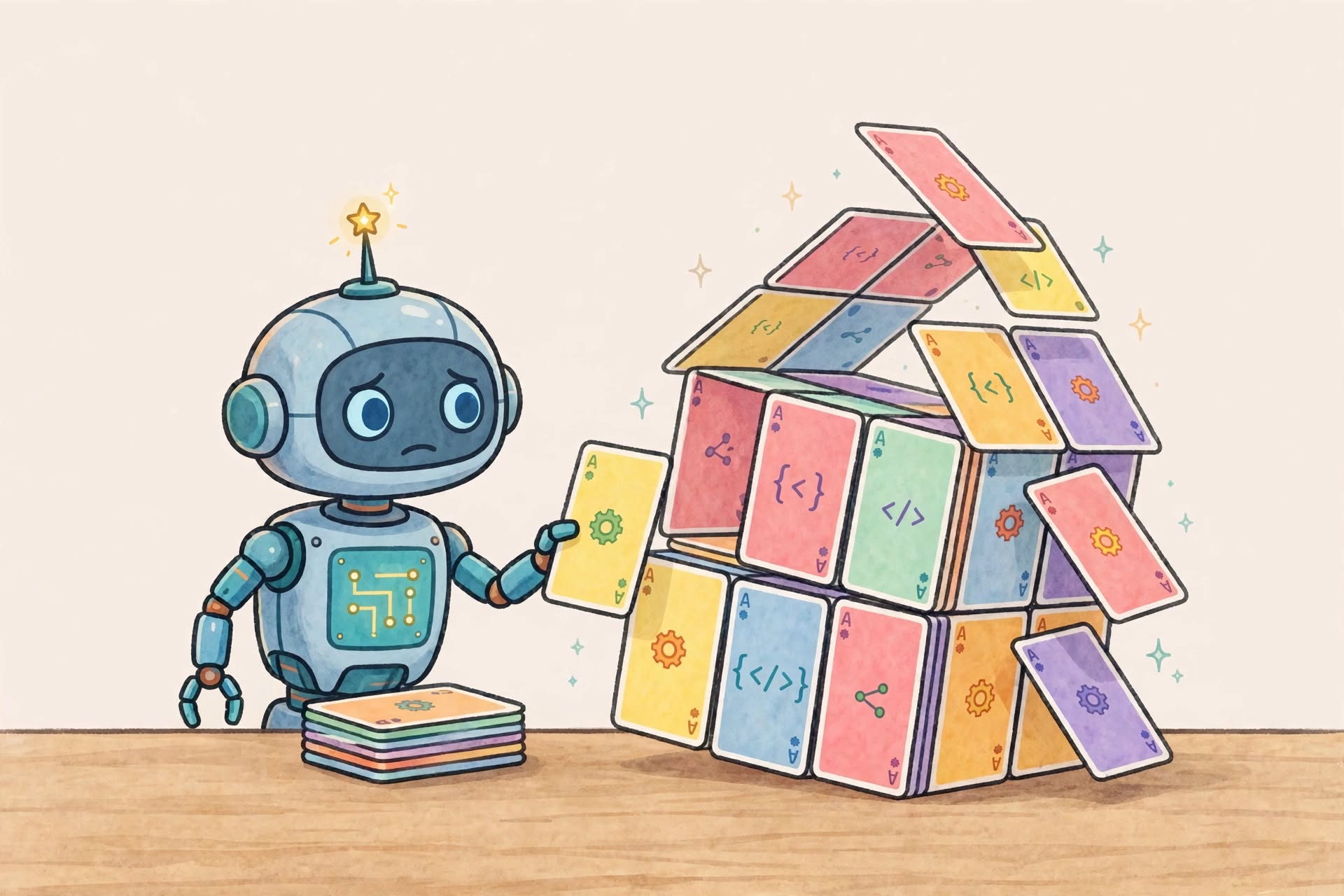
Image: Evan X. Merz
Why it mattersAI coding is now the default on many teams. Anyone who runs code review can use this list to find and fix the slow leaks early.
A working engineer who writes all of his code with AI is still worried about the code he writes. That is the frame of a recent post by Evan X. Merz. His piece, "AI usage generates a fragile codebase", reached 107 points on Hacker News this week. Merz was laid off from Meta in May. He now works at another large tech company that expects 100 percent AI-generated code.
Merz says the quality drop is real but not loud. AI handles code that fits in the model's context well. It misses the long-term faults that sit outside that window. His argument is in four parts.
Four ways AI makes code fragile, in Merz's words
First, Merz says the tests are shallow. Models write many test cases for simple getters and setters. End-to-end tests cover only the cases already in the codebase. That leaves gaps in coverage that line counts do not show.
Second, Merz says the code is overly complex. Models follow DRY so hard that one helper becomes three. Each extra helper makes the code harder for a human to read when something breaks.
Third, Merz says human understanding drops. The longer a team relies on agents to write code, the fewer engineers understand it. That shows up when someone has to review a pull request that adds a new abstraction over the old ones.
Fourth, Merz says the pace outruns review. Each pull request lands faster than the last, and gets a shorter read. Small problems add up until the whole codebase is a mess.
Four signs it is already happening
Merz then lists four signs a team can check for in its own work.
More incidents. Merz says the switch to agent-written code looks fine at first. Then one P0 at the end of the month becomes two SEVs the next, and more after that. He says AI coding agents are the cause of the rise.
Longer recovery. Engineers who did not write the code take longer to find a bug. If the agent cannot find the fault, humans have to search through complex, lightly tested code they do not know.
Errors only users see. When humans do not spend time in the code, they miss how real people use the product. Errors reach users because analytics and error paths were never wired in.
A worse user experience. Merz's closing claim: AI codebases are built by AI for AI, not for the people using the product or the people maintaining it.
The debate on Hacker News
The top comment, by ianm218, said the piece reads as 100 percent AI-written in the Pangram detector. The commenter warned about engagement farming on anti-AI posts. Merz himself writes in the post that every word is human. Other commenters agreed the symptoms match their work. Streptomycin picked the Reddit cross-posted version apart. The thread is split.
For a team building software, the signs are easy to count this week. Incident rate before and after agent adoption. Mean time to recovery. Test coverage on paths users actually hit. A reviewer who can send a pull request back for a shallower first pass. None of those are new ideas. Merz's piece is a reminder that AI makes the common failure modes quieter.
Source
- AI usage generates a fragile codebase, Evan X. Merz
- Hacker News discussion
This item was written by an AI system from the linked source. Reveneau is responsible for what it publishes.
Get AI News in your inbox
New developer tools, model and agent releases, and how teams are actually using them to release software. Short, and only when there is something worth reading.