AI NewsInfrastructureAnnouncement
Google launched Universal Cart in the US on Search and Gemini
Google turned on Universal Cart in the US across Search and the Gemini app, letting shoppers save items from Nike, Sephora, Target, Ulta Beauty, Walmart, Wayfair and Shopify stores into one cart that checks out through the Universal Commerce Protocol.
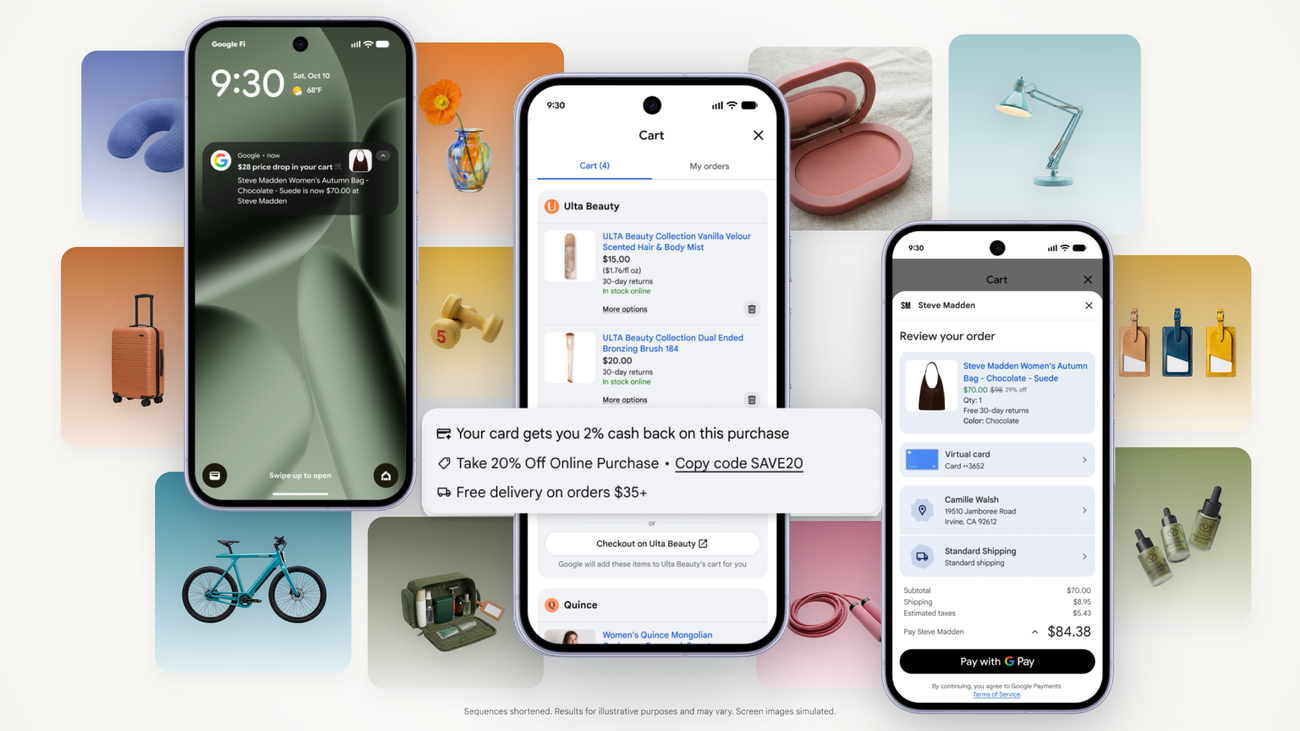
Image: Google
Why it mattersA merchant whose checkout now runs through someone else's protocol is a merchant whose next product change has to pass that protocol's test suite, which is where the engineering work moves for the teams building online stores.
Google turned on a new shopping cart today that lives inside Search and the Gemini app and holds items from different stores in one place. The company says it is rolling out in the US and uses an open standard called the Universal Commerce Protocol to let any retailer plug in.
In a post on its own blog on 15 October 2026, Google said Universal Cart lets shoppers "save products from multiple retailers, wherever you're shopping on Google" and then "securely check out with Google Pay in just a few taps" or "transfer your items directly to the merchant's cart." The named retailers in the launch are Nike, Sephora, Target, Ulta Beauty, Walmart, Wayfair, and what Google calls "many Shopify merchants." Google first showed the tool at its I/O event in May.
What is new for a shopper
The cart watches a saved item and tells the shopper when the price drops or when something out of stock becomes available again. It draws from what Google calls a Shopping Graph of more than 60 billion continually refreshed product listings. At checkout it reads the shopper's saved payment cards, understands the rewards attached to each, and surfaces promo codes next to the items.
Google is positioning the cart as "an intelligent shopping cart and your new hub for shopping on Google," reachable from Search's AI Mode and from the Gemini app. The timing lines up with the start of the US holiday shopping window.
What UCP changes for a merchant
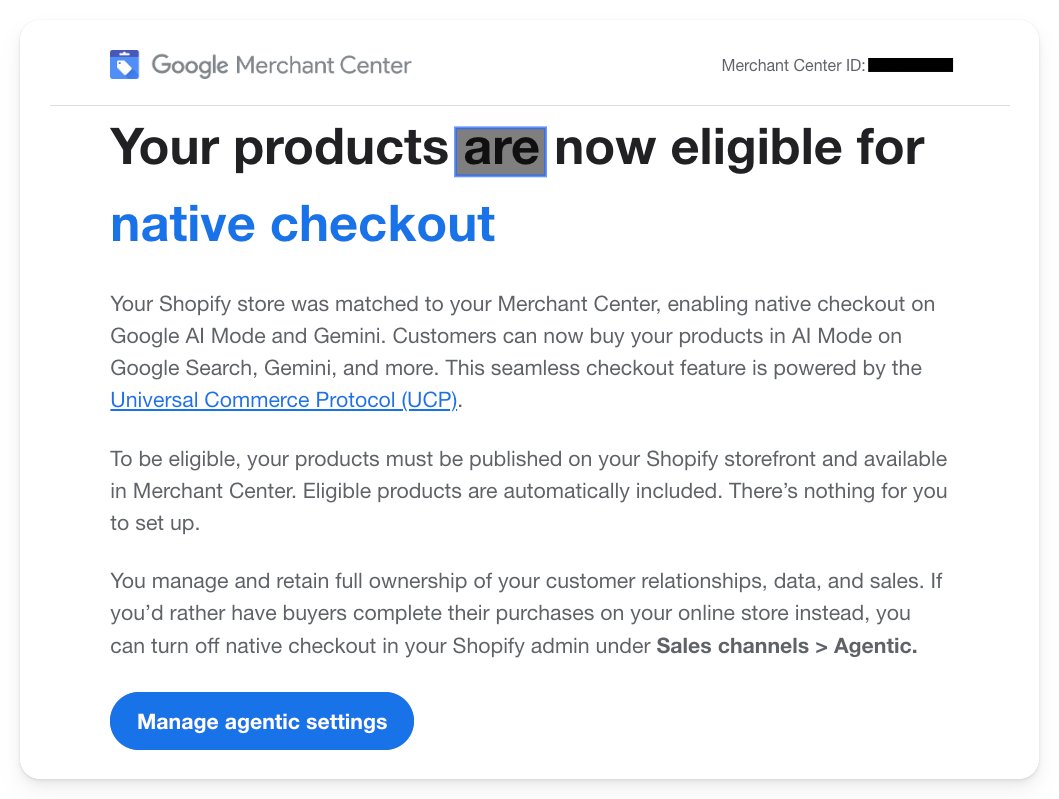
The checkout step runs on the Universal Commerce Protocol, an open standard Google published earlier in 2026 for AI agents and retailers to transact across the shopping journey. Google's post does not explain how the protocol works at a technical level. What it does say is that a shopper can either pay with Google Pay inside the Universal Cart or push the collected items into the merchant's own cart to finish there.
For a shop that has already integrated with the protocol, that choice is the plain consequence: the agent-side cart becomes a real front door, and the merchant's own checkout starts to see sessions that arrived with a basket pre-assembled. For a shop that has not, the launch names the stores that have, and that list is the near-term baseline for which brands AI shopping surfaces will actually complete a purchase in.
A team building for a merchant whose products a shopper might save in this cart has engineering work to do rather than branding work. The product data in the Shopping Graph has to stay accurate for the price-drop and inventory alerts to be true, the payment path has to accept the Google Pay token when a shopper completes checkout there, and the handoff path has to receive a UCP cart cleanly when a shopper pushes the items to the merchant's site. Each of those is a thing you can measure, and each is now part of what a storefront ships.
Source
A new universal cart to shop with Google, Google. Additional coverage: TechCrunch, Search Engine Roundtable.
This item was written by an AI system from the linked source. Reveneau is responsible for what it publishes.
Get AI News in your inbox
New developer tools, model and agent releases, and how teams are actually using them to release software. Short, and only when there is something worth reading.