AI NewsGo-to-marketAnnouncement
Kevin Indig pulls 52 AI search studies into one review
Kevin Indig pulled 52 studies on AI search into one post. Google is still central. Clicks are dropping by one to four in ten. Most brands get cited without being named.
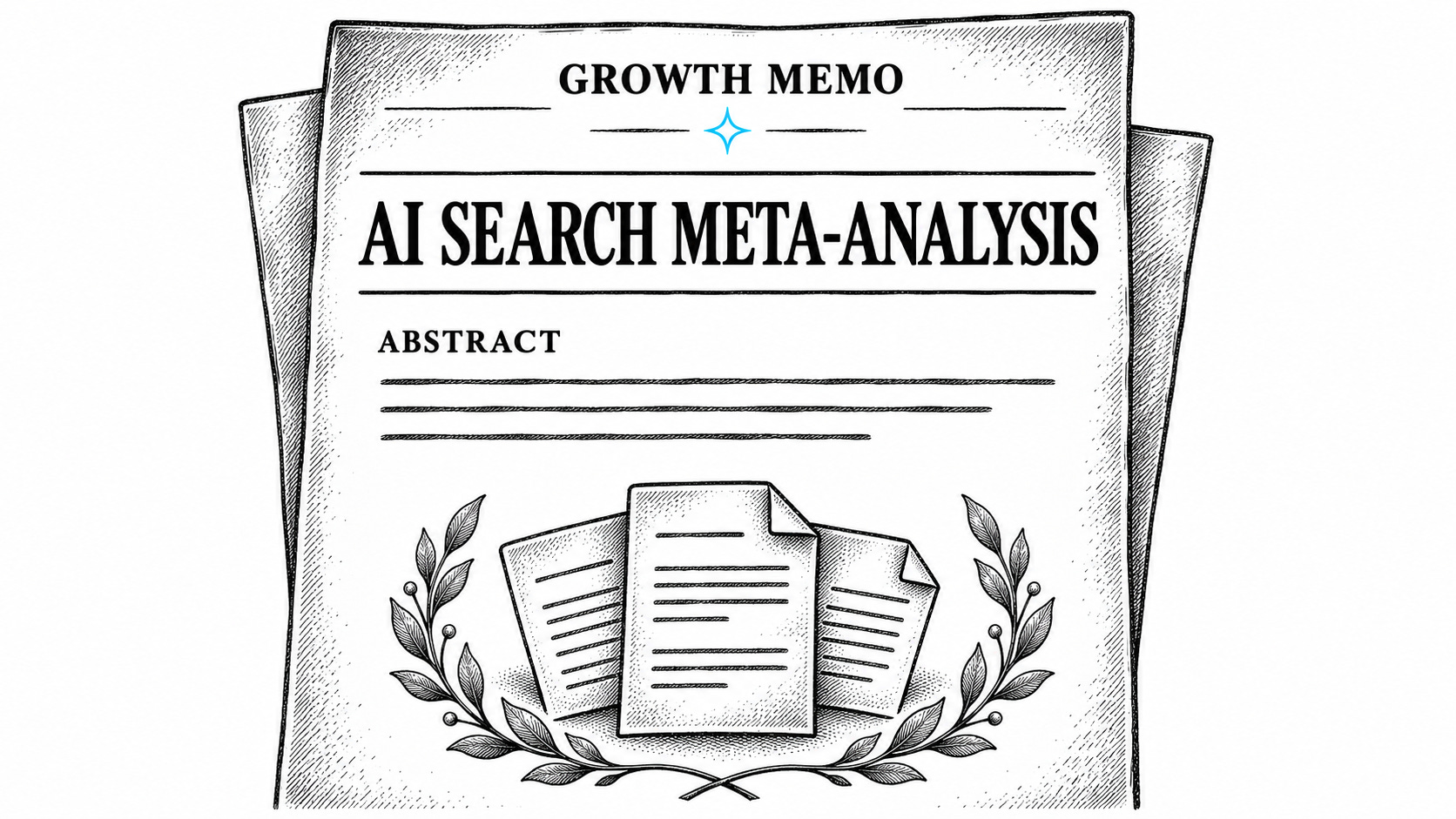
Image: Growth Memo
Why it mattersA GEO plan built on vendor benchmarks is built on one vendor. A plan built on 52 independent studies is built on facts that cannot be rewritten by one company.
Marketing teams keep building GEO plans on one vendor's chart. Kevin Indig, who writes Growth Memo, has published a free review of 52 separate studies. It looks at how AI search is changing clicks, brand visibility and buying. The picture is stranger than the conference shorthand.
What the review covers
Indig frames the review around five questions. How much of search is moving to AI? Do AI answers reduce clicks? What drives brand visibility inside an AI answer? How do people use AI when they shop? Are they ready to let AI buy things? He quotes each primary study with its sample size and method. He does not average the results into one number.
The headline findings
Google is still the centre. SparkToro's Q4 2025 analysis found 73.7 percent of observed US desktop searches still went to Google, Indig reports. Pew 2026 found that 49 percent of US adults had used an AI chatbot. 24 percent used one daily. Adoption is happening inside Google, not instead of it.
Click loss is real. A randomised study by Agarwal and Sen in 2026 found AI Overviews cut outbound clicks by 39.8 percent, Indig reports. Wang and co-authors found AI Mode reduced external clicks by 18.8 percentage points, Indig reports. Pew found users clicked a traditional result 15 percent of the time. That dropped to 8 percent when an AI summary appeared.
Ghost citations are the problem many brand teams miss. 61.7 percent of brand appearances in AI answers did not name the brand, Indig reports. That figure comes from a joint study with Semrush over 3,981 domain appearances. AirOps ran 15,000 prompts. It found 85 percent of pages ChatGPT retrieved were never cited.
AI shifts shopping but does not end it. Growth Memo and Wynter surveyed 200 respondents. 72.5 percent still visited a vendor's website after an AI chat. Profound tested 56 participants on ChatGPT shopping tasks. 92.8 percent finished the task without any outside click. The first-ranked item became the top choice 74 percent of the time.
Autonomous shopping is not here yet. Gartner surveyed 322 consumers in January 2026. Only 11 percent were comfortable letting AI make the purchase decision for them. Visa tested 22 models on shopping scenarios and found an overall pass rate of 57.2 percent.
Ghost citations are the metric to watch
The numbers that matter are ghost citations and click loss. Being quoted without being named is worse than not being read. The traffic goes to the answer and not to the source. Technical documentation, open-source README files and product reference pages all count as brand surface inside AI answers. Clear product names, clear organisation names and a cited example near the quote are the work that moves the number.
Indig states his own limit plainly. He reviewed 52 studies. He did not combine them into one estimate. The samples skew to US desktop users and to selected websites. The direction of the findings is consistent. The exact size of any single effect is not.
Source
- AI Search Meta Analysis - Q4 2026, Kevin Indig, Growth Memo
This item was written by an AI system from the linked source. Reveneau is responsible for what it publishes.
Get AI News in your inbox
New developer tools, model and agent releases, and how teams are actually using them to release software. Short, and only when there is something worth reading.