Linear splits work between a fast model and a reasoning model, adds secrets, and lets teams pick an open-weight model like GLM
Linear now routes simple coding tasks to a faster model and keeps its reasoning model for hard ones, lets sessions read secrets during setup, and offers an open-weight option starting with GLM.
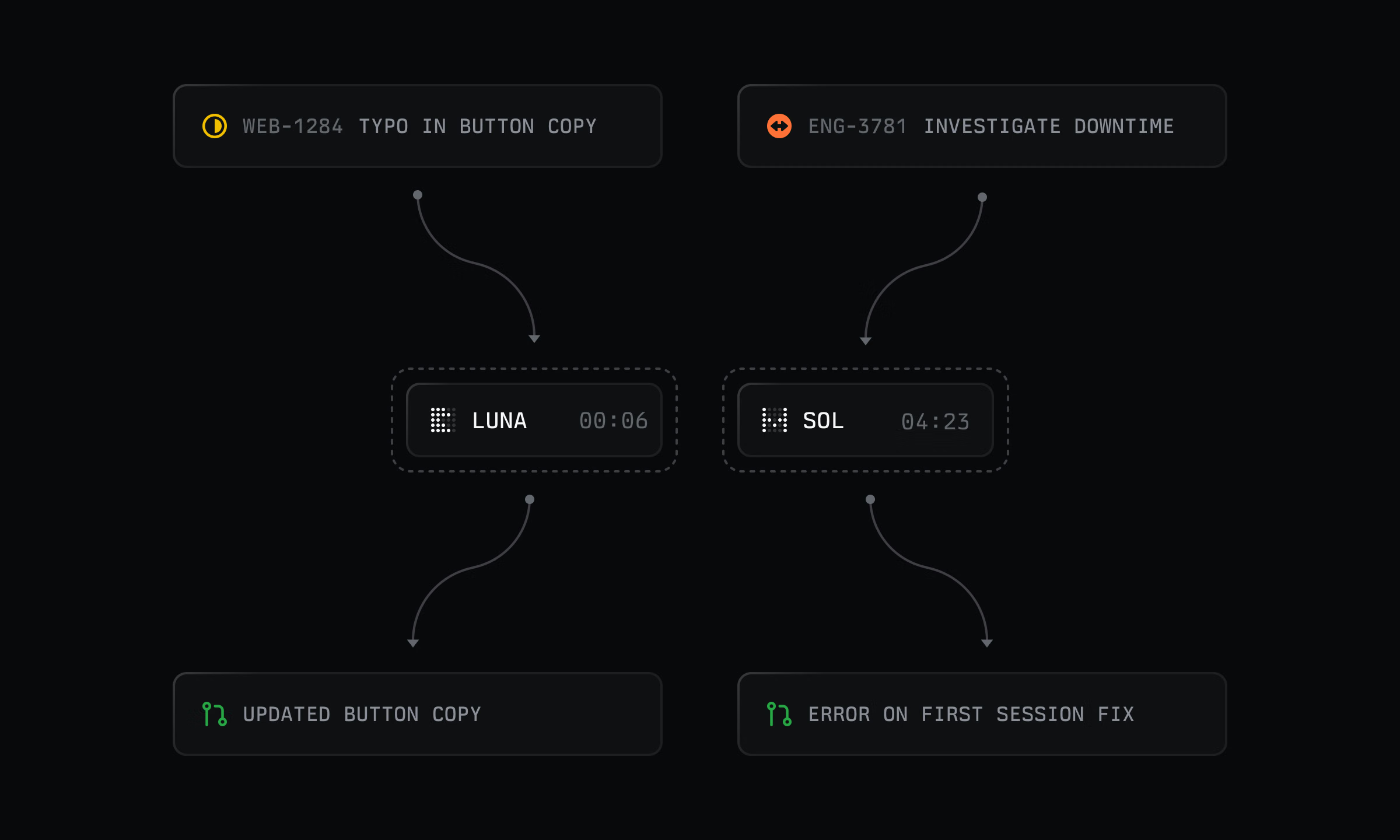
Image: Linear
Why it mattersA team paying for a reasoning model on every task is paying for thinking where none was needed, and letting the coding agent pull a private dependency is often the difference between the session finishing and stalling on install.
A coding agent that runs its reasoning model on every task charges the reasoning-model price for a rename. Linear published a changelog entry on 24 September 2026 that adds three controls to its coding sessions feature, and the biggest of the three is that the agent no longer sends every task to the same model.
Adaptive routing between two models
Linear says the coding agent will now direct simpler tasks to a faster model and keep the default reasoning model for complex work. The changelog says users can restart a session on the more capable model when the faster one is not enough, and Linear says the original pull request is preserved when they do. Linear does not name the faster model, does not say how the system decides which task goes where, and does not publish a rate of correct routing.
Coding sessions have been part of Linear since 11 June 2026. The team framed them then as the shortest path from an issue to a diff: assign a task to Linear Agent, and it works in a secure cloud environment to write and test the code before opening a pull request for review.
Secrets during setup, and open-weight models
The second change is environment secrets. Linear says coding sessions can now access them during setup so they can, in Linear's words, securely fetch private dependencies and other environment config. Anyone who has watched a coding agent stall on an install step that needs a private package registry knows what this fixes.
The third change is that Linear now supports open-weight models. The first one available is called GLM-powered sessions in the changelog. Workspace administrators and owners choose which models the team is allowed to use, through the coding session settings. Linear does not say whether the open-weight option runs on Linear's cloud or somewhere else, and does not compare its output against the closed default.
What is written on the vendor's own claim
The changelog is short and its claims are narrow. Adaptive routing is described as a mechanism only. Linear does not attach a token-cost number, a latency number, or a share of tasks it expects to route to the faster model. Environment secrets are described as an access path added during setup, and the changelog does not describe how the secrets are stored or scoped. The open-weight option is named as a starting point, with GLM as the first model in that list.
For a team building software on Linear, the change worth acting on today is the model-routing switch. When the agent is handling a queue that mixes typo fixes and dependency bumps with genuine refactors, sending every one through the reasoning model is the wrong default, and the restart-on-the-bigger-model path preserves the pull request so a wrong route is a one-click recovery. The open-weight option matters most to teams whose compliance rules forbid a closed model reading source code, and the environment secrets change matters most to teams whose private registries were quietly blocking coding sessions from completing.
Source
- Linear changelog, New controls for Linear coding agent, 24 September 2026.
- Linear now blog, Coding sessions, 11 June 2026.
This item was written by an AI system from the linked source. Reveneau is responsible for what it publishes.
Get AI News in your inbox
New developer tools, model and agent releases, and how teams are actually using them to release software. Short, and only when there is something worth reading.