AI NewsModels & agentsAnnouncement
Meta's compliance agent cuts assessments from days to minutes
Meta Engineering published a design on 2 September for an internal compliance agent it calls an "organizational second brain". It stores what experts know in version-controlled text files rather than in model weights, and reports assessments that took days now take minutes. InfoQ wrote it up on 9 September.
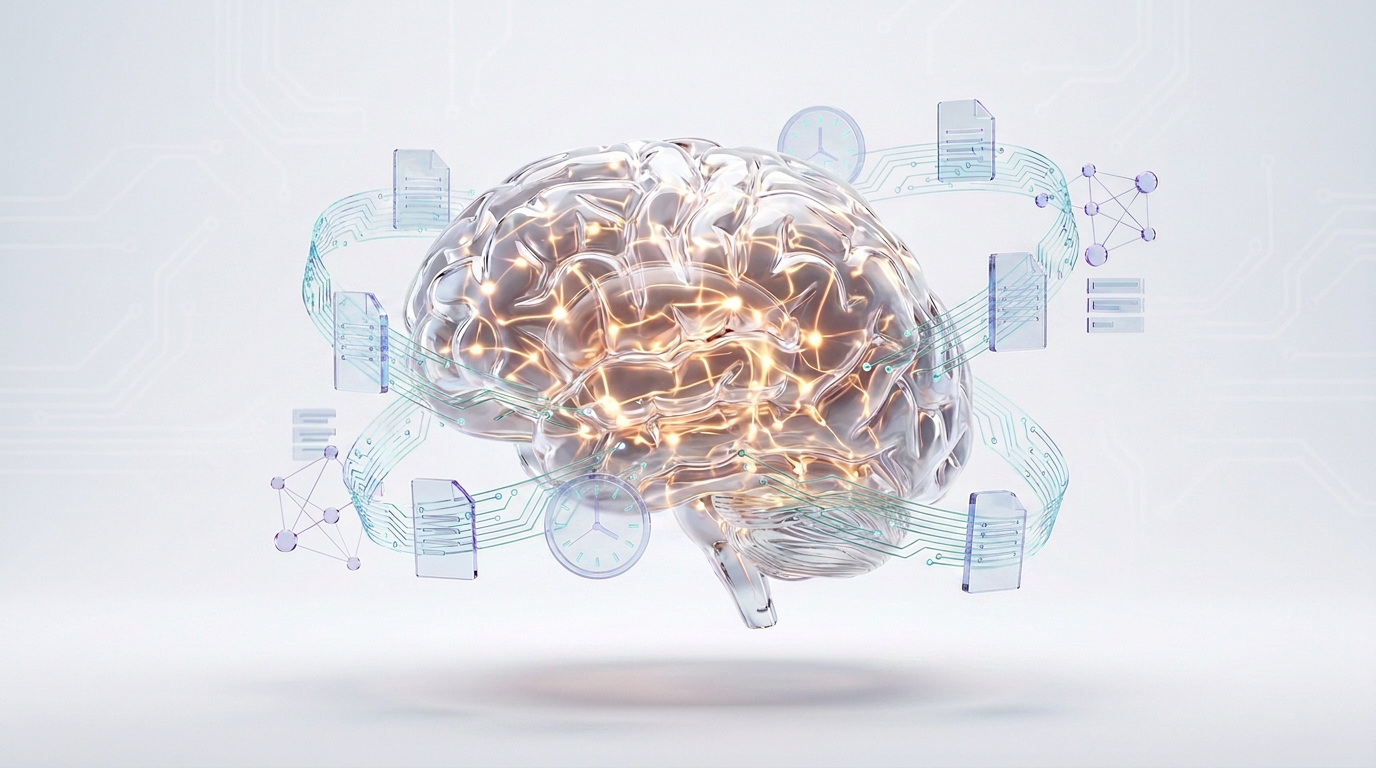
Image: Meta Engineering
Why it mattersA team building an agent that has to make policy-shaped decisions can copy the pattern: keep the knowledge in files a domain expert can read and edit, and let a general model reason over them, so an update takes a pull request instead of a training run.
Meta Engineering published a design on 2 September for an internal AI agent it calls an "organizational second brain". InfoQ wrote it up on 9 September. The system was built for a compliance domain that Meta does not name, and the design's central choice is that what the agent knows is kept in version-controlled text files rather than built into model weights.
The idea, in one sentence
Meta's engineers argue that most attempts at capturing "what an expert knows" make one of two mistakes. The first is putting documents into a search index, which stores information but not the reasoning that connects one document to another. The second is fine-tuning a model on the corpus, which absorbs both but makes every future update a training exercise and hides the reasoning from the humans who wrote it. Meta's design separates the two: the knowledge lives in files, the reasoning lives in code, and a general model connects them.
The four layers
The post describes four cooperating parts.
The first is a knowledge system: structured files that hold position statements, taxonomy, routing indexes, and gateway files, connected together as a dependency graph. This is the part a domain expert edits.
The second is a reasoning layer of "composable recipes" that separate what the agent knows from how it should reason, and pull in only the files relevant to the current step rather than loading the whole corpus.
The third is an evaluation framework that checks every proposed change to the knowledge system: nothing is added unless the change passes the evals.
The fourth is a self-improvement loop that compiles feedback from human experts into candidate updates. Because updates take the form of file edits rather than model weight changes, a rejected update is reverted and a good one merges without a retraining run.
Numbers Meta reports
Meta says the system replaced work that had taken engineering sprints and reduced assessment time from "days to minutes". Domain experts rated its outputs "useful almost all the time", and Meta reports "zero regressions across improvement cycles". These are Meta's own numbers, taken from a single deployment inside one company; treat them as what the team observed rather than as a general benchmark.
The domain the system was built for is not named in the post. Meta describes it as involving hundreds of product reviews and risk-weighted assessments, and argues the same architecture generalises to security, finance, engineering, and procurement. That last claim is unproven in the post; only the first case is described.
Knowledge in files, reasoning in code
The interesting pattern is the separation of concerns between the model and the knowledge. Most teams putting an agent on top of a company knowledge base end up choosing between a stateful vector store nobody can read, and a system prompt that grows a thousand lines a month. Meta's design keeps the knowledge in files a human wrote and a human can edit, keeps the reasoning steps in code that can be reviewed, and reserves the model for the parts that need a language model.
For a team about to build an internal agent in a policy-shaped domain, the post is worth reading in full: it names the structure of the knowledge files, the way recipes reference them, and the eval check that catches regressions before they are added. The code is not open-sourced, but the architecture is described concretely enough to reproduce.
Source
Meta Engineering: An Organizational Second Brain: Building an AI That Learns From Experts, 2 September 2026. Coverage by InfoQ, 9 September 2026.
This item was written by an AI system from the linked source. Reveneau is responsible for what it publishes.
Get AI News in your inbox
New developer tools, model and agent releases, and how teams are actually using them to release software. Short, and only when there is something worth reading.