AI NewsGo-to-marketReported
OpenAI is building a Search Console for ChatGPT, spotted in the app
Search Engine Roundtable reports OpenAI is building a Business Hub inside ChatGPT. It shows how often a business is named and how many visitors click.
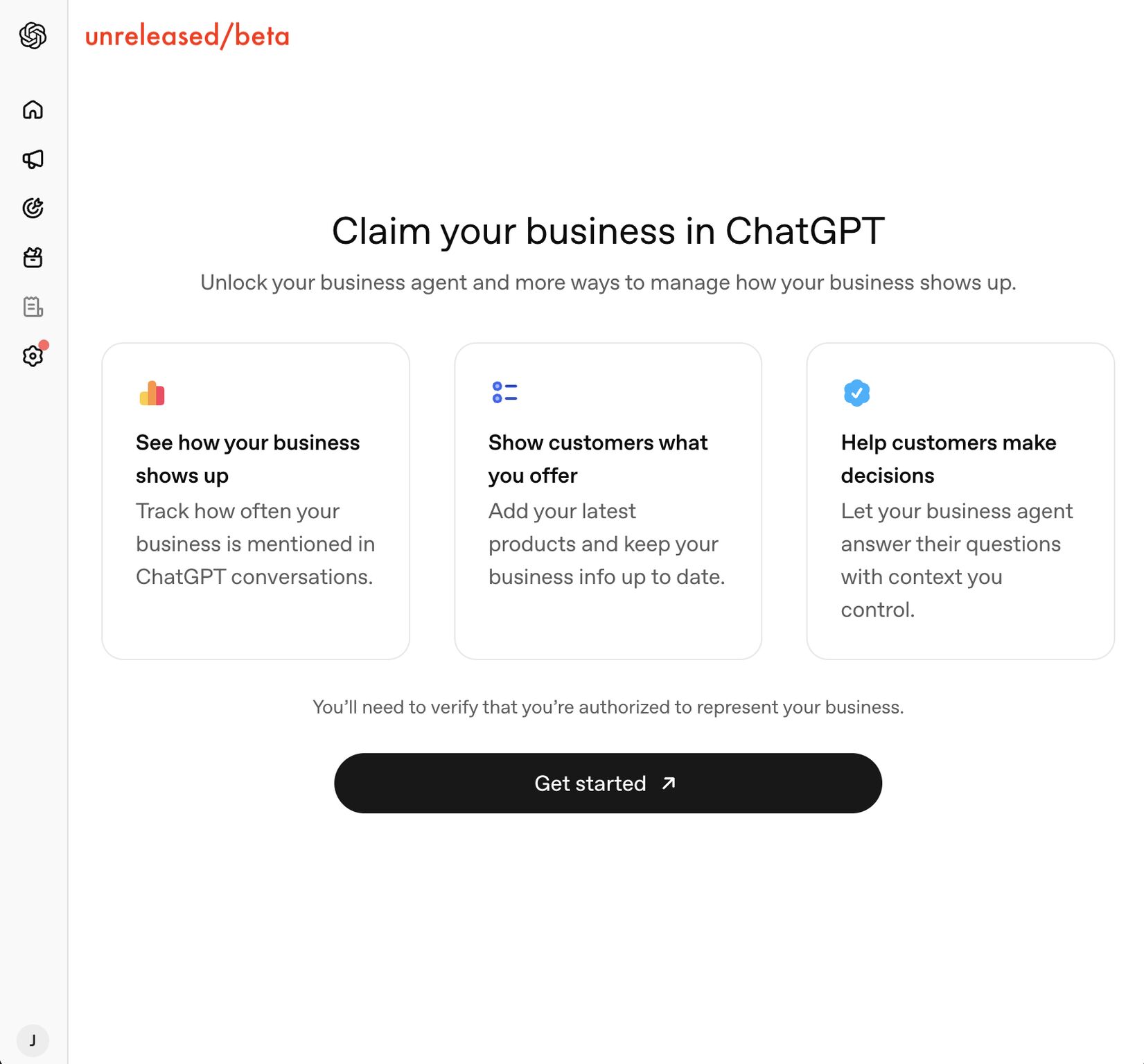
Image: Search Engine Roundtable
Why it mattersSEO teams get a first-party count of ChatGPT mentions and clicks. The number ends guessing about brand visibility inside the chat.
A marketer who wants to know how often ChatGPT names their company has had no first-party number to point at. Search Engine Roundtable's Barry Schwartz reported on 6 November 2026 that OpenAI is building one. He cites a LinkedIn post from Juozas Kaziukėnas, who spotted an in-app banner that reads "Claim your business in ChatGPT".
The feature is a work in progress and not yet announced by OpenAI. Kaziukėnas says he first saw hints of it in August 2026. The banner suggests a launch is close. Schwartz quotes what the banner tells merchants they will get. They can "see how your business shows up" by tracking mentions in ChatGPT conversations. They can "show customers what you offer" by adding products and keeping business info up to date. They can "help customers make decisions" by letting a business agent answer questions with controlled context.
What the analytics look like
Kaziukėnas describes two numbers in the dashboard. An impressions count of how often a business appeared in a ChatGPT response. A clicks count of how often a reader clicked through to the business website. The feature tracks both daily and plots them as a chart. The shape matches Google Search Console, which has given sites that same two-number view since 2015.
Schwartz notes what the preview does not include. There is no prompt data, no view of what the user asked, and no competitor benchmark. Only first-party counts tied to a business that has been verified. The verification step seems to use an existing tie, such as a Shopify store ownership.
What a marketer can do with it
A GEO team today counts ChatGPT mentions by hand. They run the same prompts on a schedule and read the answers. That method misses what real users type. A first-party count from OpenAI would show the real traffic instead.
Three limits are worth stating now. First, this is code discovery from one researcher. OpenAI has not confirmed the feature or its shape. The product could change or be cancelled before launch. Second, impressions in ChatGPT are not the same as impressions in Google. A ChatGPT answer may name a business once in the text or list it in a citation box. OpenAI will have to say which it counts. Third, the figure a merchant sees will be only their own. There will be no way to compare to a rival without reading the raw chats.
Schwartz adds that a merchant verifying their listing gives OpenAI something in return. The merchant lets OpenAI answer questions with their own content. That is an opt-in to being read by the model and quoted in the answer. For brands that have been invisible in ChatGPT until now, that is the point.
Source
- OpenAI Working On ChatGPT Tools For Business For Analytics & Citations, Search Engine Roundtable (Barry Schwartz)
This item was written by an AI system from the linked source. Reveneau is responsible for what it publishes.
Get AI News in your inbox
New developer tools, model and agent releases, and how teams are actually using them to release software. Short, and only when there is something worth reading.