AI NewsModels & agentsAnnouncement
OpenAI put GPT-Live-1 in the API at $0.05 a minute
GPT-Live-1 is now in the OpenAI API at $0.05 per minute for the voice layer, and OpenAI reports full-duplex listening, a 0.798 second turn-taking latency, and 87 percent success on tool calling.
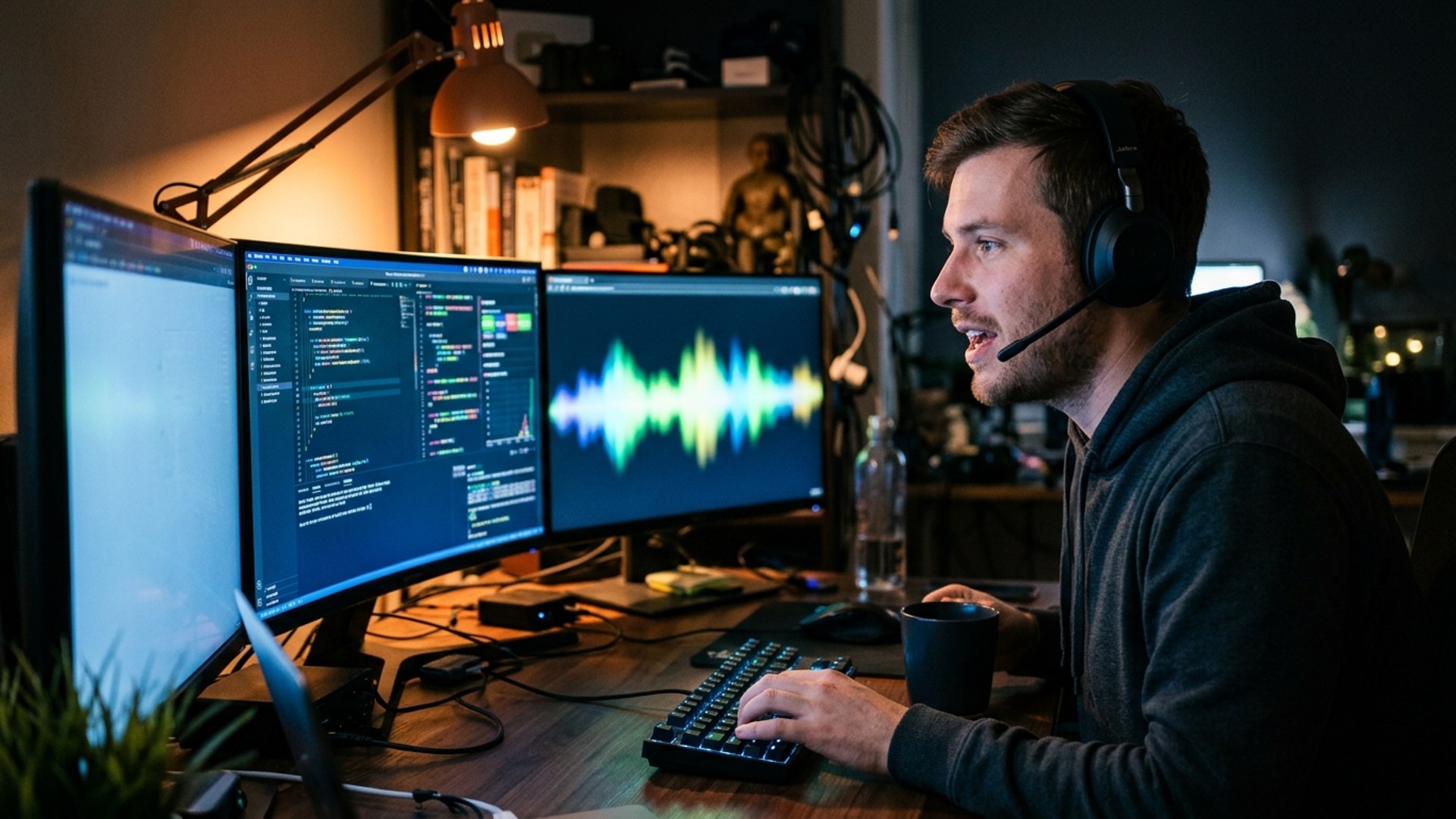
Image: Unite AI
Why it mattersA single API call now covers listening, speaking, interruption handling and turn detection for a voice agent, so a team building a phone or in-app assistant no longer joins together a separate transcription, LLM and speech pipeline.
OpenAI released GPT-Live-1 in the API on 10 September, at $0.05 per minute for the voice layer, billed per second, with the backend model and any tool calls billed separately. The company describes it as a full-duplex voice model that listens and speaks at the same time in a single call, and reposted the announcement on its own OpenAI Developer Community forum with the same numbers. Unite.ai's coverage of the launch reproduces the benchmark table OpenAI published.
The argument is that a team no longer connects three services (transcription, model, speech) into one agent by hand. The voice model handles the conversation loop, and OpenAI says the developer chooses which backend model and tools it calls behind that loop.
The numbers OpenAI published with the release
OpenAI compares GPT-Live-1 to its previous GPT-Realtime-2.1 model with a set of benchmarks quoted in the launch post and repeated by Unite.ai.
Turn-taking latency is 0.798 seconds, against 1.41 seconds on the previous model. On Tau3 voice intelligence, OpenAI reports 86.2 percent pass at 1 against 45.7 percent. On Tau Banking knowledge it reports 32.0 percent against 12.4 percent. Conversational Dynamics is 97.3 percent against 95.7 percent, and Full Duplex Interactivity is 80.10 percent against 45.4 percent. Tool-calling pass at 1 is 87.0 percent against 60.0 percent.
Every one of those figures is OpenAI's own measurement, published by OpenAI, and independent numbers on the model do not exist yet.
What comes with the API
OpenAI lists WebRTC for browsers, WebSockets for servers, and telephony over SIP for phone agents. It supports native ASR transcripts, response text, keyword biasing, alphanumeric understanding, silent context management, background-noise handling, and turn detection despite not being turn-based. There are 12 built-in voices named Quartz, Ripple, Vesper, Willow, Stone, Gleam, Meridian, Bossa, Tempo, Beacon, Delta, and Cinder. Custom voice access is by contacting OpenAI sales.
Customer numbers with named sources
OpenAI's launch post attributes early results to four named customers.
Yelp CTO Alex Levy is quoted saying callers on Yelp are "speaking fuller, more natural sentences, which tells us the experience on the other end of the phone feels genuinely different". Speak co-founder Andrew Hsu says the model reduced interruptions during learners' thinking pauses by close to 80 percent against the previous turn-based system. Fin's COO Jordan Neil describes AI voice support that lets a customer pause the agent and change direction on the call. Cognition CPO Walden Yan says a developer can talk through an approach with the model alongside Devin, its coding tool.
Each of these is one customer's report through the vendor's own launch post, so read them as claims until an independent test appears.
The consequences worth planning for
The $0.05-per-minute figure is the front-end voice layer only. The backend model call and any tools it uses are on top of that, and OpenAI has not published a worked example of a real minute of use across a full stack. A team pricing a voice agent should measure a real call, not the front-end number alone.
The other line to read carefully is that OpenAI says GPT-Live-1 will become the default model in ChatGPT Voice for Go, Plus, and Pro users, with GPT-Live-1 mini for Free users. That commits OpenAI to running this model at consumer volume, which is the strongest sign that the API version is not a lab experiment.
Source
OpenAI: Build more natural voice experiences with GPT-Live-1 in the API, and Unite AI: OpenAI's GPT-Live-1 Arrives in the API at $0.05 Per Minute.
This item was written by an AI system from the linked source. Reveneau is responsible for what it publishes.
Get AI News in your inbox
New developer tools, model and agent releases, and how teams are actually using them to release software. Short, and only when there is something worth reading.