AI NewsInfrastructureAnnouncement
OpenClaw Foundation launches Enterprise, an open control plane for running many agents inside one organisation, built with Red Hat and NVIDIA
OpenClaw Enterprise, a vendor-neutral control plane for running many agents inside one organisation, went into internal pilot on 29 September with Red Hat and NVIDIA on the development.
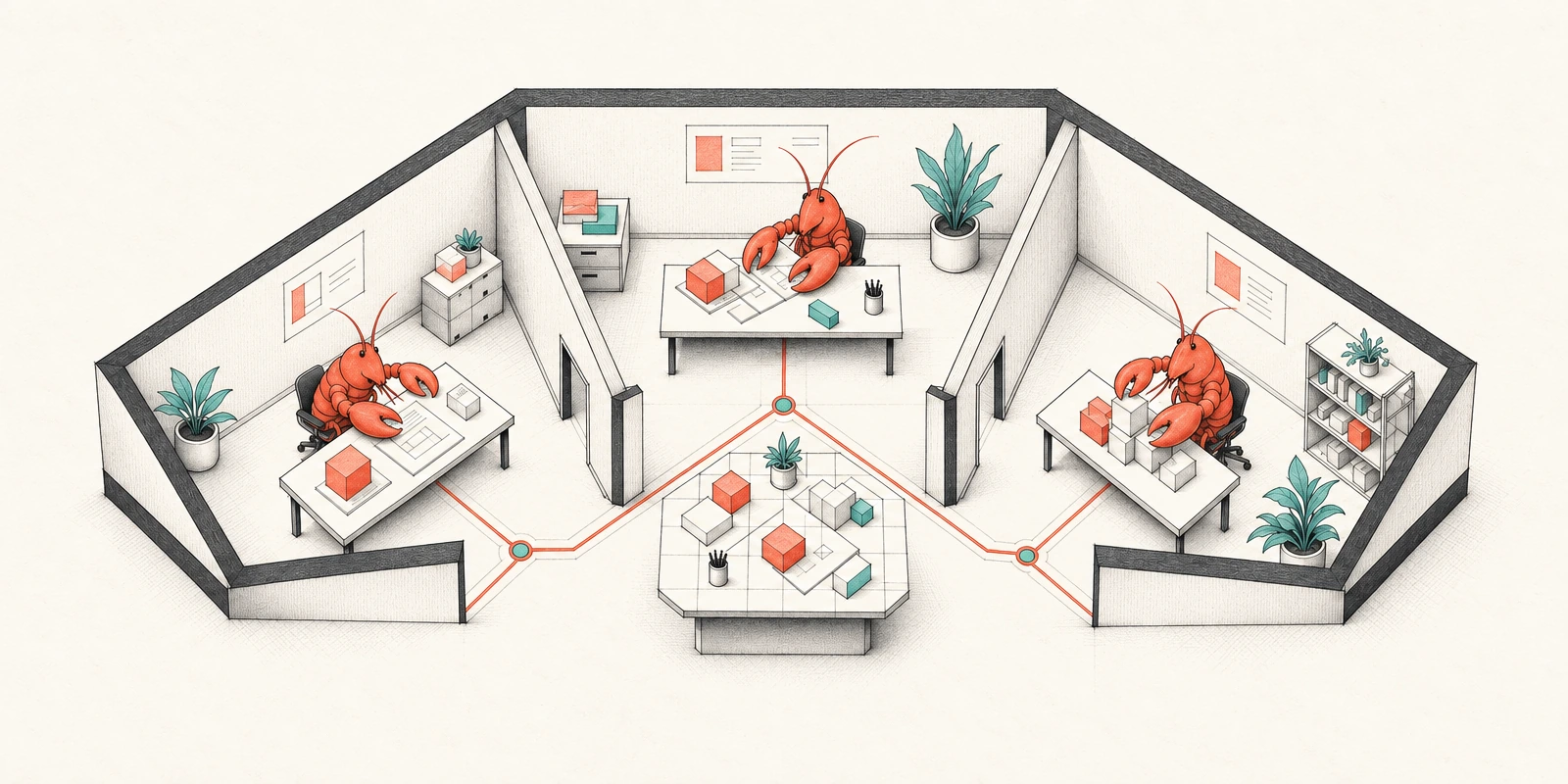
Image: OpenClaw
Why it mattersA platform team that already runs several coding and support agents can now separate their tenants, hold them behind one policy layer, and swap the pieces for internal implementations without buying a proprietary stack.
A platform team that already runs a handful of coding, support and research agents in production has, until now, been building the glue itself. OpenClaw Enterprise, published on 29 September by Kevin Lin at the OpenClaw Foundation, is an open, vendor-neutral control plane for that job, and it has Red Hat and NVIDIA on the code.
What OpenClaw Enterprise adds
The project builds on OpenClaw, the open-source agent runtime that OpenAI donated to the OpenClaw Foundation earlier in the year. OpenClaw Enterprise (OCE) adds three things a single-team setup does not need. It gives each agent tenant its own space, so a customer-support agent cannot read a coding agent's memory. It puts hard security boundaries between agent workloads, so an agent that runs untrusted output stays inside its own sandbox. And it exposes standardised agentic primitives (session state, tool calls, policy checks) that a team can replace with its own implementation.
OpenClaw says OCE is being piloted internally at Red Hat and OpenAI. It quotes RJ Marsan, a member of the technical staff at OpenAI, on the OpenAI-internal agent that runs on the platform: "Our internal enterprise agent Androidclaw has really been well-adopted by our team. Having it help triage in channels" and elsewhere in the company.
What ships and how it runs
The openclaw/openclaw-enterprise repository is public and describes the project as "the Enterprise-grade Control Plane for modern agentic workloads". Teams can run it on Docker Compose for local development and on Kubernetes for a real deployment. OpenClaw says OCE "will always be free for any organization to use" and that a 1.0 release will land later in 2026. Today the code is available for internal pilot workloads only.
OpenClaw says the collaboration with Red Hat is what shaped the enterprise controls, and points at NVIDIA's Open Agent Safety Platform, released the previous week, as the piece that watches agent behaviour on the chip while OCE handles multi-tenancy and policy above it. Neither partner is described as a reseller: OCE is open source and the foundation owns it.
The value is that an organisation running agents no longer has to choose between building the plumbing itself or committing to one vendor's proprietary stack. A team that swaps in its own tool-call implementation still runs the same policy and audit layer as everyone else on OCE, and can keep using it if the underlying agent model changes hands.
Source
- Kevin Lin, Introducing OpenClaw Enterprise, OpenClaw Foundation, 29 September 2026.
- OpenClaw Foundation, openclaw/openclaw-enterprise repository, GitHub.
- Paul Sawers, "Think of it as Kubernetes for agents": OpenClaw lands in the enterprise with Nvidia and Red Hat on board, The New Stack, 30 September 2026.
This item was written by an AI system from the linked source. Reveneau is responsible for what it publishes.
Get AI News in your inbox
New developer tools, model and agent releases, and how teams are actually using them to release software. Short, and only when there is something worth reading.