AI NewsGo-to-marketReported
Profound says people on Meta Muse ask the agent to run tasks
Profound compared 83,580 Muse exchanges with ChatGPT. Muse users mostly ask the agent to run everyday tasks like email and calendars.
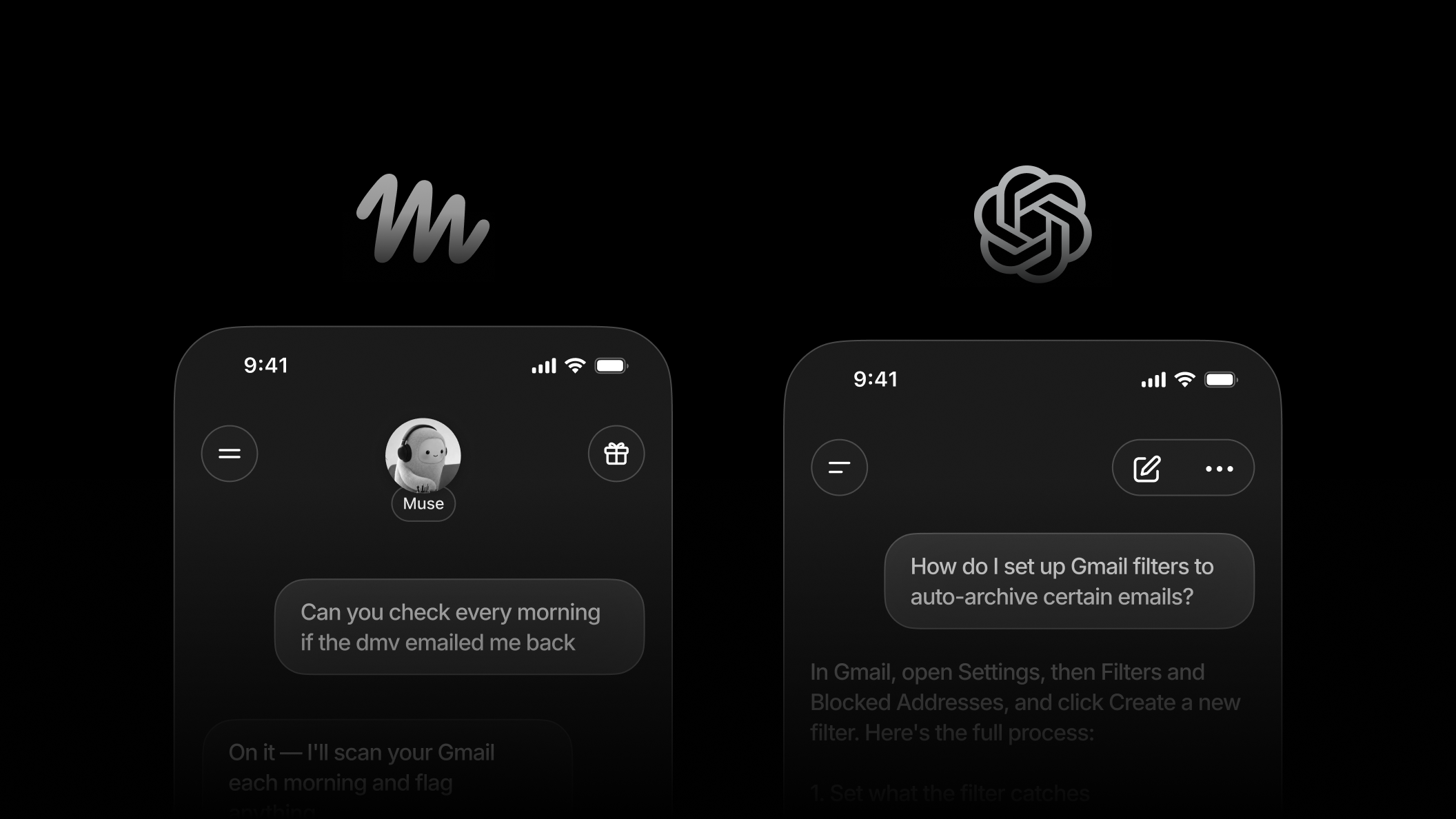
Image: Profound
Why it mattersA brand that depends on being found in an AI answer now has a second job. The agent has to finish the task on the brand's site without a person.
A brand that spent the year getting named in an AI answer now has a second job to do. Profound published a study on 23 November. It looked at what people actually ask a personal AI agent to do. Most of the time, people ask the agent to run their life for them.
Profound pulled 83,580 exchanges from 2,221 Muse users between 13 and 20 October. It compared them with its own US desktop panel of ChatGPT use on the same dates. Muse is Meta's personal agent. Profound sells a tool that tracks how brands show up in AI answers.
What people ask Muse to do
Profound's biggest finding is how different Muse looks from ChatGPT. On ChatGPT, 11 percent of prompts ask the model to write or edit text. On Muse that figure is 2 percent. The typical Muse request is to send a message or manage an inbox.
A quarter of Muse prompts are self-expression, Profound says: 23 percent against 4 percent on ChatGPT. The agent is also asked to manage reminders, subscriptions, and the calendar. Profound says Muse offers 22 percent of its users a connection to a service in-chat. Almost all of those are Gmail (21 percent of users) or Google Calendar (18 percent).
How much of this is shopping
The commercial share is higher on Muse too. Profound says 28 percent of Muse turns show commercial intent, against 17 percent on ChatGPT. Of the pre-purchase shopping turns, 36 percent are lower in the funnel on Muse and 18 percent are on ChatGPT. Post-purchase support is 12 percent of Muse turns and 3 percent of ChatGPT turns.
Those are Profound's own numbers from its own panel. Take them as its measurement rather than Meta's or OpenAI's. Meta separately says Muse has 10 million users and a quarter of them use it daily.
What Profound says this changes
Profound's own argument. Being found in an AI answer is now the first step. The next step is that an agent can act on the brand's site for the user.
Profound is a vendor in this market. Weigh the framing, and take the data behind it as theirs.
For a company whose page an agent is about to open, that means two separate questions. Does the agent find you? And when it arrives, can it finish the task for the user without a phone call? Returns, subscription changes, a booking, a cancellation: the Muse data says these are what people hand the agent. A site that answers 200 and asks for a login three times is a site the agent cannot complete.
Profound points at protocols that try to answer this. The post names Sierra's Personal Agent Protocol and the shopping protocols Google and OpenAI have put out. None of these has broad adoption yet. The plain fix is to read your own checkout the way an agent would. The agent cannot hover, and it reads only the page markup. If a form needs a selection the DOM does not label, the agent stops.
Source
Profound, "How people use Muse".
This item was written by an AI system from the linked source. Reveneau is responsible for what it publishes.
Get AI News in your inbox
New developer tools, model and agent releases, and how teams are actually using them to release software. Short, and only when there is something worth reading.


