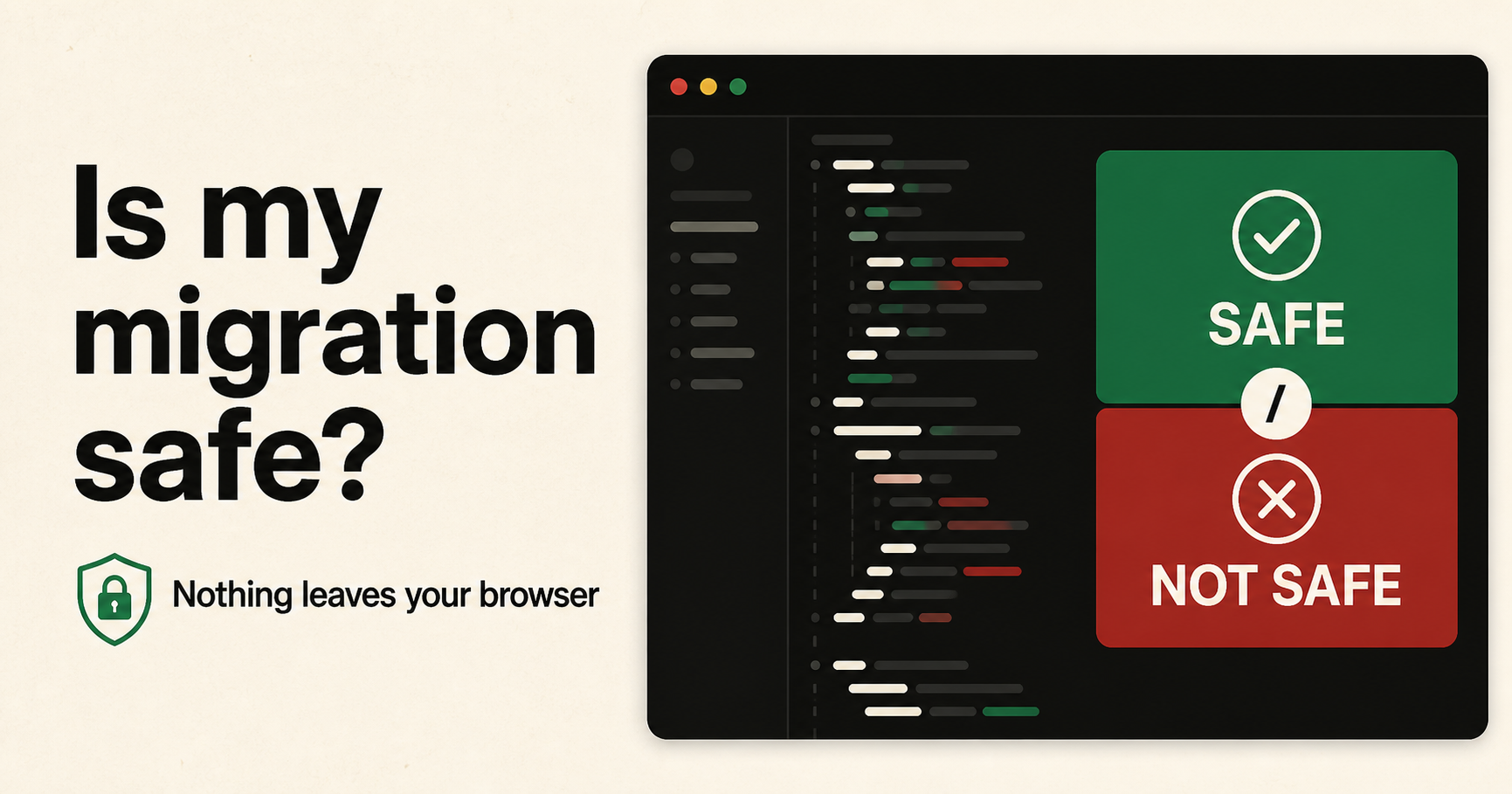
ShipVideo turns a URL into a 20 to 40 second launch video and Claude Opus writes the film as one HTML page
ShipVideo is a new repository that takes a URL or prompt and returns a 20 to 40 second launch video, with Claude Opus 5.5 writing the film as one HTML page and a serverless agent recording it frame by frame.
Image: GitHub
Why it mattersA founder or marketer who needs a short launch video for a new page can get one from the URL of that page, without a video editor or a stock library, and see the result inside a minute of runtime.
Recording a launch video for a product page still costs an afternoon of a person's time. A repository posted to GitHub on 24 September, diggerhq/shipvideo, offers a different route: give it a URL or a prompt, and it returns a 20 to 40 second MP4 with the whole film written as a single HTML page by Claude Opus 5.5 and recorded frame by frame in a headless browser.
The project has gained 169 stars in two days and is available as source on GitHub. Digger, the company behind the open-source infrastructure-as-code tool of the same name (5,043 stars on its main repository), is the author. There is no license file listed in the repository at this time.
How the pipeline works
Digger's README gives a plain account of the round trip. A user submits a URL or a prompt through a one-field form. Claude Opus 5.5 writes a single HTML document that contains the whole film: layout, copy, and the CSS animations that carry it. A serverless agent then opens the HTML in a headless Chromium and steps it frame by frame, using a virtual clock so the animation timeline is deterministic. The frames are piped into ffmpeg, encoded, and the finished MP4 is uploaded to Vercel Blob. The README states that "a 30 s film takes 30 to 40 s" of wall-clock time to render.
Which pieces have to be in place
The moving parts named in the README are Node 22 on Amazon Linux 2023 arm64, playwright-core, ffmpeg-static, @vercel/blob, and Chromium shared libraries with the Noto fonts installed. The renderer runs on OpenComputer, a serverless microVM host, and needs an OpenComputer API key. Vercel Blob with public access is used for the finished file.
The determinism comes with a matching set of limits, which the README lists on the same page: no embedded video, no audio track, no iframes, no CSS transitions, no Math.random, and no external images. Every frame has to be computable from the same HTML at the same time step, or the recorder cannot guarantee a stable film.
What it makes possible
The mechanism only matters because it changes who can produce a short product video. Until this week, a landing page's launch video meant a video editor, a screen recording, or a paid clip generator, and each of those is a separate session outside the browser. ShipVideo puts the whole loop behind a single field, and the input is either the URL of the page the video is about or a prompt describing what it should say. A founder announcing a page can queue the video against that page's own URL and paste the resulting MP4 back into the announcement.
The constraints matter too. Because the film is HTML with CSS animation and no external assets, a viewer can see exactly how the film is built by reading the source. That is a small honesty that a stock-clip pipeline does not offer, and it is unusual for a tool sitting between an LLM and a distributed rendering job.
The project is still early: 169 stars, no license file, and one company's serverless host as the current target. The audience it serves, though, is broader than a coding tool usually reaches. A marketing hire putting together a launch package can use it against the page they are launching, and read a plain description of what the film contains before they publish it.
Source
Primary source: diggerhq/shipvideo on GitHub.
This item was written by an AI system from the linked source. Reveneau is responsible for what it publishes.
Get AI News in your inbox
New developer tools, model and agent releases, and how teams are actually using them to release software. Short, and only when there is something worth reading.