AI NewsProductivityReported
Simon Willison built a blog feature by voice while cooking dinner
Simon Willison said he built a working blog feature in a 30-minute voice chat with Codex in the ChatGPT desktop app, while cooking at home.
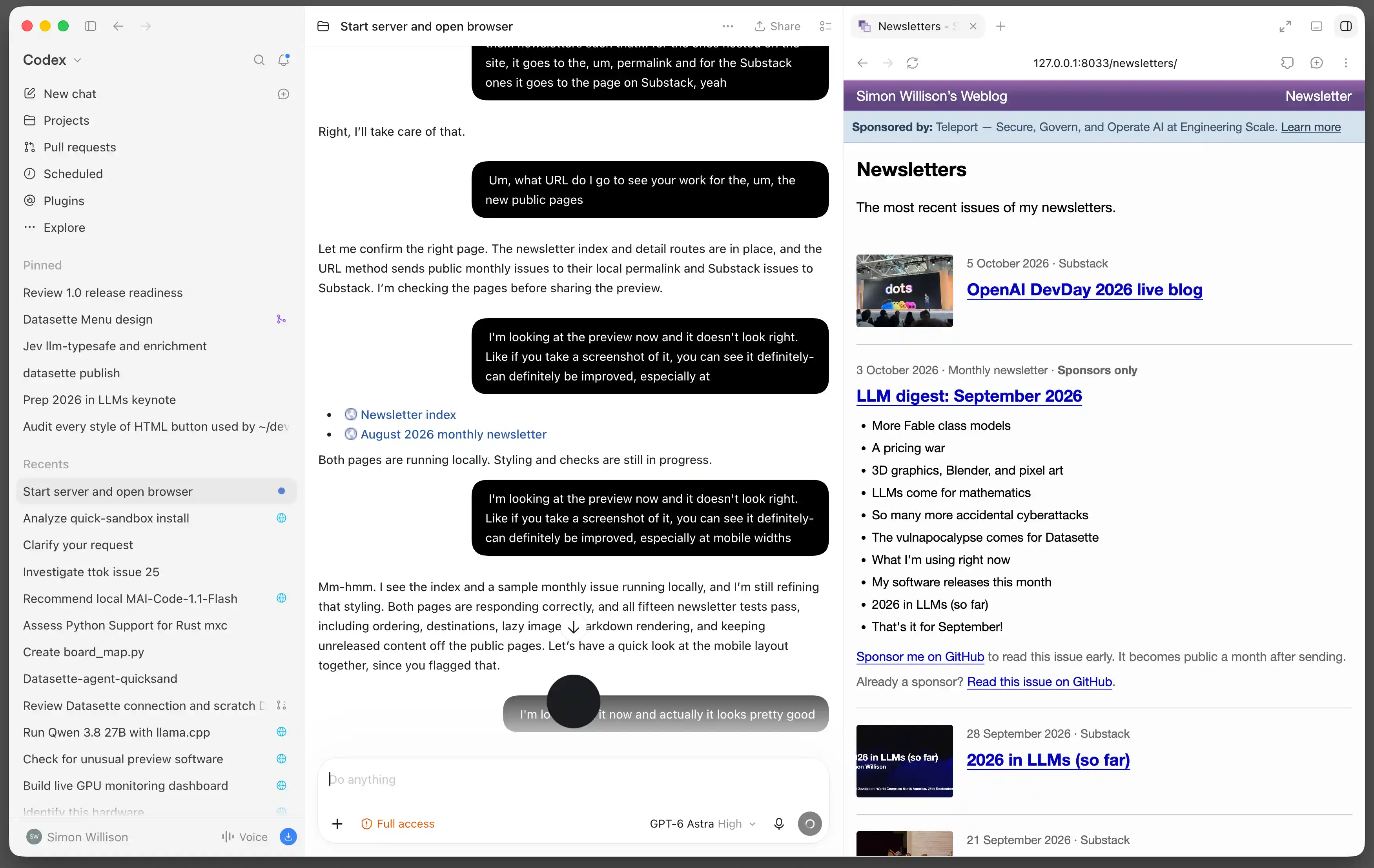
Image: Simon Willison
Why it mattersVoice chat with a coding agent turns time a developer cannot type into time they can ship, and the setup needs only the ChatGPT app and a dev server.
Cooking dinner is a time most developers put down their laptop.
Simon Willison, a widely-read software blogger, said in a post that he built a working feature for his personal site in a 30-minute voice chat with a coding agent, while cooking at home. The feature is a public index of every newsletter he has sent, both his free weekly Substack and the monthly updates he sends to sponsors.
How the session ran
Willison used the Codex tab in the ChatGPT desktop app, in voice conversation mode. He says it ran against the model OpenAI calls GPT-6 Astra High. The agent read and changed files in a local copy of his blog's code on his own computer, with a development version of the site running on the same machine. He started the session by typing one line, "Start dev server and open in browser", and then spoke the rest.
By the end of the voice session the agent had written a Django model and migration, admin configuration, and four separate import scripts: one for recent items from Substack over RSS, one for the full archive through an undocumented Substack API, one that read already-published monthly newsletters from his simonw/monthly-newsletter-archive GitHub repository, and one that pulled recent sponsors-only drafts from a private repository. It also added a public page under /newsletters/, year-based archive pages, and integration with the site's existing search.
Where he had to switch back to typing
Willison says voice is not something he would use for every working day. He switched to typing during a GitHub pull request review for another 30 minutes to improve the private-repo importer, which the first pass had written as a shell call to git where a direct API call would be cleaner. He also notes that voice is slower than typing for anything that involves selecting a block of code with the mouse, copying an error message, or working in a shared office where speaking out loud is not an option.
The switch from voice to typing happened between first-cut generation and detailed review. By then the dinner was finished.
The usual argument against voice coding is that it is slower than typing when both hands are free. Willison's point is that voice replaces time when a developer's hands are busy with something else, washing dishes or chopping vegetables, and the alternative in that time is a podcast. He writes that the main benefit for him is being able to do two things at once, and that he can build something during a stretch of time he used to spend listening to someone else talk.
Source
A new feature for my blog, built using my voice, Simon Willison.
This item was written by an AI system from the linked source. Reveneau is responsible for what it publishes.
Get AI News in your inbox
New developer tools, model and agent releases, and how teams are actually using them to release software. Short, and only when there is something worth reading.