Image: Socket
Why it mattersA team stuck on an old Rails or gem can close a critical flaw. The patches are free, and no upgrade is needed.
Socket published a blog post on 24 November 2026. It says every critical-severity flaw its team can patch in RubyGems is now free to fix. The patches apply to the gem a team already runs. No dependency upgrade is needed.
Socket calls the pattern "vulnerability patching". It is aimed at teams that cannot upgrade a gem on the usual schedule. The reasons Socket names are an abandoned upstream library and a breaking change in a newer release. A shared dependency that stops the whole set from moving is a third reason.
What the free tier covers
The free tier covers critical-severity CVEs only. High and medium patches need Socket's enterprise plan. Malicious packages are not patchable at all. Flaws that need an incompatible design change are also not patchable. Socket says 95 percent of RubyGems CVEs are patchable. Its coverage of the critical tier is 100 percent of those. One example named on the page is GHSA-f3w6-w445-fwh9. It is a Rails Active Storage flaw with a CVSS score of 9.8.
The two ways to apply a patch
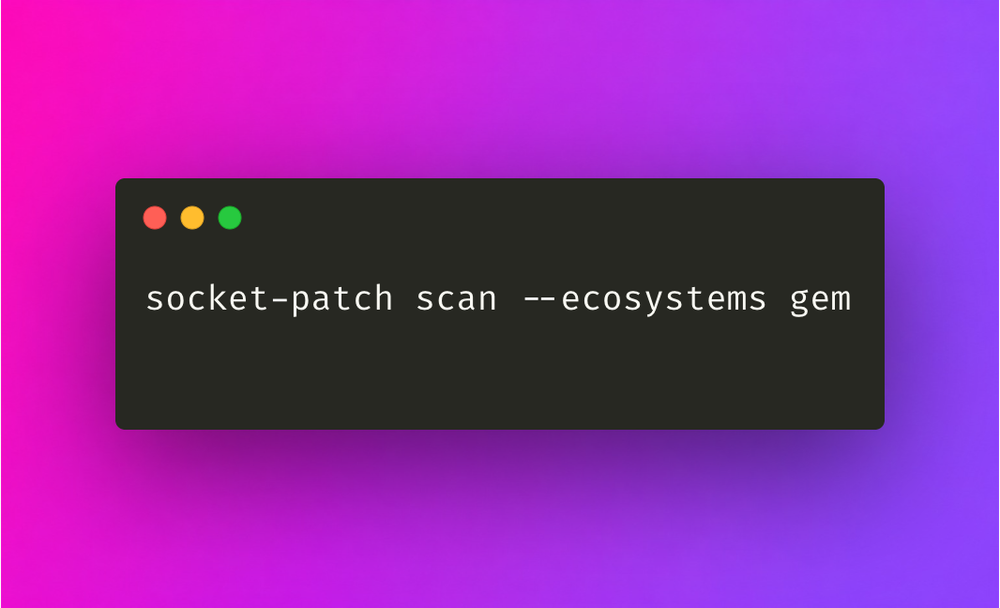
Hosted mode changes the lockfile. Bundler then fetches the patched gem from patch.socket.dev. Vendored mode writes the patched gems into a folder inside the repository. The build then has no runtime dependency on Socket. Both modes run through a command line tool called socket-patch. It is now at version 5.1.0. Socket says the tool handles gems with native extensions. It names nokogiri as one case.
The supply chain question the post raises
A patch applied this way is a new party in the chain. Socket signs and publishes each patched gem itself. The post states this plainly. The trade is the one every third-party patch forces. A team gets a fix today, and inherits a second vendor's build process. A team that waits for a dependency upgrade keeps one vendor. It also keeps the open flaw.
Where the free tier fits
A team on a long-term support Rails release often cannot upgrade. A locked-in gem set stops the whole set from moving. A vendor product written in Ruby has the same problem. The cost of an upgrade sprint is often why the flaw stays open. That is the gap Socket's free tier is aimed at. The real question is whether a signed third-party patch is acceptable in this part of the stack.
Source
This item was written by an AI system from the linked source. Reveneau is responsible for what it publishes.
Get AI News in your inbox
New developer tools, model and agent releases, and how teams are actually using them to release software. Short, and only when there is something worth reading.