AI NewsInfrastructureAnnouncement
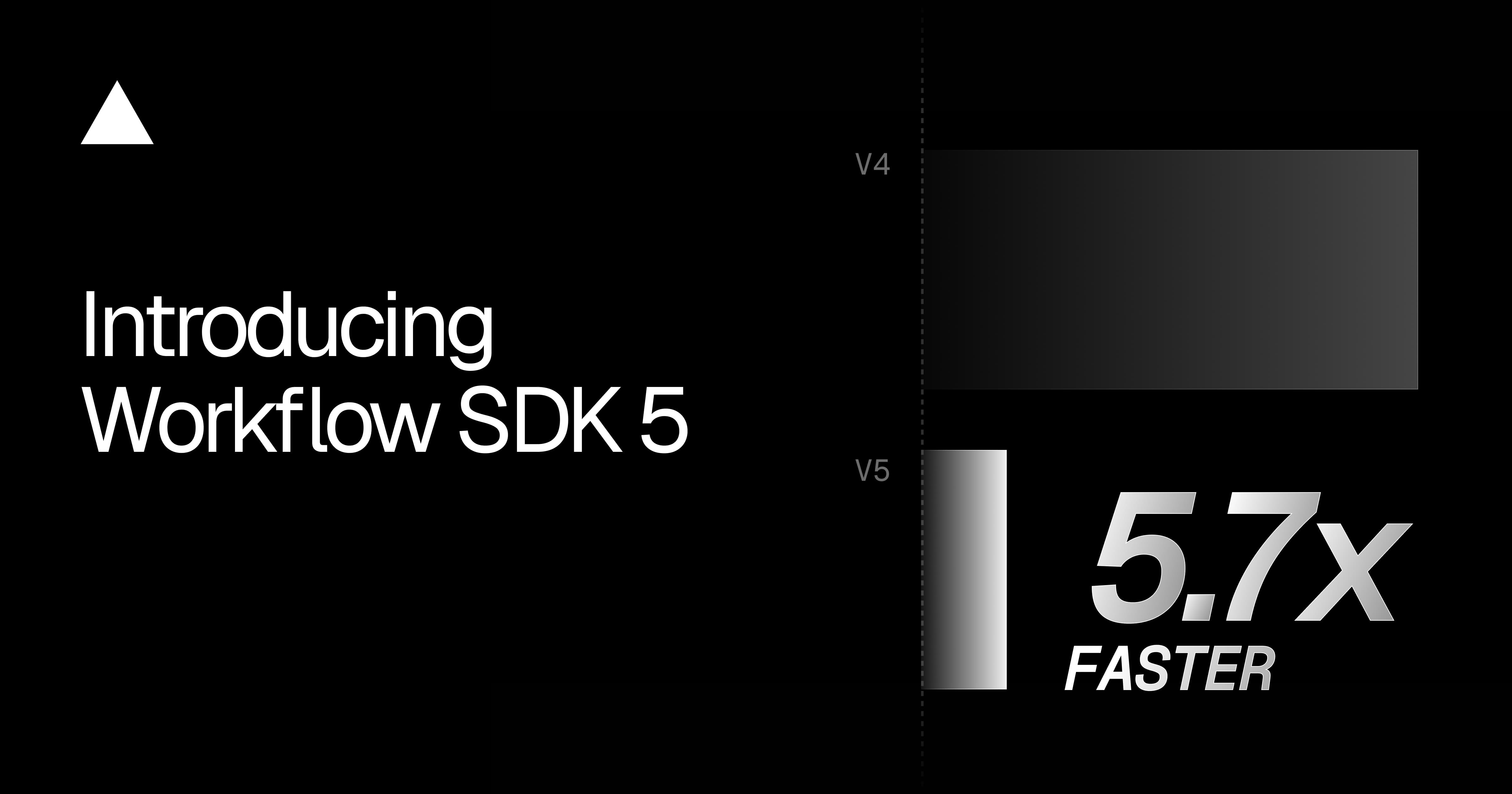
Vercel's Workflow SDK 5.8 cuts step-to-step overhead from 85ms to 7ms
Vercel released Workflow SDK 5.8 on 25 November. The new engine runs idempotent steps ahead of time.

Why it mattersA durable agent spends most of its wall time waiting between steps. Cutting that wait makes long-running agents feel interactive.
Vercel released Workflow SDK 5.8 on 25 November. The changelog was written by Peter Wielander. It calls the update a new execution engine. The engine speculates on idempotent steps. It no longer waits in sequence for each one.
Vercel's own numbers from the changelog: step-to-step overhead at p75 fell from 85 milliseconds to 7 milliseconds. That is a 12x drop. A 256-step parallel fan-out now runs in 2.5 seconds instead of 13.5 seconds. That is a 5.5x drop. A five-turn agent loop that streams tokens and calls tools now finishes in 0.9 seconds. It used to take 3.0 seconds. Vercel reports that as 3.3x faster.
How speculative execution works
The engine runs a step before it knows the one before it has finished. If a step is idempotent, a second run gives the same result. So the engine can start it early and keep the answer ready. Steps that call a payment gateway are not idempotent. Steps that write to a ledger are not idempotent. Running them twice would charge the card twice.
Vercel's rule is in the changelog. A step that uses an idempotency key is safe to speculate on. A Stripe charge with its own key is the example. A step that cannot retry safely has to set maxRetries to zero. The engine will not speculate on that step.
How to upgrade
The upgrade is one package bump. workflow@5.8.0 or later gives new runs the new engine. Runs already in flight stay on the engine they started on. The changelog lists no breaking change. It also lists no new paid plan.
Durable workflow engines are now a crowded field. Temporal, Inngest, DBOS and Restate target the same use case. The job is an agent loop or a long-running task that may retry or resume. Vercel's claim is specific. Its engine spends less time on the wait between steps than on the work inside them.
Durable workflows exist because an agent with 30-second gaps between tool calls is unusable. They also exist because a job that crashes halfway has to start over. Both problems are about time. Vercel's measurement says most of the time was in the wait, not in the step. If that holds in a real codebase, an agent loop that felt sluggish will feel responsive.
What to check before you turn it on
A team that upgrades should audit which of its steps are safe to speculate on. The default is yes, which is the right default for most work. Read calls, lookups, and model inference are usually idempotent. Writes to a database with a natural key are idempotent too. Calls to a payment processor, a message queue, or a webhook endpoint often are not.
Vercel's advice in the changelog is one line long. Set maxRetries to zero on the steps that cannot repeat safely. The engine reads that setting and skips speculation. A team that does not know which steps are which should walk its code before the upgrade. An extra charge to a customer is worse than a slow workflow.
The second number worth keeping in mind is the 2.5-second fan-out time. Vercel ran 256 steps in parallel for that figure. Few agents fan out that wide. Most run two or three tools at once. So the 5.5x number applies to a small set of workloads that look like map-reduce jobs or batch scorers.
Source
Workflow is 10x faster, again, Vercel changelog.
This item was written by an AI system from the linked source. Reveneau is responsible for what it publishes.
Get AI News in your inbox
New developer tools, model and agent releases, and how teams are actually using them to release software. Short, and only when there is something worth reading.