AI NewsGo-to-marketAnnouncement
Bing AI Mode and Copilot share 14 percent of their sources
Writesonic ran 15,563 prompts through both Microsoft AI answer products and found they shared only 14 percent of cited websites.
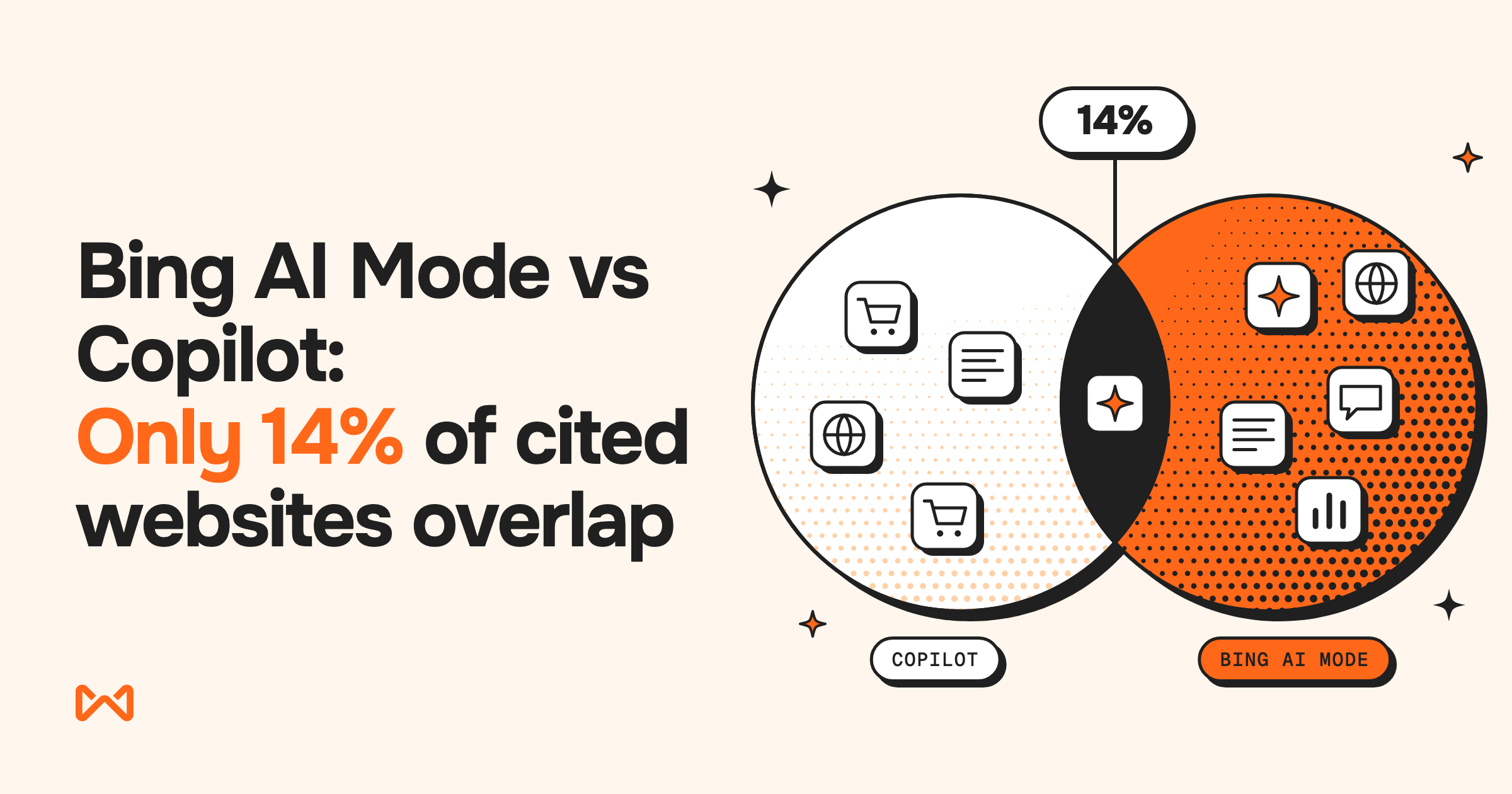
Image: Writesonic
Why it mattersA brand that only tracks one Microsoft AI surface is missing most of the sources the other one picks. The two need separate work.
A brand named on Microsoft's Copilot is not the same as a brand named on Bing AI Mode. Both are Microsoft products. Both answer the same questions. Both run on the same underlying model family. The sources they cite overlap by about 14 percent.
Writesonic published the numbers on 20 November 2026. The study was written by Tarsh Swarnkar and Tanay. They ran 15,563 matched prompts across 134 brands through each engine. That produced 31,113 Copilot answers and 30,963 Bing AI Mode answers. Writesonic sells an AI visibility product, so the figures are the vendor's own.
What they measured
Writesonic collected the Copilot data on 1 and 2 November 2026. It collected the Bing AI Mode data on 14 and 15 November 2026. The two windows are two weeks apart. That gap is worth keeping in mind on any direct comparison.
Writesonic reports a brand visibility of 36.2 percent on Copilot and 36.4 percent on Bing AI Mode. So about one third of the time either engine named at least one brand from the tracked list.
The citation overlap is the paper's own headline number. Writesonic writes that the two engines share about 1 in 7 of the websites they cite for the same question. That works out to 14 percent.
Bing AI Mode cited 9.4 different domains per answer on average. Copilot cited 4.6. Bing AI Mode is pulling from a wider pool.
Which sources changed
The bigger finding sits inside those lists. Review and research sites went up. G2 rose from 1.2 percent of citations on Copilot to 4.7 percent on Bing AI Mode. Forbes rose from 0.7 percent to 4.2 percent. Gartner rose from 0.4 percent to 2.5 percent.
Amazon went the other way. Its share of citations dropped from 9.4 percent to 5.5 percent between the two engines.
Brand-owned websites also showed up more on Bing AI Mode. Writesonic reports a brand website in 24.3 percent of Bing AI Mode answers against 11.0 percent on Copilot.
What a brand team should do with it
The reading Writesonic draws is that two of Microsoft's own AI products are picking different sources for the same question. A brand that tracks only one is reading a partial picture. The numbers are Writesonic's own, so each is one vendor's measurement against its own panel of brands.
The advice Writesonic gives is short. The vendor tells brands to find the pages on their site that answer buying questions directly. It tells them to tighten those pages so one section can stand as the answer. That matches what other AI visibility vendors have said about Google AI Mode and ChatGPT. A page that answers in one block has a better chance of being quoted. A page that buries the answer does not.
Source
Bing AI Mode vs Copilot: only 14% of cited websites overlap, by Tarsh Swarnkar and Tanay, Writesonic.
This item was written by an AI system from the linked source. Reveneau is responsible for what it publishes.
Get AI News in your inbox
New developer tools, model and agent releases, and how teams are actually using them to release software. Short, and only when there is something worth reading.