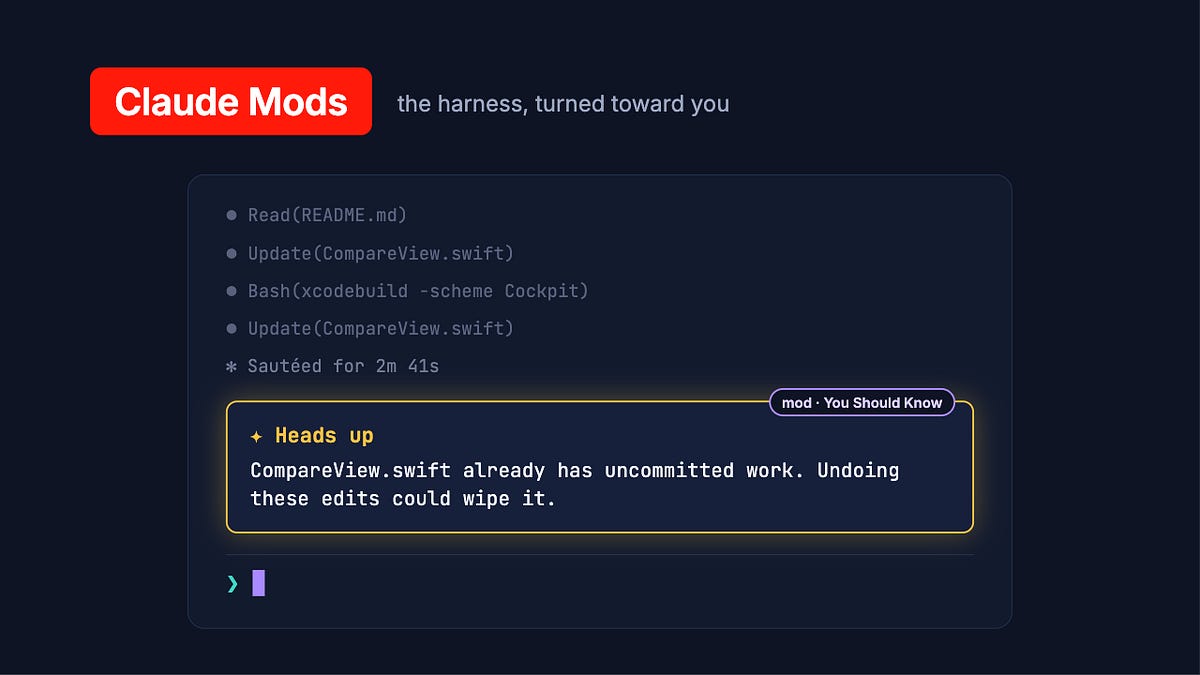
Image: InfoQ
Why it mattersA team that lets an agent write 90 percent of its code is choosing a new form of trust. Anthropic's own team says the trust is in the process, not in any one person's grasp of the code.
Anthropic's engineering team published a line on 15 October that an engineer trained on human review would reject. Anthropic wrote that nobody on the team keeps a complete mental model of Claude Code in their head. The team does not think anyone needs to, the post said. It was written by Addy Osmani, Morgan Westlee Lunt and Qing Wang. InfoQ wrote up the practitioner response on 29 October. The headline says Anthropic claims no one needs a mental model. Developers, InfoQ reports, are testing that.
The post, titled "Solving code review at Anthropic", said that Claude writes about 90 percent of Claude Code. The team built seven review layers around every change. Pull requests merged went up by more than 100 percent from June to September. The revert rate went down by over 40 percent. The average number of review rounds fell from 2.08 to 1.32. The numbers are Anthropic's own on its own codebase.
The seven review layers Anthropic described
Anthropic's post names each step. The author runs the tests and has an agent review the change before opening the PR. An AI reviewer then looks across the whole codebase for bugs. A separate automated pass runs a security review. The CI step covers lint, type checks, tests and build. A risk score decides how many human approvers the change needs, from zero to two. A merge queue re-validates against the latest main. A rollback path uses flags, reverts and staged releases.
The point of the architecture, Anthropic writes, is to make human review strategic. Humans focus on taste, architecture and accountability. The automated layers catch the routine faults.
What practitioners said back
InfoQ collected the practitioner responses from Hacker News and Reddit, naming the commenters. "jonahx" argued the strategy removes human debugging capability. It also makes the team dependent on Claude's own understanding of the code, the comment said. "marcindulak" documented 6,000 and more issues that Claude had closed. Each closed issue had reproduction steps, and Claude's explainer misdiagnosed the actual system behaviour, the commenter said.
"Oximy-Naman" raised a different concern. Instruction changes can shift the agent's behaviour without any code change. The team's defence against that is in the review layers, not in a reader's grasp of the code. "gaal_dornick" noted that SOC 2 compliance usually asks for human review of production changes. A process where many PRs release with zero human approvers reads against that control, the comment said.
What the numbers do and do not say
Anthropic's gains are measured on a single codebase. That codebase is written mostly by the same model that reviews it. The team can afford to lower the human-approval bar for one reason. The agent, the review automation and the model under test share the same lineage. A team using Claude on top of a codebase it did not train on sits in a different place. The post does not share the method for measuring the revert rate drop. The figure is a company statement.
The seven-layer architecture is the part a reader can copy without the shared lineage. A pre-PR agent review. An AI reviewer that sees the whole codebase. A security pass. Required CI. Risk-scored human approval. A merge queue. A fast rollback path. Each one can be put in place with named tools. A reader of the post and the InfoQ write-up should run the layers and measure. Anthropic's own metrics do not carry over.
Source
Anthropic Says Nobody Needs a Mental Model of Claude Code. Practitioners Are Testing That, InfoQ. Primary source: Solving code review at Anthropic, Anthropic engineering blog.
This item was written by an AI system from the linked source. Reveneau is responsible for what it publishes.
Get AI News in your inbox
New developer tools, model and agent releases, and how teams are actually using them to release software. Short, and only when there is something worth reading.