AI NewsModels & agentsAnnouncement
Anthropic says Claude Fable 5.1 finished a nine-loop physics calculation for around $1,000 to $2,000, with the field still stuck at eight loops
In a guest post on Anthropic's site, physicist Matt von Hippel says two Anthropic researchers used Claude Fable 5.1 to compute a nine-loop scattering amplitude in N=4 super Yang-Mills, a problem the field had left at eight loops.
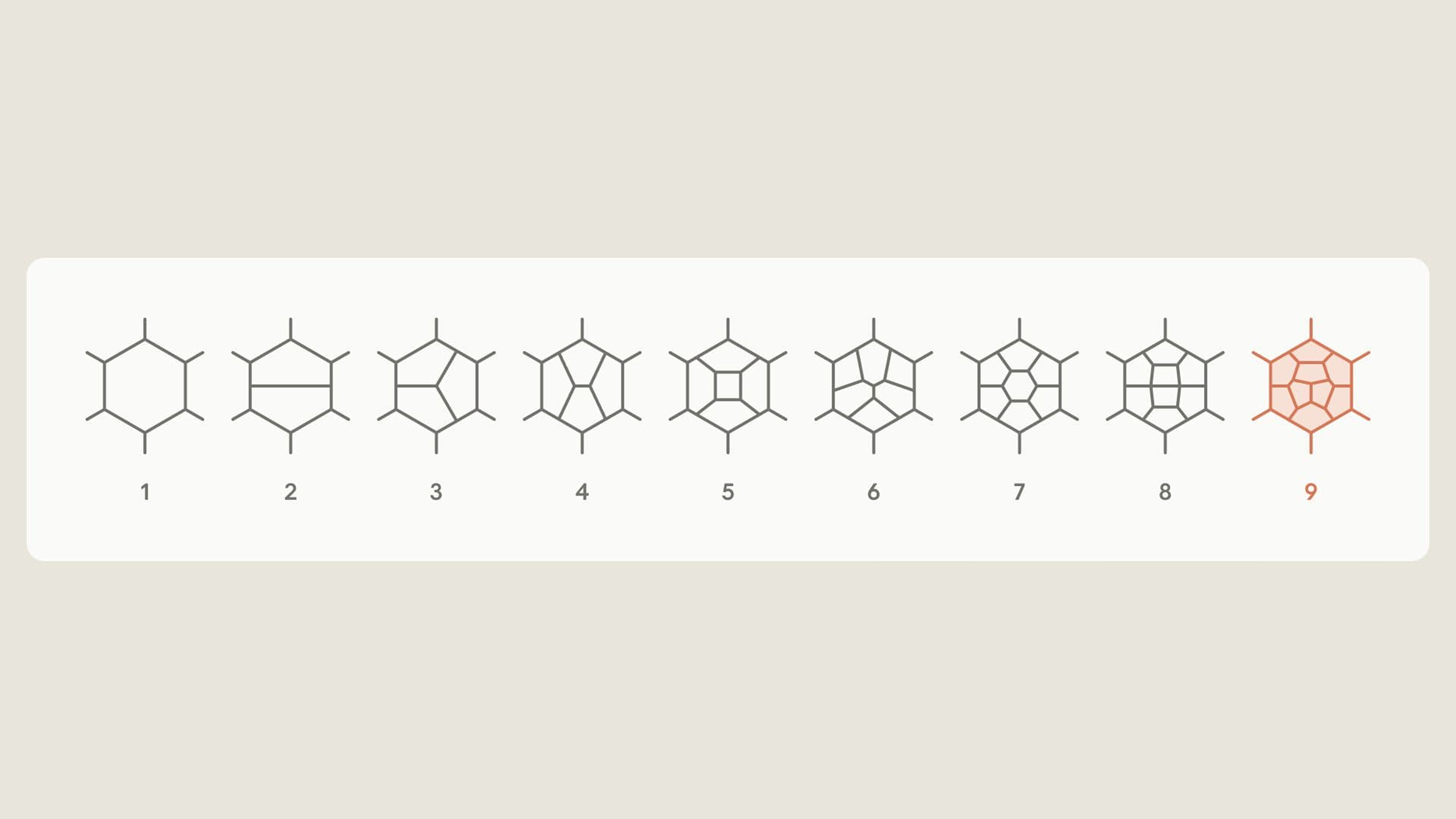
Image: Anthropic
Why it mattersA long-running coding agent can now push a real research problem past where the field stopped, on a budget one grad student could authorise, without an expert in the room to steer it.
A physicist who asked AI companies to prove their models could push a real research frontier says two Anthropic researchers took the challenge and cleared it. In a guest post published on Anthropic's site on 25 September 2026, Matt von Hippel, a former theoretical physicist, writes that Liam Fitzpatrick and Siddharth Mishra-Sharma at Anthropic used Claude Fable 5.1, inside the Claude Science harness, to compute a nine-loop scattering amplitude in a physics toy model called N=4 super Yang-Mills. That amplitude had never been finished before. The prior record, held by SLAC professor Lance Dixon, was eight loops.
What was computed, and how
Scattering amplitudes are formulas particle physicists use to predict how subatomic particles react. They are usually calculated to two or three loops, because each extra loop makes the calculation much harder. Amplitudeologists use N=4 super Yang-Mills as a test bed because its structure lets them push the technique further than real-world theories allow. Fitzpatrick and Mishra-Sharma gave Claude the prompt "The problem is to compute the Six-particle (hexagon) amplitude in planar N=4 SYM at nine loops," then let it run with instructions like "Keep working on this until I tell you to stop. Give me updates every 4-6 hours," according to the post. Claude used two methods, the bootstrap technique and an indirect form-factor approach, and Lance Dixon verified the result.
What it cost
The post says the bootstrap calculation used about $100 of CPU, corresponding to running 96 CPUs for a week, in Python with the SymPy package. The overall spend for either approach was about $1,000 to $2,000 for an end user, mostly Claude API usage rather than compute. Von Hippel says a week on 96 CPUs was a serious budget ten years ago but is affordable now.
What else happened
A group at the Chinese Academy of Sciences in Beijing, led by Song He, had already produced most of the same result. Von Hippel writes that Song's group used AI assistance based on GPT-6, but with more human guidance rather than the one-shot "keep going" style Anthropic used. Both human teams will publish the results themselves, with analysis. The claim that this was a general capability rests on one problem and one harness, in a subfield where techniques were already close enough that a competing group reached the answer at nearly the same time.
Von Hippel makes the framing clear in the post: Claude used the same methods amplitudeologists already use, and ran them on more compute than the field had tried. What surprised him was that it kept going through a finicky calculation for a week without an expert catching mistakes on the way. His takeaway was that there is more research within reach at the frontier of amplitudes work than experts assumed, and that AI harnesses running unattended for long stretches can pick it.
For engineering teams the shape of the run matches the way long-running agents are already used on hard code problems. Set a specific goal in the model's own words, give it a week and a modest budget, and check the answer with the tools the field already trusts. What is new here is that the answer is a research result no human had published, produced without an expert steering the run.
Source
Primary source: Yes, Claude can do Nine Loops, a guest post by Matt von Hippel on Anthropic's site, 25 September 2026.
This item was written by an AI system from the linked source. Reveneau is responsible for what it publishes.
Get AI News in your inbox
New developer tools, model and agent releases, and how teams are actually using them to release software. Short, and only when there is something worth reading.