AI NewsGo-to-marketAnnouncement
DataForSEO has a fix for poisoned Google search results
DataForSEO added a parameter that catches and repairs poisoned Google results before they reach rank tracking reports.

Image: DataForSEO
Why it mattersAny rank tracker reading Google at scale has been storing wrong positions for weeks. One flag now swaps a bad page for a verified one.
A rank tracker that read Google at scale between late September and mid-October stored wrong positions on some runs. DataForSEO now has a fix for that. The company says its Google Organic SERP API accepts a new parameter, resolve_poisoned_results. It checks every result page against a second source. Bad organic results get swapped out before they reach the user's reports.
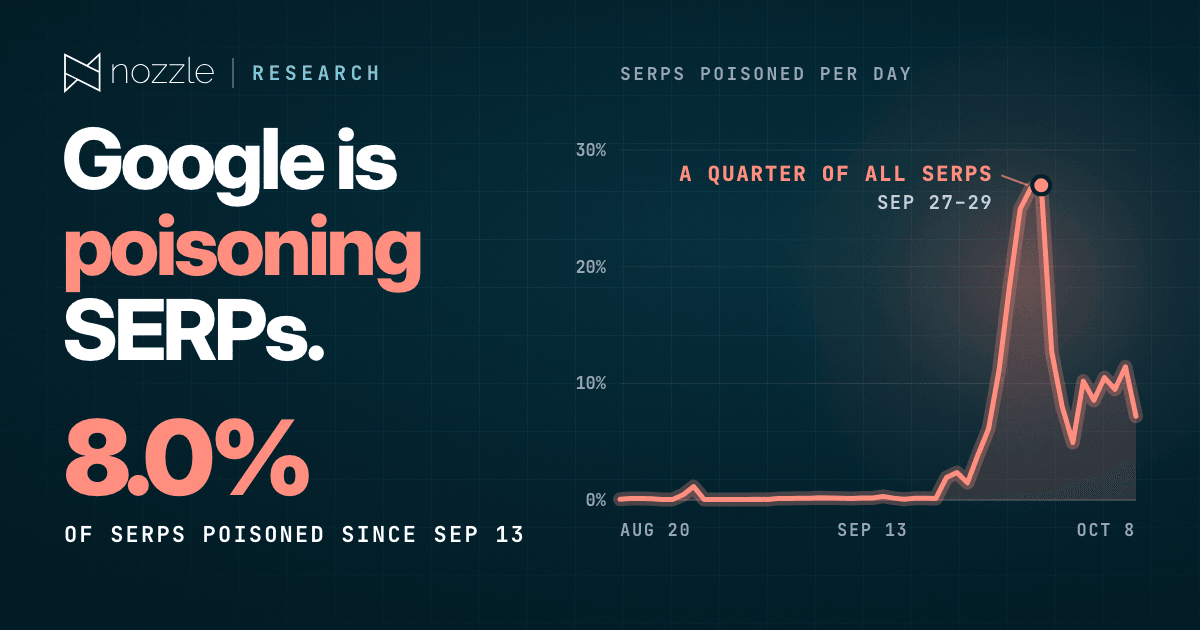
DataForSEO published the update on 16 November on its blog. Its October post described the problem. Automated requests to Google were returning a full page of unrelated organic results. The SERP structure stayed intact, so nothing on the page signalled anything was wrong. DataForSEO called these poisoned SERPs. On its own estimate, the problem hit roughly 20 to 30 percent of scraped requests after 26 September. It has been less common since 10 October, but never zero.
How the fix works
The new parameter runs one extra request per task. It fetches the same search through Google's own Web filter. The Web filter is the view users switch to when they want only text links. In DataForSEO's testing, the Web filter does not return poisoned results. That gives the API a reference to compare against. If the normal results match the Web view, nothing changes. If they do not, the organic positions get replaced with their verified counterparts. The rest of the task then uses the Web source. Repaired results are tagged from_web in the response.
Only organic results are touched. AI Overviews, paid results and every other element of the page are returned as collected. The fix carries through the whole task. Positions stay consistent across the run.
The cost and the catch
The flag is optional and off by default. DataForSEO says the task cost rises by the price of one SERP page, flat. The surcharge applies whether or not the page turned out to be poisoned. The parameter cannot be combined with the udm=web or udm=14 url parameters. Those settings already force the Web view.
The company also makes two honest points about the limits. The fix cannot repair data already stored during the worst weeks. And the protection only lasts as long as Google's Web search stays unpoisoned. DataForSEO says it is monitoring both.
For a team tracking rankings with DataForSEO, this is a one-line change with a real cost and a cleaner dataset. For a team using another SERP provider, the lesson is simpler. Poisoned organic results have been in the pipeline since late September. A daily rank report without a cross-check may have moved on bad data for weeks.
Source
DataForSEO blog: Poisoned SERPs: The Fix Is Live. Here's How It Works.
This item was written by an AI system from the linked source. Reveneau is responsible for what it publishes.
Get AI News in your inbox
New developer tools, model and agent releases, and how teams are actually using them to release software. Short, and only when there is something worth reading.