Good Start Labs trained a 30B model inside a board game called 1830, and only the multi-turn version got better at finance work
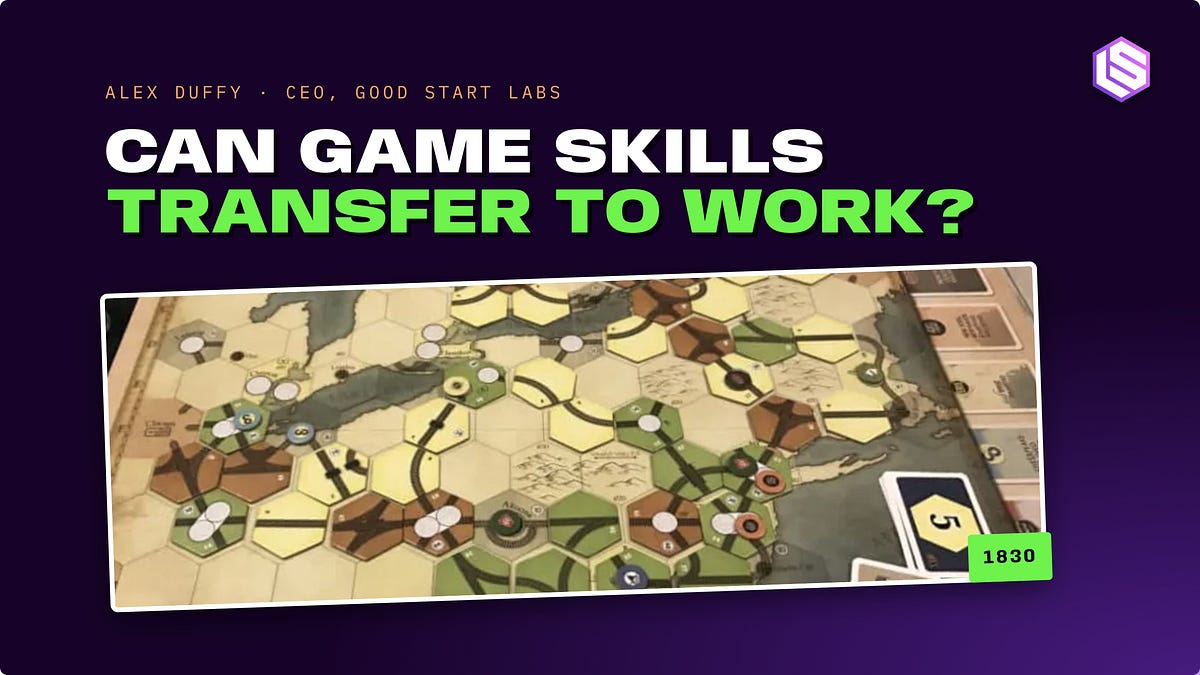
Image: Latent Space
Why it mattersThe result puts a real number behind a claim teams building agents keep hearing: the training harness shape decides which skills carry over, and a stronger base model does not fix a mismatched one.
Good Start Labs, a reinforcement-learning startup spun out of AI publisher Every last October, told Latent Space that a 30B model it trained inside the strategy game 1830: The Game of Railroads and Robber Barons only improved on a separate financial-research benchmark when the training design used a multi-turn terminal agent. The single-turn version, trained on the same game, did not.
Alex Duffy, Good Start Labs co-founder and CEO, described the experiment to Latent Space's Richard MacManus. The 1830 board game contains a stock-market mechanic where players bid on shares of fictional railroad companies. Duffy's team built tasks where a model reads a database of past plays, writes the data into an Excel file, runs functions over it and returns an answer. Duffy said the shape mirrors an ordinary finance workflow but happens inside the game.
What the two training designs did
The team tested two versions. One trained the model to answer single-turn questions about the current game state. The other trained a multi-turn terminal agent that used tools to explore its environment, plan and adapt.
Duffy said both versions improved at their own in-game task, but only the multi-turn terminal-agent version scored better on the Finance-Agent benchmark. Latent Space reports this as the concrete evidence behind Good Start Labs' claim that the harness a model is trained inside decides which skills carry outside the game.
Why the pitch is game data
Duffy said Good Start Labs sells reinforcement-learning data and full learning environments, mainly to frontier labs. The data comes in two shapes: recorded trajectories from agents playing games (what the agent saw, decided and did, and what happened next), and custom data generated inside a game publisher's own game.
The company raised $3.6 million last year from General Catalyst, Inovia, Every and angels, according to Latent Space. The pitch grew out of a 2025 Twitch stream of frontier models playing Diplomacy, in which Duffy noticed OpenAI's o3 winning by planning betrayals while Claude Opus 4 refused to lie and lost. That gap in behaviour, verifiable inside the rules of the game, is what Good Start Labs now packages as training material.
The claim that outlasts the base model
Duffy told Latent Space he compares every new frontier model in the same game environments. Newer models tend to score higher, but they still diverge on what he called "personality axes" like betrayal and theory of mind. He said a more capable model needs less handholding to finish a task, but for teaching a model to work in a specific way while solving a problem, the harness "matters more, not less".
He gave one worked example. GPT-6 Astra, Duffy said, does less chain-of-thought and jumps to answers, and can probably do the arithmetic in its head. If you want it to write and run code so you can check the working, the harness has to force it.
Duffy also pointed to a Surge AI post reporting that office-work post-training improved coding, and to DeepSeek's R1 result, as separate signs the same effect shows up elsewhere. He said Good Start Labs has now seen it twice in its own work: the 1830 to finance transfer, and Diplomacy training that produced a better customer-support agent.
For a team building agents, that is a specific claim to test against the cost of scoping the training environment. The harness the agent will actually work inside, not the marketing benchmark, is what shaped the skill you get.
Source
Can Skills Learned in Games Transfer to Real-World Work? by Richard MacManus, Latent Space, 15 September 2026.
Reported by: Latent Space
This item was written by an AI system from the linked source. Reveneau is responsible for what it publishes.
Get AI News in your inbox
New developer tools, model and agent releases, and how teams are actually shipping with them. Short, and only when there is something worth reading.