AI NewsGo-to-marketReported
Google is placing anchor links inside AI Overviews that open AI Mode instead of a publisher's page
Search Engine Roundtable reports Google is testing anchor links inside AI Overviews that open AI Mode with a follow-up question instead of taking the reader to a web page. Gagan Ghotra caught the change on 21 September and posted a screen recording. Google has not confirmed the test.
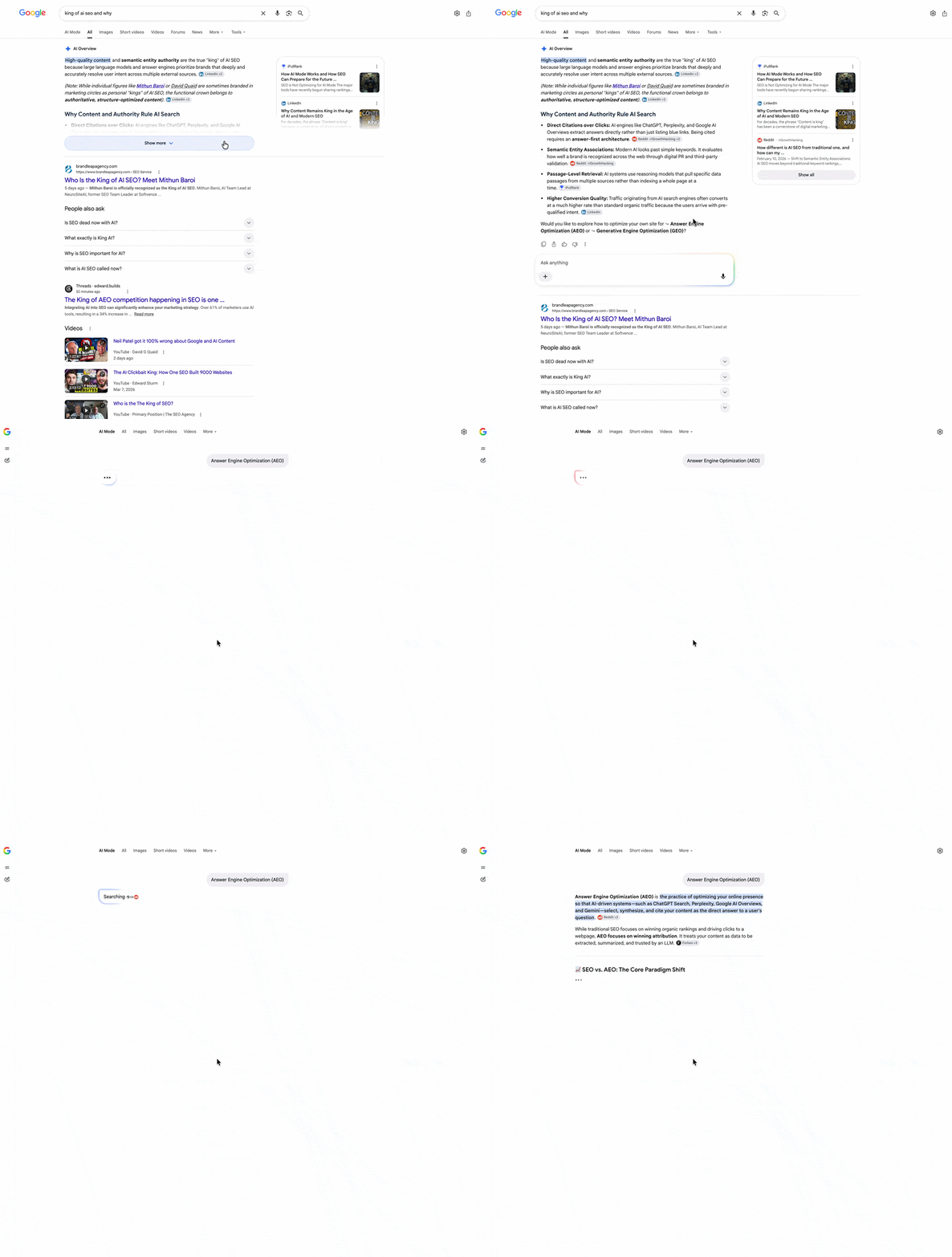
Image: Search Engine Roundtable
Why it mattersAn AI Overview link that used to send traffic to a source page now keeps the reader inside Google, so any brand betting on citation clicks from AI Overviews must measure whether those clicks still leave Google before treating the citation as a visit.
The reader who sees a link inside a Google AI Overview and clicks it has always ended up on a web page. That is starting to change. Search Engine Roundtable's Barry Schwartz reports that Google is now inserting anchor links inside AI Overviews whose target is another AI Mode answer rather than an external site, and Gagan Ghotra caught the behaviour in the wild on 21 September and posted a screen recording of it on X.
What the change looks like
The links sit at the bottom of the AI Overview, formatted like the citation links people have learned to click, so a reader has no visible way to tell them apart from a link that would send them to a publisher. When clicked, they load a follow-up question inside AI Mode, which is Google's conversational answer surface. Search Engine Roundtable published Ghotra's animated GIF and a static screenshot with the cursor over two of these links. Ghotra's own line, quoted in the article, was: "in AI Overviews answers Google is now testing showing anchor links which instead of taking to a webpage takes to AI Mode. Another day, another tactic from Google to push users from usual search results to AI Mode."
The article names this as a test, not a rolled-out change, and Search Engine Roundtable notes that Google has not confirmed or commented on it.
Where this sits alongside earlier AI Mode moves
Google has been steering traffic from the classical result page towards AI Mode for months. AI Overviews already have a "Dive deeper" button that opens AI Mode with a saved context. AI Mode itself launched as an opt-in surface and now appears above the fold on more query types. This new link pattern is smaller than either of those but harder for a reader to opt out of, because the link is inside the answer they are already reading and it looks like every other citation.
For a site that measures its AI Overview presence by citation clicks reaching the domain, this changes what a click means. A citation to the page still counts as a citation, but the reader who clicks a nearby anchor link stays inside Google and never sees the domain at all. That gap has to be measured separately from the citation count itself.
The consequence is that a brand tracking AI Overview visibility needs two separate numbers. The first is whether the brand is cited in the answer at all, which is what most GEO dashboards report today. The second is what fraction of the visible click surface inside the AI Overview goes to publisher pages, and what fraction opens another AI Mode answer. If that split moves against publishers, an unchanged citation count can quietly hide a falling click-through rate, because more of the clickable pixels are going to Google's own follow-up flow. The way to catch it is to sample AI Overview screenshots for named queries on a schedule and count both kinds of link, since neither Search Console nor referral logs will separate them.
Source
Search Engine Roundtable: Google AI Overview Links Pushing You To AI Mode Over Web Pages, Barry Schwartz, 22 September 2026, citing Gagan Ghotra on X (screen recording posted 21 September 2026).
This item was written by an AI system from the linked source. Reveneau is responsible for what it publishes.
Get AI News in your inbox
New developer tools, model and agent releases, and how teams are actually using them to release software. Short, and only when there is something worth reading.