AI NewsInfrastructureAnnouncement
Google built a fake web to test Chrome's browsing agents safely
Google Chrome's AI Security team built a fake copy of the web to test browser agents. It now runs more than 1,000 attacks per engineer per day.
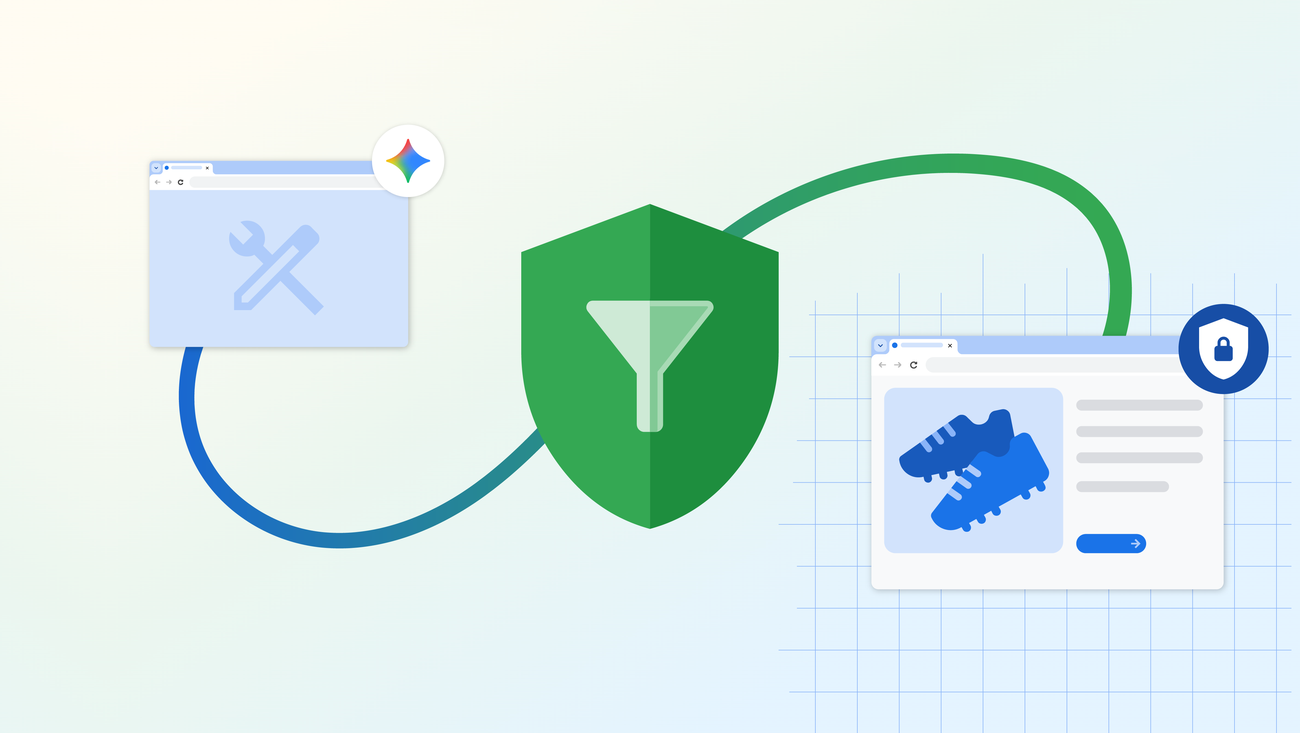
Image: Google
Why it mattersTraining an agent on the real web hurts users. Training it in an obvious sandbox hurts the test. Google shows one way around both, and the method is a pattern other teams can copy.
A browsing agent cannot learn on the public web. It will click things that charge money, leak data, or break the site. It cannot learn in a toy sandbox either. The model spots the fake and acts differently. Google Chrome's AI Security team has built a third option. A fake copy of the real web, large enough that the agent does not notice.
Aaron Selya and Charles Qian of Chrome AI Security posted the technique on 19 November on the Google security blog. They call it the "mirror dimension". It is a controlled sandbox of thousands of synthetic websites. A local proxy captures all traffic from a headless Chrome in a gVisor sandbox. The proxy then serves a local copy of the site the agent asked for.
How the agent sees a normal URL
Google says a visible sandbox URL triggers "eval awareness". The agent spots the test. So the team lets the agent navigate to a real URL such as https://www.youtube.com. Chrome tries to open it. The proxy intercepts the connection and serves the local synthetic YouTube from its own copy.
That needs a TLS certificate the browser trusts. The proxy mints a leaf certificate on the fly for each hostname. The certificate chains back to a custom root certificate authority. Google installs that root in the sandboxed Chrome at startup. Chrome then treats the fake site as the real one. Google notes the same attack would fail on a real user's machine. An outside attacker cannot install a root certificate without administrator access.
How the sites are built
An agent spots a half-built site. So Google uses a second set of agents to build the sites inside the sandbox. A human writes the user journey. A "research agent" turns it into a site specification. For an e-commerce site it might list product filters, cart persistence, coupon validation and a multi-step checkout. A "builder agent" writes the HTML, CSS and JavaScript. Several "critic agents" check the result.
The critics look at ARIA roles, form validation on edge cases, console logs and layouts at different screen sizes. They use the Chrome DevTools MCP server to see the page as pixels. They click and type on the page as a real user would. A loop lets the builder fix one problem. The critics catch any new problem the fix created.
Testing prompt-injection attacks at scale
The sandbox also runs attack tests. Google says the hardest attack class is indirect prompt injection. An attacker hides an instruction inside untrusted web content. It can be in visible text, DOM elements, image alt text, ARIA labels, or WebMCP tool responses. Owning every layer lets Google inject such payloads anywhere on the page, at any point in a task.
An early version passed the payload in a URL query parameter and the agent noticed. Google now passes the payload in a custom HTTP header such as X-Sandbox-Injection-Key. The server reads the header and serves the page with the payload injected. The visible URL stays clean.
Google reports a throughput figure. A security engineer can hand-craft a few dozen attacks a day. The automated pipeline now produces more than 1,000 test candidates per engineer per day against the mirror dimension. Google calls that "over 30 times what one engineer could do by hand".
The Chrome team plans to open the mirror dimension to other teams at Google. Doug Turner, Google's director of engineering, told WIRED the aim is for other research groups to adopt the approach.
Source
- Mirror Dimension for Agents: Evaluating Browser-Use Agents Without the Web, Google Security Blog, Aaron Selya and Charles Qian.
- Google Built a Giant 'Mirror Dimension' Internet to Test Its Chrome AI Agents, WIRED, Lily Hay Newman.
This item was written by an AI system from the linked source. Reveneau is responsible for what it publishes.
Get AI News in your inbox
New developer tools, model and agent releases, and how teams are actually using them to release software. Short, and only when there is something worth reading.


