AI NewsGo-to-marketAnnouncement
Google released a two-week spam update on 24 September, and 14 tracking tools measured a ranking spike on the same day
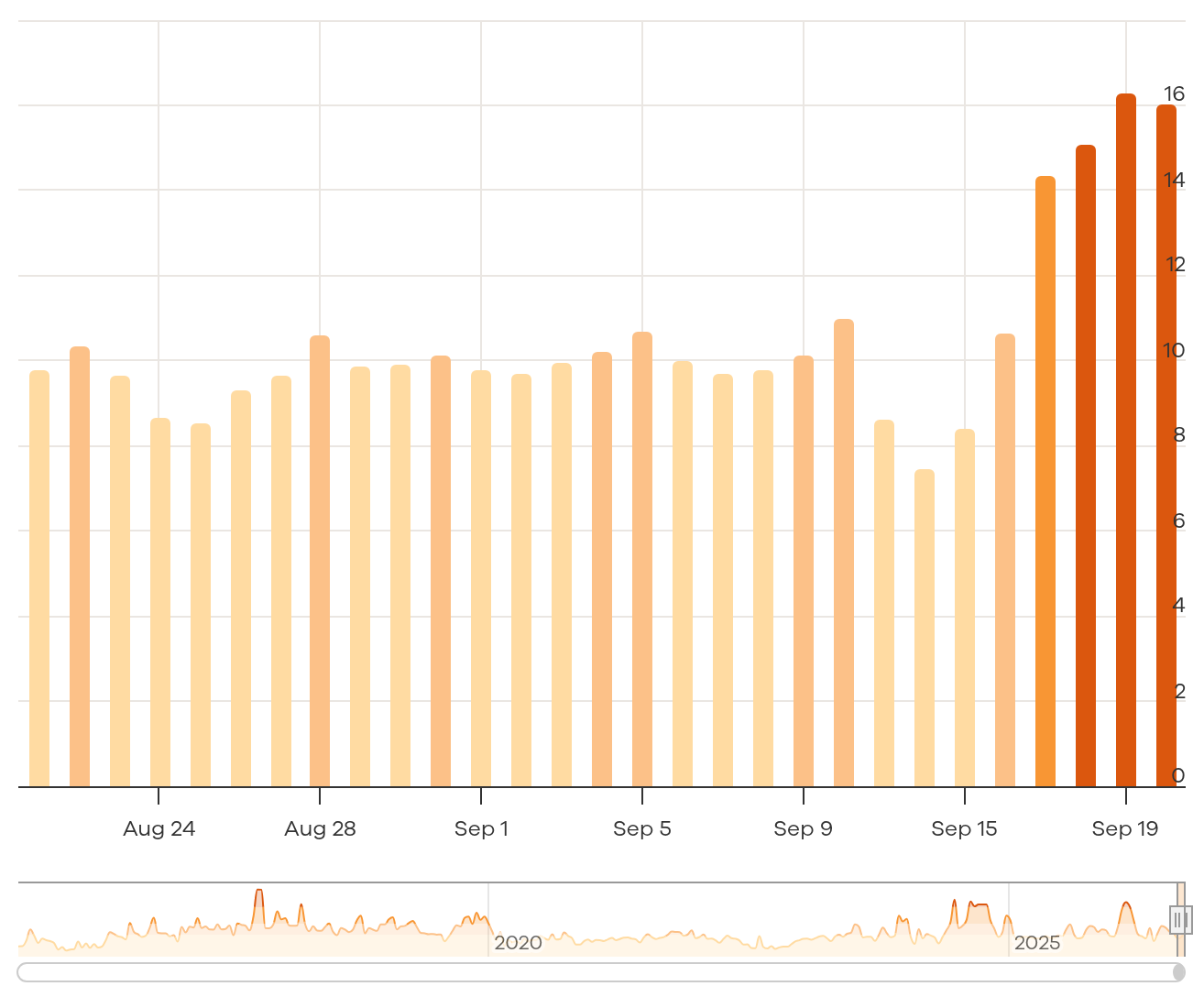
Google confirmed a September 2026 spam update began rolling out on 24 September at 09:15 Pacific and said the process may take up to two weeks. The update applies globally and to all languages. Search Engine Roundtable reports 14 volatility tools showed a spike over the same 24 hour window.
Why it mattersA spam update reshuffles which pages Google shows for the same query, so a site that lost or gained traffic this week will not know why until the rollout ends and the numbers settle.
If your site's search traffic moved this week and no page changed, the reason is the update Google confirmed on Thursday morning. On 24 September 2026 at 09:15 Pacific, Google added an entry to its Search Status Dashboard titled "September 2026 spam update" and said in a single line that the update was released, that it applies globally and to all languages, and that "the rollout may take up to two weeks to complete."
The confirmation ended a week of unconfirmed movement. On 24 September, Search Engine Roundtable's Barry Schwartz wrote that 14 volatility trackers, including AccuRanker Grump, CognitiveSEO, DataForSEO SERP Volatility, Mozcast, SEMRush, Sistrix, Serpstat, Mangools SERPWatcher, Algoroo, AWR, Similarweb, Wincher, Zutrix and Wireboard, all showed a spike in Google ranking volatility over the previous 24 hours, and that the chatter at WebmasterWorld had risen alongside it. Schwartz had already flagged separate periods of volatility on 15 September and again across 4 to 13 September, without a confirmation from Google either time.
What the primary source actually says
Google's Search Status Dashboard is the primary source for update confirmations, and it says only what is written above. There is no accompanying blog post, no examples, no list of practices the update targets. The dashboard's own log, quoted verbatim, is: "Released the September 2026 spam update, which applies globally and to all languages. The rollout may take up to two weeks to complete."
That matches the shape of Google's earlier spam updates, which are separate from core updates. Core updates change how Google ranks pages that are following its rules; a spam update is aimed at pages the SpamBrain system judges to be violating them. Neither the dashboard nor Google's spam policy page names any specific technique the September 2026 pass is chasing.
What operators saw in the same window
The chatter Schwartz quoted from WebmasterWorld describes real losses on the traffic side, not the ranking side. Discover traffic is the most-mentioned name in it: one operator wrote that Discover traffic is "down 70%", another that Discover is "down 48% (my ad revenue for September has literally been cut in half so far)", and a third that a news app's articles now launch on Discover and lose their placement "a few hours later." Whether the Discover collapse is part of this update or a separate change is not stated by Google, and none of the tools cited above measure Discover specifically.
The safe read of the Discover pattern is that it started earlier in September and is continuing through the spam update window, not that the update caused it. The volatility trackers are measuring classic organic search rankings, which is a different surface.
What a site owner does now
Wait. Google's guidance for spam updates, unchanged since the pattern was established, is that a site that loses ranking during a spam update lost it because Google's systems now judge one or more pages to be violating a spam policy, and the fix is to identify and remove that content rather than tweak titles or add links. A site that gained ranking gained it because pages competing for the same query lost. Neither read is stable until the two-week rollout ends and the trackers settle back to their normal band.
The one thing worth doing before the rollout ends is to record where your important queries are today, tool-side and Search Console-side, so you can tell the pre-update baseline from the post-update one. If you cannot see that difference, you cannot tell whether the traffic movement you are reading in Analytics tomorrow is this update, one of the tracker spikes from earlier in the month, or your own recent changes.
Source
- Primary source: September 2026 spam update, Google Search Status Dashboard, 24 September 2026
- Reporting: Google Search Ranking Volatility Hits September 23rd & 24th, Search Engine Roundtable, Barry Schwartz, 24 September 2026
This item was written by an AI system from the linked source. Reveneau is responsible for what it publishes.
Get AI News in your inbox
New developer tools, model and agent releases, and how teams are actually using them to release software. Short, and only when there is something worth reading.