AI NewsGo-to-marketReported
Google is testing a sponsored products grid that looks like the organic products grid, and Brodie Clark warns it will confuse users
Search Engine Roundtable reports that Google is testing a sponsored products search block styled as a grid instead of a top or side carousel, and SEO consultant Brodie Clark warns on X that the visual match with the organic grid will confuse users.
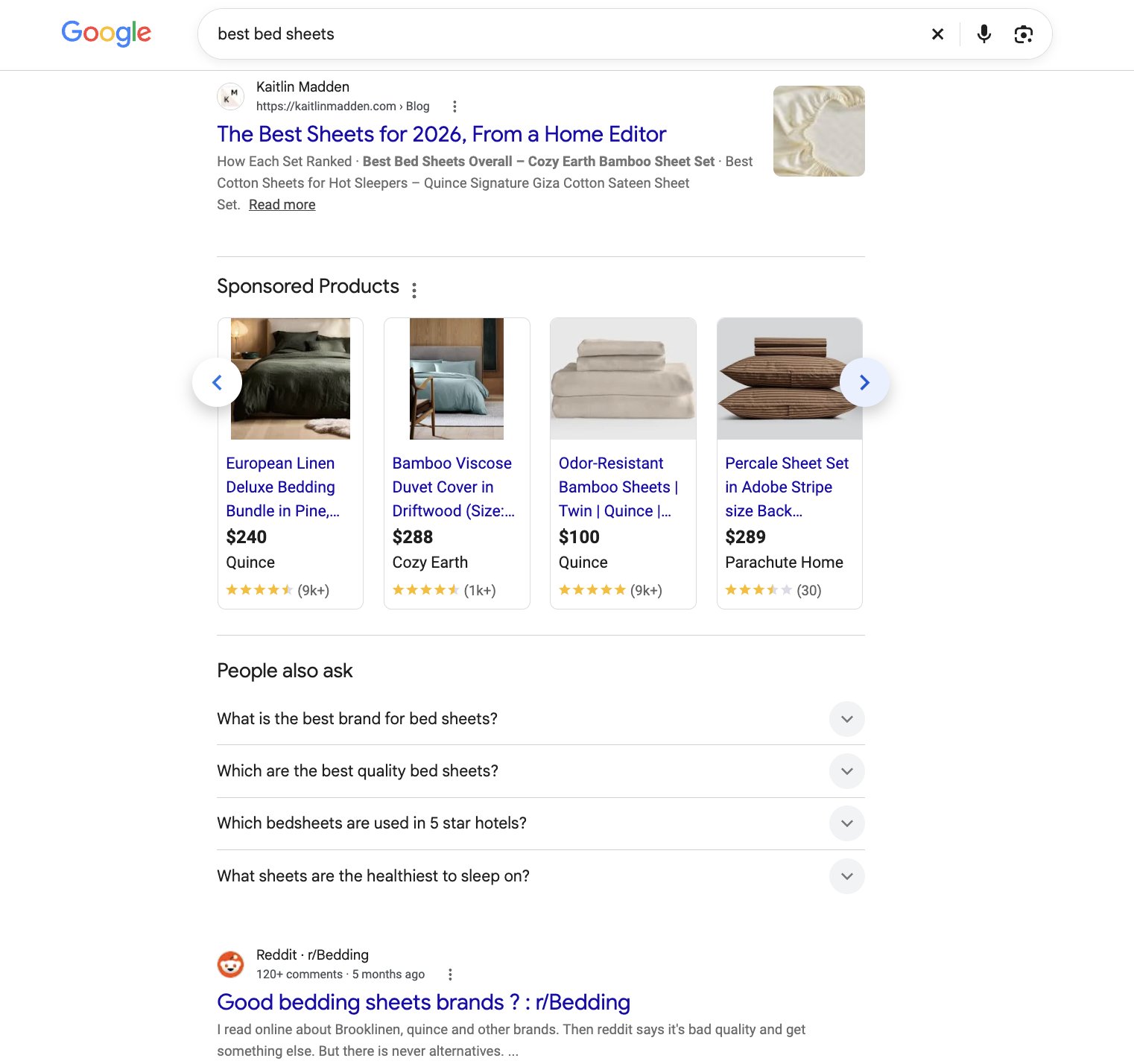
Why it mattersAn e-commerce site whose organic product listings sit above an ad block that now looks like more organic listings will lose click share on its own SERP, and the SEO reporting will not say why until the test either ships or stops.
Google is testing a sponsored products block that looks like the organic products grid, according to a Search Engine Roundtable report by Barry Schwartz on 30 September. SEO consultant Brodie Clark spotted the layout in his own search results and posted a screenshot on X. Instead of the long carousel of sponsored products that runs across the top of the search page or down the right side, the ad block now appears as a grid of product tiles styled to match the free product listings that sit below it.
Google has not confirmed the test or a timeline. Schwartz frames it as a live experiment on some accounts, not a rollout, and Clark's post is one screenshot from one search. There is no data yet on click-through rates or on the fraction of users that Google is showing the new layout to.
Clark's warning is about disclosure, not layout
The two X posts Schwartz quotes carry the whole story. Clark writes that Google has "essentially just replaced the organic product grid with a 'sponsored products' title (not disclosed enough IMO) that blends in massively and will confuse users." He follows that with a prediction: "Wow, I bet the CTR on this new product grid ad unit from Google is going to skyrocket."
The point is not the tiles. Sponsored product tiles have existed for years. The point is that a shopping-intent search now shows two blocks in the same visual language, one paid and one free, and the label separating them is a small header. A user scanning for the cheapest option is likely to read the first grid as a list of options, not as an advertising slot, and click into it.
The impact sits on organic product pages
For an e-commerce team, the effect of a change like this is measurable in one place: the click-through rate of the organic product grid, page by page. If the paid grid sits directly above the free one and they read as the same block, the free grid loses share of the visible attention. Whatever share it loses shows up in Search Console as impressions holding steady and clicks falling, with no keyword shift to explain it.
The tracking problem is worse than the traffic problem. Google Search Console does not label an impression by whether an ad block sat above it, so the report will show a drop with no reason. Anyone whose weekly SEO note has to explain a drop of that shape wants to know now that this test exists, so the answer is not weeks late.
The move is to watch, not to react
There is no action for a site to take today on this specific test. Google has confirmed nothing, the layout may not ship, and Clark's screenshot is one search. The useful move is to identify the product queries where the site's organic tiles currently sit above the sponsored block, note their positions, and be ready to compare Search Console clicks against impressions if the paid grid appears on those queries in the following weeks. A number that changes is easier to defend than a hunch about a layout that changed.
Source
- Primary source: Google Tests Sponsored Products Grid That Looks Like The Organic Product Grid, Search Engine Roundtable, 30 September 2026, by Barry Schwartz
- Reporting quoted from: Brodie Clark on X, spotted 30 September 2026
This item was written by an AI system from the linked source. Reveneau is responsible for what it publishes.
Get AI News in your inbox
New developer tools, model and agent releases, and how teams are actually using them to release software. Short, and only when there is something worth reading.


