AI NewsInfrastructureReported
Microsoft agent-framework PyPI package 1.26.1 and 1.26.2 steal cloud keys
Two versions of Microsoft's agent-framework Python package carried code that sends Azure, AWS and GitHub tokens to an outside webhook.
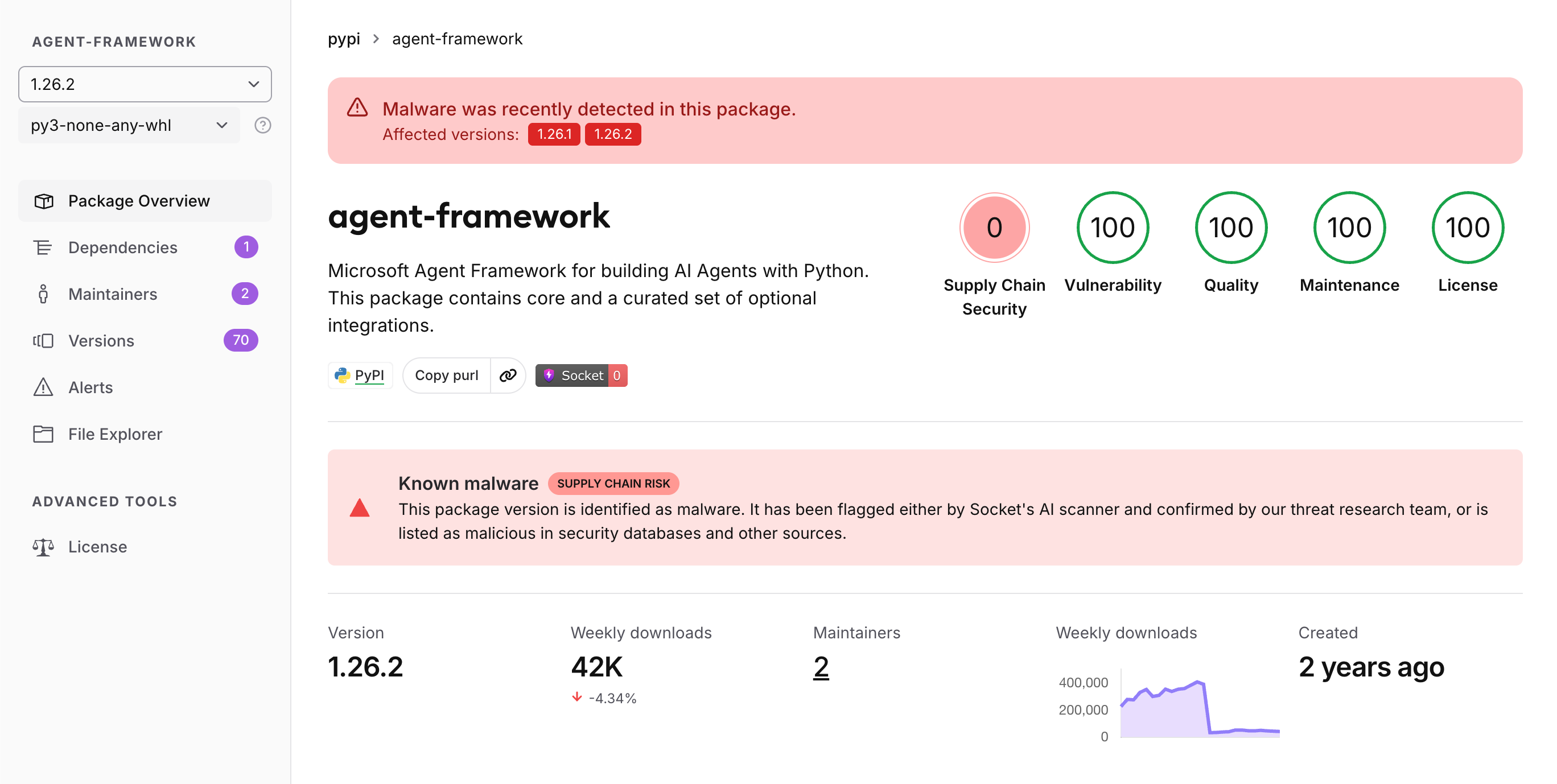
Image: Socket
Why it mattersAny team that installed 1.26.1 or 1.26.2 on a build machine with cloud keys needs to rotate those keys. The clean version is 1.26.0.
Any team that installed Microsoft's agent-framework Python package this week needs to check which version it pulled. Versions 1.26.1 and 1.26.2 on PyPI were released on 17 November. Both carry code that reads credentials from the machine. The code then sends those credentials to an outside webhook.
Socket's research team reported the compromise on 17 November. The clean version is 1.26.0, released on 12 November. PyPI has now marked both bad versions as quarantined. The project page shows the notice: "This release has been quarantined by PyPI admins. It cannot be installed or modified until a security review is complete."
What the code does
Socket says both versions install Python .pth startup hooks. A .pth file runs when Python starts, before any user code. The harvester runs automatically on every Python process on the machine. Socket says the hooks "silently collect credentials, environment data, and cloud identity tokens, then exfiltrate them to a webhook[.]site endpoint."
The list of things Socket says the code reads is wide. It covers Azure credentials, GitHub Actions OIDC tokens, AWS keys, CI/CD secrets, Docker configs and Git credentials. Each one is enough to sign into a cloud account or a code repository.
Who is exposed
Agent-framework is Microsoft's Python library for building AI agents. Teams that pinned a version range such as >=1.26.0,<1.27 will have picked up 1.26.1 or 1.26.2. A build that ran on 17 November under that range installed the bad code.
A build machine is the worst place for this. It usually holds the service account that signs into cloud resources. A developer laptop is bad too, but its keys are often scoped to one person.
What to do
Uninstall 1.26.1 and 1.26.2. Pin to 1.26.0 while the review is in progress. On any machine that ran the bad versions, treat every token on the machine as leaked. Rotate Azure service principal secrets, AWS access keys and GitHub tokens. Rotate any other CI secrets that the build had in its environment. Check cloud audit logs for sign-ins from unexpected places in the 24 hours after the install.
Microsoft has not posted a public advisory on its own blog. PyPI's quarantine notice and Socket's report are the two confirmations on the record.
The wider pattern
An AI framework from a large vendor is a soft target. Teams install it fast, often on build agents that hold the keys the attacker wants. A .pth hook is one of the quieter ways to run code at install time on Python. It keeps running on every Python call after that. Any team that lets an AI coding agent run pip install in the background should audit what the agent is installing.
Source
Socket: Microsoft's agent-framework PyPI package compromised with credential stealer. PyPI quarantine notice for 1.26.1.
This item was written by an AI system from the linked source. Reveneau is responsible for what it publishes.
Get AI News in your inbox
New developer tools, model and agent releases, and how teams are actually using them to release software. Short, and only when there is something worth reading.