AI NewsInfrastructureReported
Optimizely says attackers injected JavaScript into customer experiments
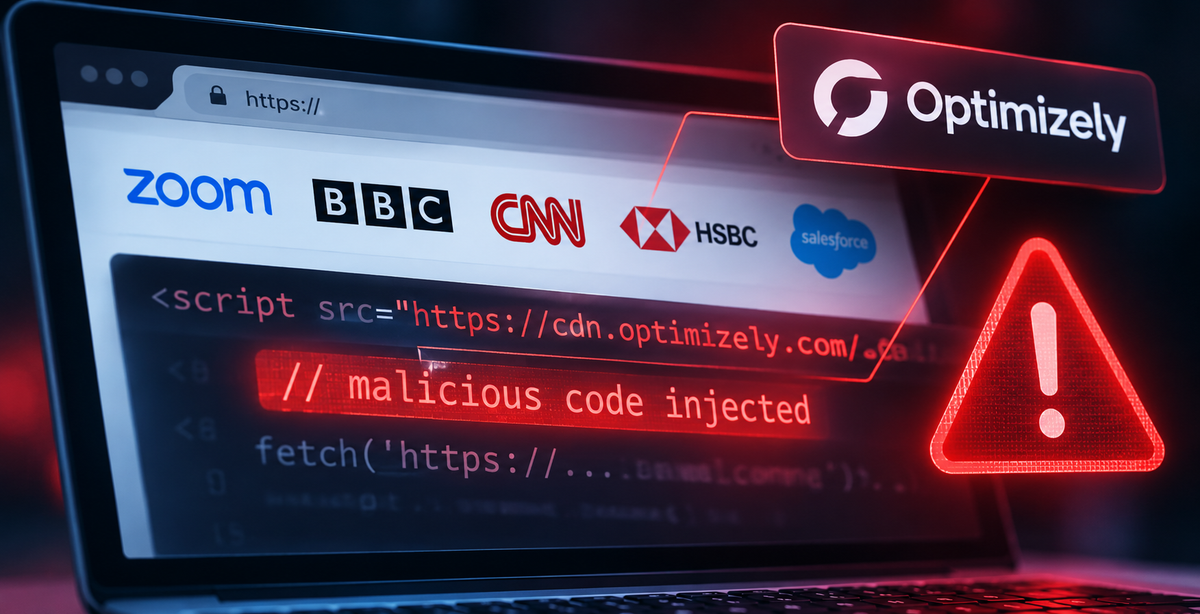
Optimizely confirmed an attacker added malicious JavaScript to some Experimentation customer projects. The fix is live and injected code has been removed.

Why it mattersA site running Optimizely Web Experimentation served attacker code from a trusted script tag. Teams should audit project JavaScript and rotate any credentials entered on that site on 16 November.
Optimizely confirmed on its status page that an attacker added malicious JavaScript to some of its Experimentation customer projects. The post is dated 17 November at 01:02 UTC. It names Web Experimentation (Snippet Delivery) as the affected service. Optimizely says it has fixed the vulnerability and removed the injected code.
Optimizely says an attacker "exploited a vulnerability in Experimentation". The attacker used it to "add malicious JavaScript to some customer projects". The company has also secured affected user accounts. It added further protections, Optimizely says. The status page does not say how many customers were hit or what the code did.
What outside reporting adds
Search Engine Journal's Matt Southern reports that 178 organisations had the malicious code served from their Optimizely snippet. SEJ names Zoom, BBC, CNN, Salesforce and GitLab among them. The flaw sat in Optimizely's Experimentation account signup flow, according to SEJ. The article cites Scott Helme of Report URI, who first identified the code on 16 November at 4:21 am UTC. SEJ reports that all infected files were clean by 11:11 pm UTC the same day.
SEJ also puts a figure on the theft. About $7,040 had reached the attacker's wallets by 7:25 pm UTC on 16 November. SEJ describes what the injected code did. It swapped cryptocurrency wallet addresses in checkout flows. It harvested credit card data from payment forms. It captured cookies that were not marked HttpOnly and took screenshots. It loaded exploit kits aimed at older iOS devices.
What a site should do today
Scott Helme, quoted by SEJ, asks site owners to search project JavaScript. Look for the string 1688360.cc and for suspicious uses of atob(. Any site that used Optimizely Web Experimentation on 16 November should review the project JavaScript in its account. It should also check the change history log. SEJ advises treating card numbers entered on that site on 16 November as exposed. Rotating API tokens and resetting user access are standard moves after an account was reached.
Optimizely does not use the phrase "supply chain", but this sits in that family. The code came from a script tag the site owner had put on the page months or years ago. A content security policy listing Optimizely as an allowed origin passed every request from that origin, including the malicious ones. A site relying on CSP as the only check cannot tell the normal code from the compromised code.
For a Reveneau engagement, this story applies to any site that runs third-party JavaScript. Two checks are easy to skip. Subresource Integrity on a third-party script would have caught the first served byte that changed. And every script tag added this year is a fresh line in next year's audit.
Source
Web Experimentation Security Incident, Optimizely Service Status. A Trusted Optimizely Script Carried Malware To 178 Organizations, Matt Southern for Search Engine Journal.
This item was written by an AI system from the linked source. Reveneau is responsible for what it publishes.
Get AI News in your inbox
New developer tools, model and agent releases, and how teams are actually using them to release software. Short, and only when there is something worth reading.