AI NewsInfrastructureAnnouncement
NVIDIA Personal AI Router enters beta for Ollama and LM Studio
NVIDIA released Personal AI Router (PAIR) in beta, a proxy that discovers Ollama and LM Studio nodes on the local network with mDNS and routes each inference request to a machine that has the requested model loaded.

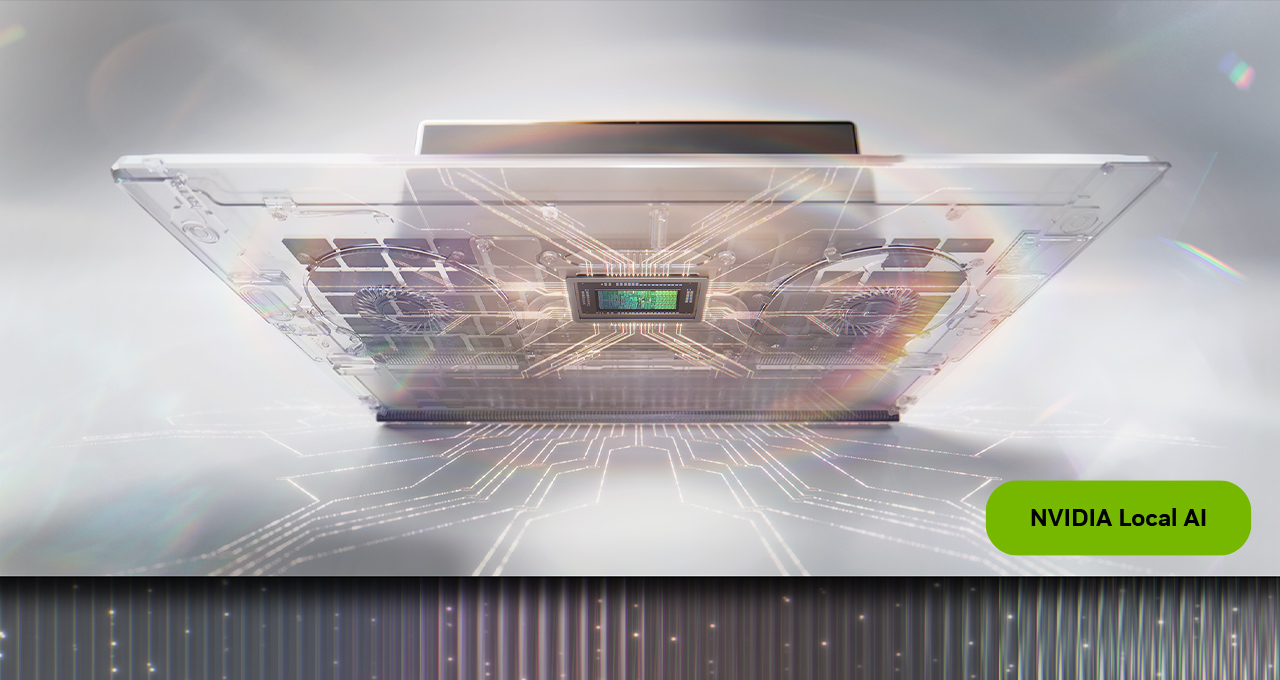
Image: NVIDIA
Why it mattersA team building local agent workflows can now extend the inference layer to any Windows, macOS or Linux machine with a compatible GPU on the same LAN, without changing the agent code or the Ollama or LM Studio endpoints it already calls.
NVIDIA has released Personal AI Router, or PAIR, in beta. It is a proxy that discovers Ollama and LM Studio instances on the local network and routes each inference request to one machine that has the requested model available, so an agent making many parallel calls can spread the work across every eligible node on the LAN. The GitHub repository at NVIDIA/Personal-AI-Router carries 1,204 stars and 208 forks at the time of writing, and the software runs on Windows 11, Linux and macOS on x64 and arm64 systems.
What it does
PAIR is a router that runs above the inference engines. Ollama or LM Studio still runs the model on each node. According to NVIDIA, PAIR discovers participating systems with mDNS, tracks whether each one is ready for a request, schedules independent jobs, and returns each response to the application that originated it. An agent harness continues to send its request to the local Ollama or LM Studio endpoint it already understands, and PAIR proxies the request by taking over the default port. PAIR then inspects the request's engine and model requirements and picks a paired system that has both. Different nodes can host different models, so loading the same model tag on more machines only increases the number of eligible workers for that request.
Every request stays on one node for its full lifetime. NVIDIA states in the announcement that PAIR does not "merge GPUs or pool VRAM into one larger accelerator", so a model that will not fit on any single machine still cannot be run this way. What changes is concurrency: a workload that sends many independent calls can spread out instead of queuing.
The one number NVIDIA published
For the demo, Hermes Desktop generates a five-subagent workload using Qwen 3.6 35B A3B, and Ollama runs the model on whichever node PAIR selects. On a single NVIDIA RTX Spark laptop the workload took 18 minutes on average. On a three-device cluster of an RTX Spark laptop, a DGX Spark and an RTX 5090, it took 8 minutes 48 seconds on average. NVIDIA labels this an unofficial, configuration-specific demonstration and warns that results depend on workload parallelism, model, engine settings, hardware, network and node availability.
Why the split is placed here
Most local-inference stacks route to one machine. Once a coding agent starts sending subagents in parallel, the first machine becomes the queue, and every extra GPU in the house sits idle. PAIR keeps the local interface Ollama and LM Studio already expose, so an agent harness that was calling http://localhost:11434 keeps calling http://localhost:11434, and the multi-machine part is hidden above the proxy. The cost is control: NVIDIA says the same behaviour makes PAIR useless when the workload is a single long call, or when only one node has the requested model. A home cluster with matching GPUs and the same tags loaded on each will see the biggest gain.
For a developer running a multi-agent local setup on their own hardware, this is a working way to turn the second workstation from a spare machine into a worker without rewriting the agent. NVIDIA links Petals and Mesh LLM as alternatives that share compute across parties or split a model that will not fit on one machine, since PAIR does neither.
Source
Primary source: NVIDIA PAIR announcement on the NVIDIA developer blog, 2026-09-03. Coverage: InfoQ, 2026-09-11. Code: NVIDIA/Personal-AI-Router on GitHub.
This item was written by an AI system from the linked source. Reveneau is responsible for what it publishes.
Get AI News in your inbox
New developer tools, model and agent releases, and how teams are actually using them to release software. Short, and only when there is something worth reading.