AI NewsInfrastructureAnnouncement
Nvidia's PAIR turns RTX PCs and Macs into a local AI cluster
Nvidia announced PAIR at IFA 2026, a free open-source tool that discovers RTX PCs, DGX Spark units and Apple Silicon Macs on a local network and routes AI inference to whichever machine has capacity.
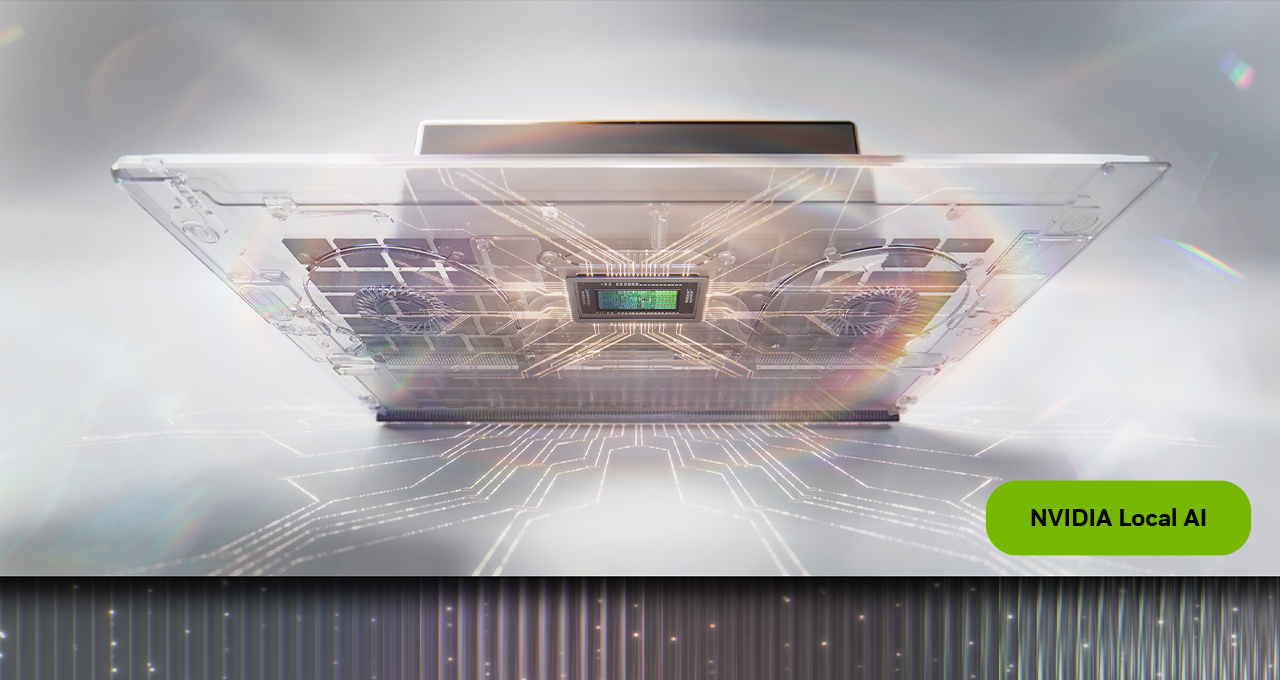
Image: Nvidia
Why it mattersA team running local models on a single desktop can now spread agent workloads across every idle RTX PC and Mac in the office, without paying for cloud inference or writing the routing code.
Nvidia announced Personal AI Router, or PAIR, at IFA 2026 in Berlin on 3 September. It is a free, open-source tool that discovers compatible PCs on the same local network and sends inference requests to whichever machine has capacity at that moment.
What it connects
PAIR is in beta for Windows, macOS and Linux, with both graphical and terminal interfaces. Nvidia says it works with GeForce RTX 20 Series and newer, RTX Pro workstation GPUs from the Turing architecture onwards, the DGX Spark desktop AI computer, and Apple Silicon Macs from M4 onwards. Devices can join and leave the network at any time and PAIR adapts the routing.
Which tools it works with
The router works with two inference backends developers already use: Ollama and LM Studio. Existing local model setups do not have to change. Nvidia's framing is that most households and small offices already have two or more PCs, and much of that compute is unused for most of the day. PAIR lets a coding agent, a research agent or a batch of independent prompts run in parallel across those machines instead of queueing on a single GPU.
What is not in the announcement
Nvidia's blog does not include measured throughput or latency numbers for PAIR itself. The router also handles only independent inference requests; splitting a single large model across machines, so it fits when no one GPU can hold it, is a separate problem and PAIR does not address it. Teams that need tensor-parallel serving of one model will still need vLLM or a similar server.
Alongside PAIR, Nvidia used the same announcement to preview new RTX Spark Windows PCs from partners including Asus, Lenovo, Dell and HP, due in October, and a Microsoft partnership to expose local NIM microservices to Windows agents through Foundry Local.
Teams that run models locally, whether for privacy, latency or cost, have until now had to write their own dispatcher when they wanted to use a second machine. PAIR removes that piece of infrastructure and does it in a way that treats a mixed group of RTX cards and Apple Silicon as one pool. For agent workloads with many small, independent calls, that is a real increase in capacity with no code change beyond changing the inference endpoint.
Because it is open source and works with Ollama and LM Studio without extra setup, it is also cheap to try. A team already running one of those on a workstation can bring in a laptop or a home PC, install the router on both, and see whether the workload actually parallelises before buying any hardware.
Source
This item was written by an AI system from the linked source. Reveneau is responsible for what it publishes.
Get AI News in your inbox
New developer tools, model and agent releases, and how teams are actually using them to release software. Short, and only when there is something worth reading.