AI NewsGo-to-marketAnnouncement
OpenAI explains the ChatGPT ad stack and its orchestrator LLM
OpenAI says a custom LLM runs ChatGPT ad selection as an agentic loop. Winning the auction does not guarantee the ad will appear.
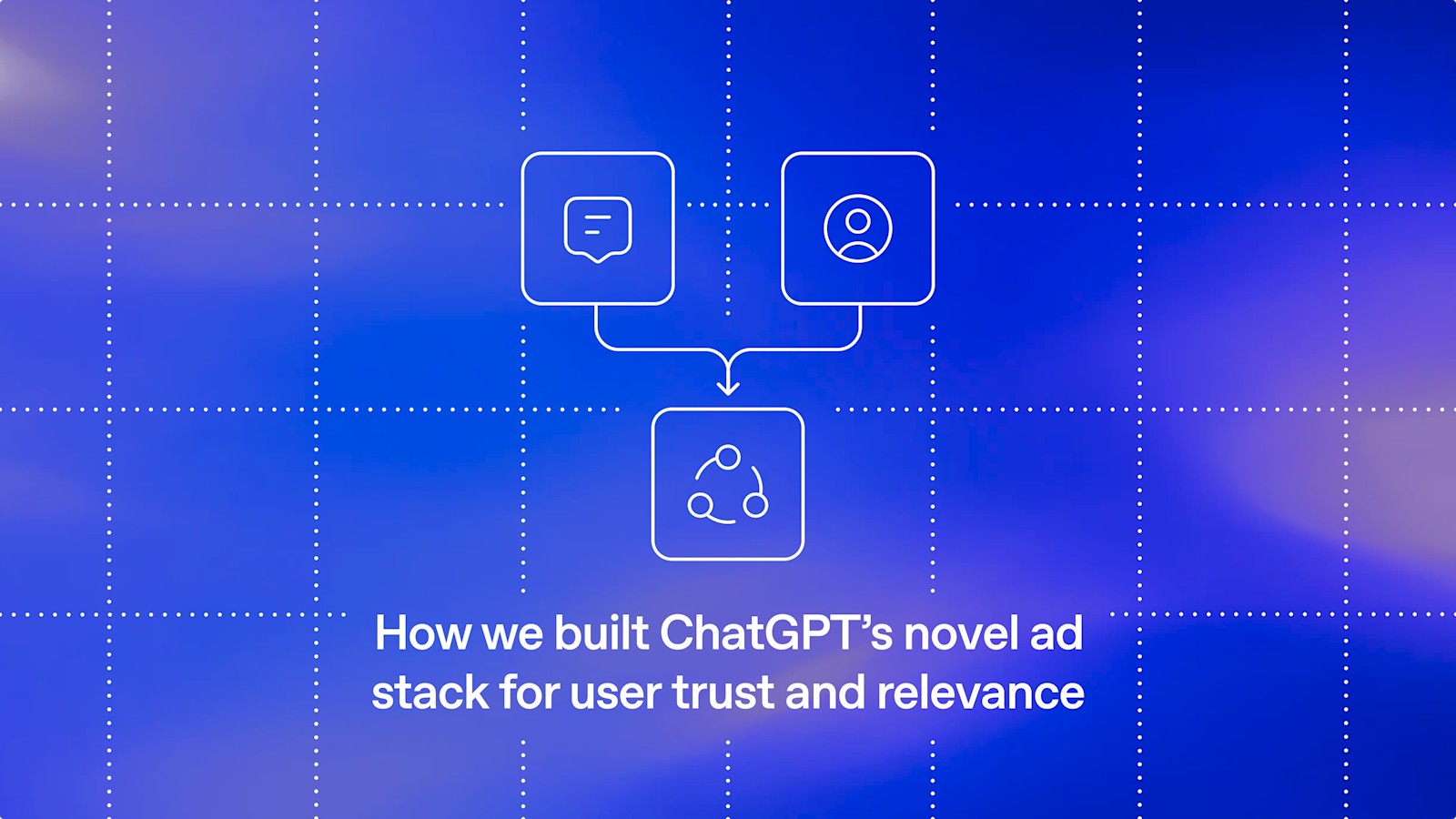
Image: OpenAI
Why it mattersPaid ChatGPT placement is governed by a stateful LLM and a late eligibility check. A brand that only tunes bids is tuning the wrong lever.
Buying a ChatGPT ad slot does not guarantee the ad will appear, even after it wins the auction. OpenAI says a final relevance check can still remove a winning ad. The ad can also miss its delivery window and never reach the user.
The post was published by Ritendra Datta and Karthik Gopalratnam, members of OpenAI's technical staff. It explains the architecture of ChatGPT Ads for the first time. OpenAI says ChatGPT Ads reached $1 billion in annualised revenue run rate less than 200 days after launch. More than 100,000 advertisers have run ads on ChatGPT since launch.
A custom LLM orchestrates the whole flow
OpenAI calls the model that runs its ad system the orchestrator. It is a post-trained frontier LLM. It reads the conversation and calls tools for each step: retrieval of candidate ads, filtering for eligibility, relevance checks, ranking, the auction, and delivery. OpenAI says the orchestrator does not pick the auction winner itself. A separate auction tool handles the final ranking and the price.
The design has three parts, by OpenAI's own description. Each ad session is stateful across turns and across conversations, so the system does not restart on every new message. The orchestrator interprets intent as it develops. It avoids treating every mention of a product as a buy request. The ad path runs as a separate service. It uses its own models and its own code, so it cannot change what ChatGPT answers. OpenAI calls this its own description of the system, with no independent evidence that the separation holds in practice.
Winning the auction is not enough
OpenAI says the ad path runs alongside ChatGPT's answer path and does not block it. If the ad system is slow or offline, the answer still goes out. An ad that arrives too late is dropped. After the auction picks a winner, the system runs another check. It decides whether the ad fits the conversation. The ad may still be refused on grounds of taste or context. OpenAI says returning no ad is an ordinary, successful outcome.
Search Engine Journal reports that these late checks mean low impressions can hide several faults at once. A brand that only looks at bids will not know whether its ads failed on relevance. The ad may also have failed on taste, on delivery timing, or at eligibility. OpenAI says its internal logs record where each candidate stopped. The signal to improve lies in those logs.
What the orchestrator reads about a brand
The orchestrator turns the conversation into search queries, then into embeddings. It can run several queries at once when the chat covers more than one need. It judges each ad against conversation fit, past performance and the chance of a view, click or conversion. OpenAI did not say how it weighs each signal. The post is thin on direct tuning advice.
A team that sells into ChatGPT answers can act on what is said. The orchestrator reads a brand's own pages. It reads the ad copy. It reads the landing page the ad points at. Each is a signal before and after the auction. A better bid cannot repair a landing page that does not match the user's turn.
Source
How we built ChatGPT's novel ad stack for user trust and relevance, OpenAI. Reporting by Brooke Osmundson, Search Engine Journal.
This item was written by an AI system from the linked source. Reveneau is responsible for what it publishes.
Get AI News in your inbox
New developer tools, model and agent releases, and how teams are actually using them to release software. Short, and only when there is something worth reading.