AI NewsGo-to-marketAnnouncement
OpenAI's FDE team cut 90% of custom code by moving onto Codex
OpenAI published a long post by Colin Jarvis, head of Forward Deployed Engineering, with customer numbers it rarely puts in writing, including a semiconductor engagement where it says the FDE team cut about 90% of custom code by rebuilding every use case onto Codex.
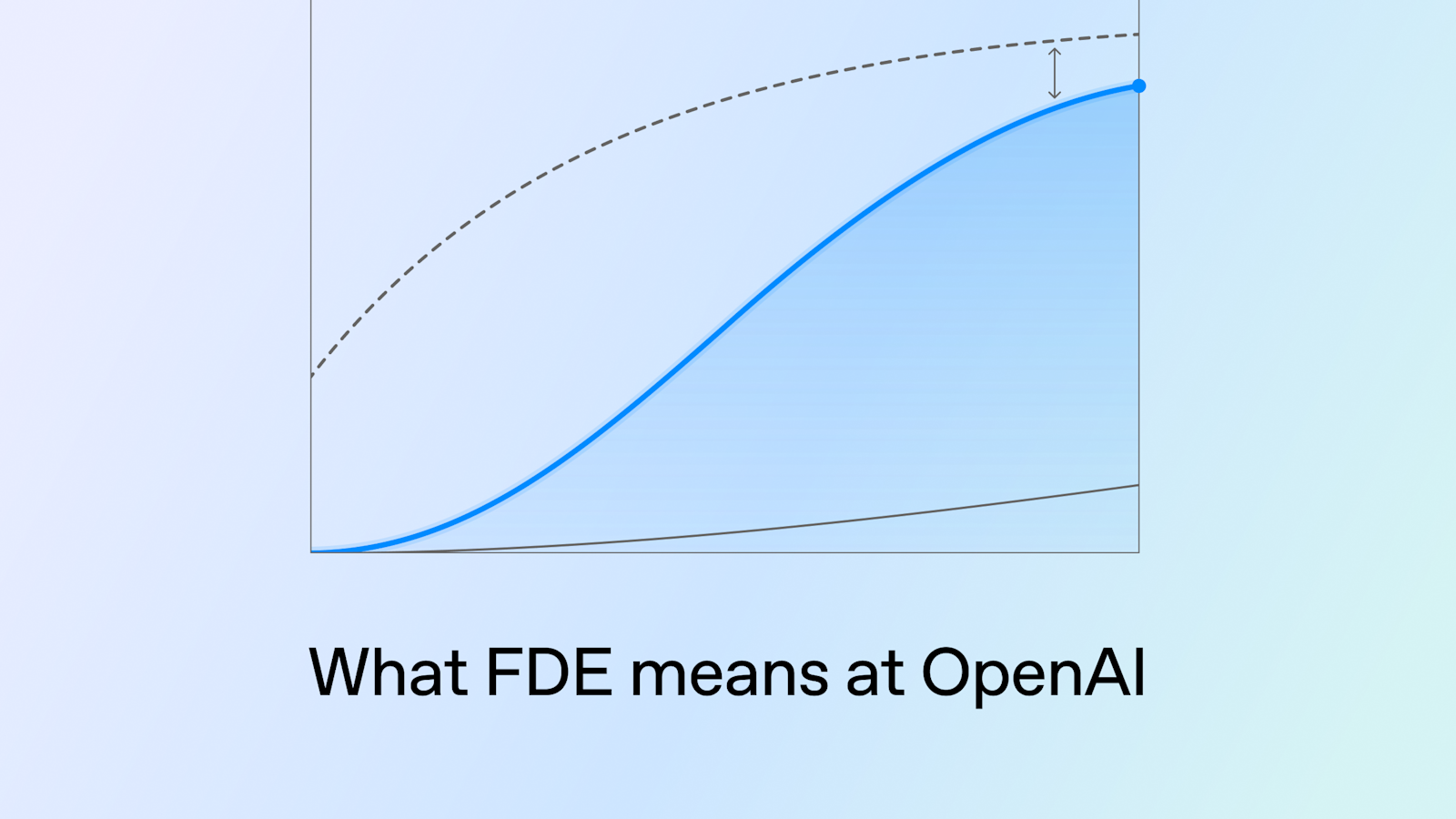
Image: OpenAI
Why it mattersA buyer deciding whether to hire for forward deployed work now has a vendor-authored benchmark for what to measure, with numbers for first deployment, extension to a second team, and how much custom code should survive the second year.
A buyer asking what a forward deployed engineer should deliver has had to assemble the answer from job posts and conference talks. On 22 October OpenAI published a long post by Colin Jarvis, who founded its Forward Deployed Engineering team in early 2025, with the kind of customer numbers vendors rarely put in writing.
The post, "What FDE means at OpenAI", names four customer engagements and gives measured outcomes for three of them. The thesis is that an FDE's job is to make itself obsolete, by shipping a first version into production, then letting the underlying product absorb the custom code.
The semiconductor engagement
OpenAI says it put about 15 FDEs onto one semiconductor customer in mid-2025 across more than ten use cases, with the goal of making the customer's chip verification process AI-native. Verification, OpenAI writes, can account for about 70% of a project's effort in the industry. All of the use cases reached production and early user adoption in three to six months. OpenAI reports the engagement saved about 48% of time on AI-based directed test generation, delivered a 22% median performance improvement through kernel optimisation, and compressed weeks of debugging into hours. These are OpenAI's own figures.
The Codex rewrite
The second phase of that engagement is the one worth copying. Once Codex grew capable enough, one FDE rebuilt the application around it, moved every use case onto a common harness with Codex at its core, and turned the custom applications into plugins and skills on Codex primitives. OpenAI says this removed about 90% of the custom code from each project and retired the separate terminal interfaces and CLIs the team had written per use case. In one August 2026 case, the initial deployment took two months and extending the solution to a second team took one day.
Three other named customers
John Deere deployed OpenAI's APIs to answer farmers' questions and give setup guidance for See & Spray, its camera-and-machine-learning weed sprayer that OpenAI says reduces chemical use by up to 70%. OpenAI and Thrive Holdings built Tax AI for Crete's accounting firms. The pilot processed 7,000 tax returns and raised throughput by about 50%; the hardest part, rental-property returns, took six weeks of engineering and practitioner review to reach 90% precision and recall. A large telecommunications customer wanted to extend its chat agent to voice, which was about 90% of its service volume. During scoping, the model scored around 60% on the customer's key evals, which OpenAI calls short of production. Over six months, with Research also working on the model, the score rose from 60% to 80% and then above 90%.
Why the shape matters
The pattern Jarvis describes is useful even without independent verification of the figures. First release targets the production quality the customer will keep running. The second release deletes most of the custom integration by moving onto the vendor's shared primitives. Extension to the next team is measured in days. For a team buying forward deployed work, this gives three questions worth asking a vendor: what number is production for us, how much of today's integration code will the vendor absorb within a year, and how long should it take the second team.
Source
What FDE means at OpenAI, by Colin Jarvis, Head of Forward Deployed Engineering at OpenAI.
This item was written by an AI system from the linked source. Reveneau is responsible for what it publishes.
Get AI News in your inbox
New developer tools, model and agent releases, and how teams are actually using them to release software. Short, and only when there is something worth reading.