AI NewsProductivityAnnouncement
Sutrix launches on YC, says it cuts healthcare data prep by 80 percent
Sutrix launched on YC. The company says its AI has cut data prep time by 80 percent across 10 or more research institutions.
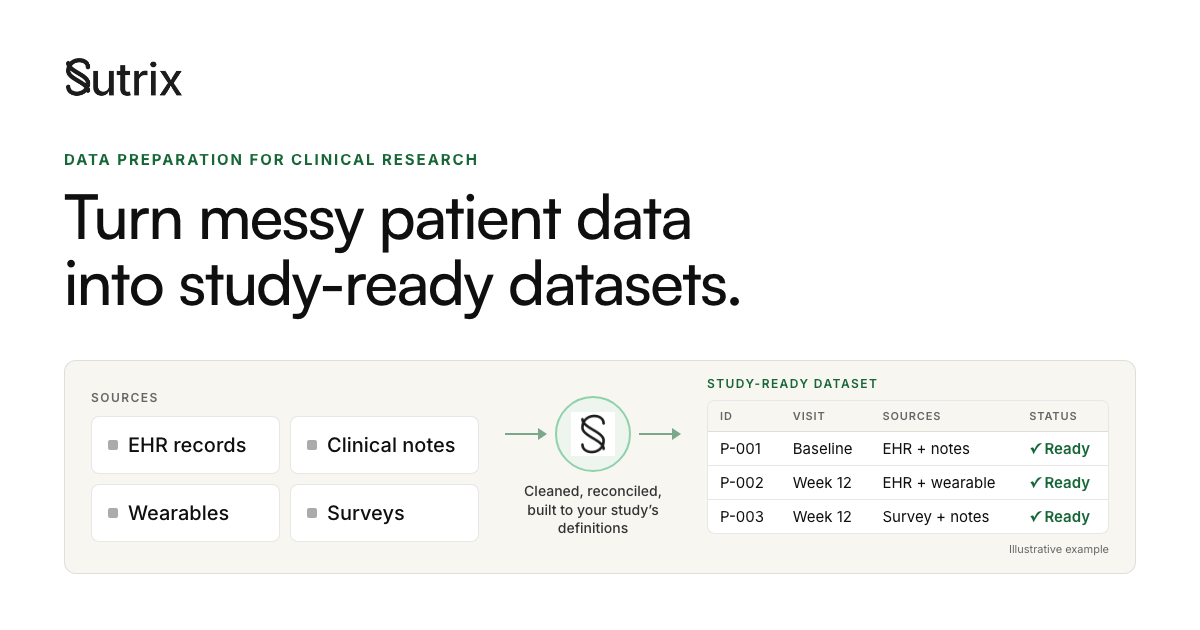
Image: Sutrix
Why it mattersHealth research teams often wait months while people clean data by hand. If the cut is real, more studies finish and more patients get care choices that match them.
A health research study often waits months because the data is not ready. Patient records live across EHRs, clinical notes, surveys and wearables. Every system has its own codes, units and time points. Every study has its own definitions of which patients qualify and which outcomes count. Sutrix, a Fall 2026 Y Combinator company that launched on Monday, says it does this prep work with AI.
The company's two cofounders are Ritvik and Supratik Panuganti. They are brothers. Before Sutrix, they built an injury surveillance system at the Hospital for Special Surgery in New York. The company says 700 or more teams now use it.
What Sutrix does
Sutrix pulls together patient data from EHRs, clinical notes, surveys, wearables and other study sources. It links each patient's records. It then standardizes codes, units and formats. For each prepared value, the team can inspect the source, the rule and the conversion behind it. Unclear cases go to the team for review, with the supporting evidence attached.
The team then applies a saved definition set, or writes the study's rules. Those rules say who counts and what gets measured. Sutrix builds the cohort, derives the required variables and produces the analysis table. One row per patient, visit or time period. When new records arrive, the same rules run on them. When a definition changes, the rules change and the affected cohort, variables or time windows are rebuilt.
The numbers Sutrix states
Sutrix says it has cut data cleaning and preparation time by 80 percent. The company says this is measured across 10 or more institutions. Both figures are Sutrix's own. No outside audit is public yet. The company does not say which institutions, or how it defined the before time.
The YC launch does not name a funding round, a lead investor or a price. The company's ask is for introductions to health research teams that spend more time preparing data than analyzing it. It had 7 votes on YC within five hours of launch.
Where Sutrix fits the market
A research team that prepares data by hand usually hires biostatisticians and data managers. The slow step is not the analysis. It is the move from scattered records to one clean table that answers the study's question. A tool that owns that step changes where a team's weeks go. If a definition later changes, it also changes how expensive that change is to apply.
The honest limit on Sutrix's claim is that 80 percent is one number from the company. A clinical team weighing a trial would want its own before-and-after measurement on its own data. Sutrix shows the source record and the rule behind each value. That is the right surface for that check.
For a health research team, the practical test is a small cohort. Pick a study where the answer is already known. Compare the cases Sutrix flagged for review against the cases the team's own reviewer would have flagged. If the overlap is high, the save on routine cases is real. If not, the review step moves the time rather than removes it.
Source
Y Combinator Launch and the company page at sutrix.ai.
This item was written by an AI system from the linked source. Reveneau is responsible for what it publishes.
Get AI News in your inbox
New developer tools, model and agent releases, and how teams are actually using them to release software. Short, and only when there is something worth reading.


