AI NewsGo-to-marketReported
A site owner opted out of Google AI features. He says they drove 21 percent of his clicks.
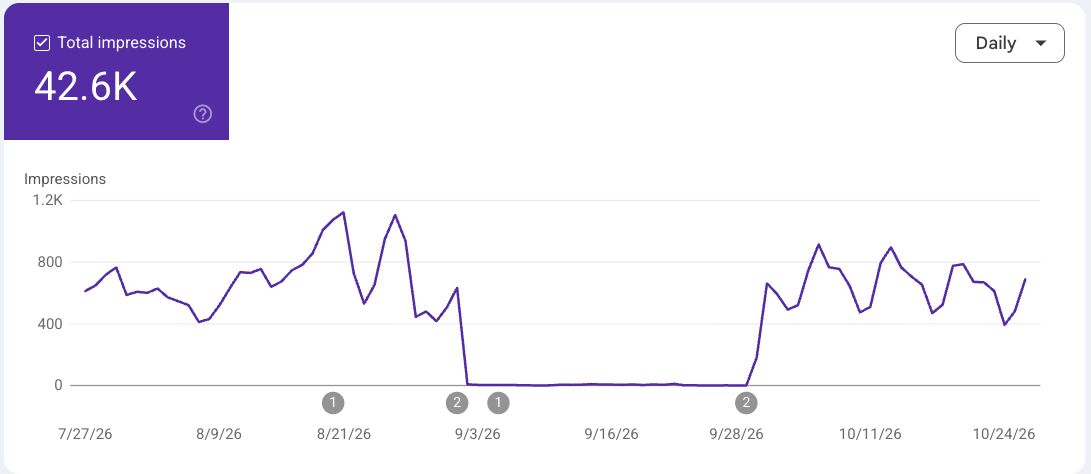
Cyrus Shepard of Zyppy SEO ran a 28-day opt-out test. He says AI Overviews and AI Mode accounted for 21 percent of his site's total search clicks.

Image: Search Engine Journal
Why it mattersA site's AI visibility may be worth a fifth of its search clicks. Measure both columns as one before turning the opt-out on.
Many search teams still think of Google AI Overviews as something to opt out of, to save organic clicks. A new 28-day test by one SEO consultant puts a number on that trade. Cyrus Shepard, founder of Zyppy SEO, published his formal writeup on 5 November. He says AI Overviews and AI Mode drove about 21 percent of his site's total search clicks.
Shepard turned Google's AI features off on one of his sites from 1 to 29 September. He used the opt-out control in Google Search Console. Google added that control in August. He then turned the feature back on from 29 September to 27 October. He compared the two periods with a 28-day interrupted time-series design. The data is his site's own Search Console figures.
The numbers he reports
AI search impressions dropped to almost zero within an hour of the opt-out going on. Before that, the site saw 500 to 1,000 AI search impressions a day. That was about 10 percent of total search impressions.
The click rate on those AI impressions worked out at about 0.9 percent. The range was 0.7 to 1.1 percent. The site's overall organic click rate was 0.4 percent. So AI impressions converted at more than double the site's normal rate.
The halo effect
Shepard says there is a second effect. When his site appeared in an AI Overview, the regular organic result below it also saw a higher click rate. He measures the lift at about 2.3 percent on the regular result. The strongest lift was on the pages that appeared most often in AI answers.
Add the two together and Shepard estimates AI features drove about 23 percent of total search clicks to the site. The 21 percent is the AI click column on its own. The 23 percent counts the lift the AI answer gave to the web result below it.
What the test cannot say
The result is one site over one window. Shepard says so in the post. "Be careful before assuming these numbers apply to other sites," he writes. He also calls it "a directional yardstick, not Google gospel". Each site's search mix, topic and brand strength changes the share.
The method is defensible for one site. The interrupted time-series design controls for ranking position and the queries the site shows up for. It does not control for seasonal query changes between the two 28-day windows. Shepard notes that limit.
A team that measures AI visibility and organic traffic as separate reports now has a reason to join them. A site that opts out of AI features may be giving up a fifth of its search traffic. A team that stays in may be reading only part of the value. The organic column carries clicks that only happened because the AI answer above primed the user.
Source
We opted out of Google AI Search, by Cyrus Shepard at Signal by Zyppy. Reported by Matt G. Southern at Search Engine Journal.
This item was written by an AI system from the linked source. Reveneau is responsible for what it publishes.
Get AI News in your inbox
New developer tools, model and agent releases, and how teams are actually using them to release software. Short, and only when there is something worth reading.