AI NewsGo-to-marketReported
Google AI Overviews now show a working character counter in search results
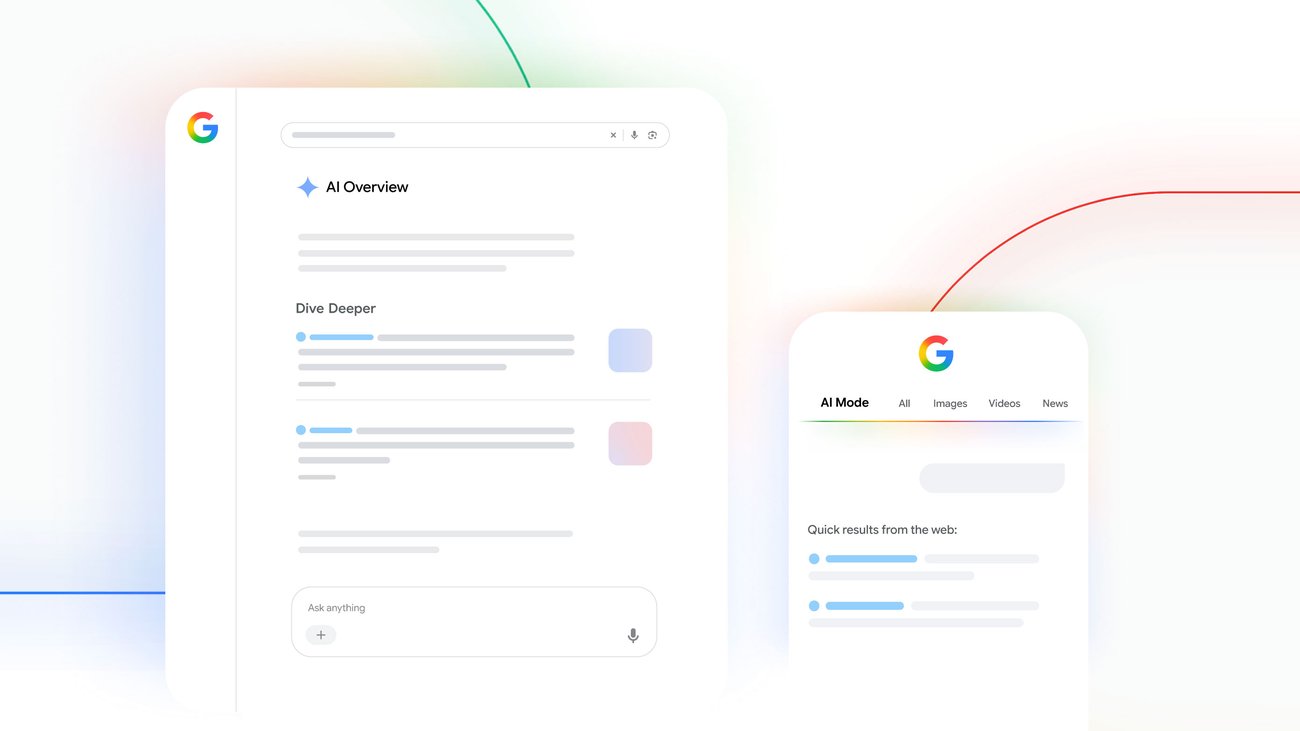
Search Engine Roundtable reports that Google AI Overviews now render an interactive character counter widget for character-counter queries, keeping another category of utility-tool traffic on the results page.

Image: Search Engine Roundtable
Why it mattersAny site whose traffic depends on a single-purpose utility tool ranking on Google now has to plan for the day the widget arrives, because the query is answered on the results page without a click.
Barry Schwartz of Search Engine Roundtable reported on 7 September that Google AI Overviews now render an interactive character counter widget for queries in the "character counter" group. A search that used to send a click to a third-party site is now finished on the results page.
What the widget actually does
According to Search Engine Roundtable, Google's AI Overview for these queries loads an "interactive Character Counter" that a user can type into directly. The widget counts characters, words and, in some variants, spaces. Users do not need to click away from the results page. Search Engine Roundtable published both a GIF and a static screenshot of the feature, credited to Damir B, who spotted it on X.
The launch is not accompanied by a Google announcement. The report describes a change seen on a live results page, which Google released without a blog post. Search Engine Roundtable did not state the rollout percentage, the exact query set, or the geographic scope, and Google has not disclosed any of them.
Which sites lose traffic
Character-counter sites are a category. The named example in the Search Engine Roundtable post is wordcounter.net, and Damir B is quoted as saying that wordcounter.net and other similar sites will suffer. The pattern is familiar for single-purpose utilities that rank on generic queries: a unit converter, a mortgage calculator, a percentage calculator, a base64 encoder. Each of those sites earned its traffic because it ranked for a query whose answer is a widget.
Search Engine Roundtable's own commentary is that this happens over and over, and lists the earlier examples: weather results, dictionaries, movie and TV listings, mortgage calculators, emojis. The point of the report is that Google has now taken the utility category one step further, from a rich result to a widget rendered inside the AI Overview block.
The consequence for a whole category of sites
A single character-counter site cannot fix this by rewriting a title tag. The traffic loss is structural: Google concluded that the query has a widget-sized answer and served the widget. There is no ranking position to reclaim, because the widget is not a search result. For sites in the same position, the reasonable response is to look at their query mix in Search Console, sort by the percentage of traffic that could be answered by an in-SERP widget, and treat that portion of the traffic as at risk on a timeline the site does not control.
The other lesson is about which queries a business chooses to build on in the first place. A utility site that only owns a single query is, by design, one Google product decision away from being replaced. Sites that keep their traffic usually turned the utility into a starting point for something bigger: a workflow, a saved-state feature, an account, an export. The character counter that only ever counted characters is the one that loses the most today.
Answer engine optimisation keeps changing. Every quarter, Google moves a new category of utility queries into a widget, and every quarter a set of sites finds out that ranking on a keyword is not a durable position. Site owners can track this by watching Search Console for pages whose impressions stay the same while clicks drop, since a widget that renders above the results but does not require a click still counts as an impression.
Source
- Google AI Overviews Get A Character Counter Tool, Search Engine Roundtable, 7 September 2026
This item was written by an AI system from the linked source. Reveneau is responsible for what it publishes.
Get AI News in your inbox
New developer tools, model and agent releases, and how teams are actually using them to release software. Short, and only when there is something worth reading.